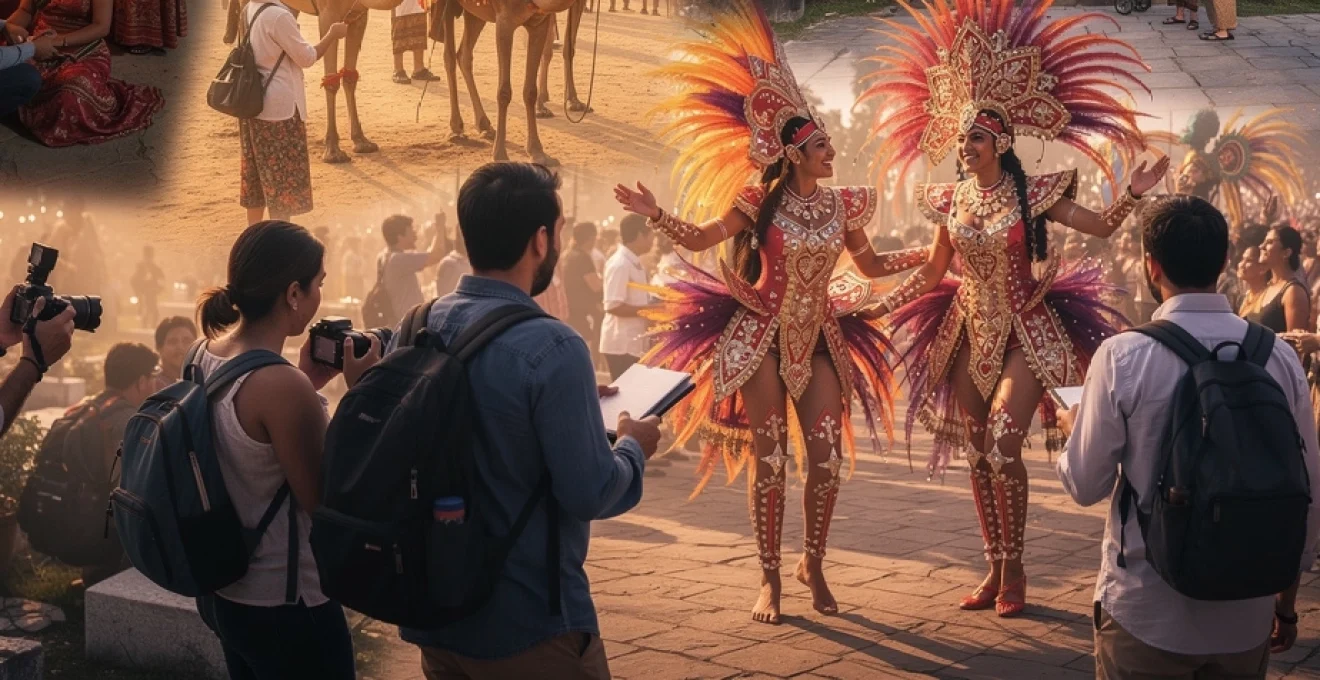
Travel has evolved beyond simple sightseeing and photograph collections. Today’s discerning travellers seek experiences that penetrate beyond the superficial tourist veneer, searching for authentic connections with the places they visit. Cultural festivals represent one of the most profound gateways to this deeper understanding—moments when communities reveal their collective soul through celebration, ritual, and shared tradition. Unlike static museum exhibits or curated walking tours, festivals present living, breathing culture in its most dynamic form, offering you an unfiltered glimpse into the values, histories, and social structures that define a destination.
When you align your travel itinerary with local festivals, you fundamentally alter your relationship with a destination. Rather than observing culture through protective glass, you become a participant—however temporary—in traditions that have shaped communities for generations. This participatory approach transforms your understanding from intellectual appreciation to visceral comprehension, creating memories and insights that persist long after conventional tourism experiences fade. The colours, sounds, flavours, and emotions of festival participation create neural pathways that standard travel simply cannot replicate.
Anthropological immersion through festival participation
Festival participation offers something remarkably rare in modern tourism: anthropological immersion without the barrier of academic distance. When you witness community celebrations in their authentic context, you gain insights into social structures, belief systems, and cultural priorities that would require months of traditional ethnographic study to comprehend. Festivals condense centuries of cultural evolution into concentrated experiences, revealing how communities define themselves and what they collectively value most deeply.
Witnessing living traditions at día de los muertos in oaxaca, mexico
Oaxaca’s celebration of Día de los Muertos represents perhaps the most profound inversion of Western attitudes toward mortality you’ll encounter anywhere. During the nights of October 31 through November 2, the city’s cemeteries transform into vibrant social spaces where families gather around graves adorned with marigolds, candles, and offerings of the deceased’s favourite foods. The atmosphere contradicts every expectation—rather than solemnity, you’ll find music, laughter, and children playing amongst the tombstones.
This celebration reveals core Mexican philosophical concepts about the relationship between life and death. The elaborate altars constructed in homes and public spaces demonstrate belief in the permeability between worlds, while the festive tone reflects an understanding that honouring the dead strengthens communal bonds amongst the living. By attending these celebrations, you witness how cultural attitudes toward mortality shape daily life, family structures, and community cohesion in ways that profoundly differ from secular Western approaches. The symbolic foods, specific flowers, and ritual timing all communicate complex cosmological beliefs that you absorb experientially rather than theoretically.
Observing sacred rituals during bali’s nyepi silent day
Bali’s Nyepi celebration presents a counterintuitive festival experience: a day of complete silence, stillness, and sensory deprivation across the entire island. For twenty-four hours following elaborate purification ceremonies, the island shuts down completely—no lights, no work, no travel, no entertainment. Even tourists must remain in their accommodations, observing the restrictions alongside local residents. This unusual requirement transforms you from observer to participant in one of Hinduism’s most contemplative celebrations.
The preceding night’s Ogoh-Ogoh parade—featuring enormous demon effigies paraded through streets before being ceremonially burned—creates dramatic contrast with Nyepi’s silence. This juxtaposition reveals Balinese cosmological concepts about balance, the cyclical purification of negative energies, and the importance of periodic retreat from worldly stimulation. You gain understanding of how ritual restraint functions as powerfully as celebratory expression, and how an entire society can coordinate collective spiritual practice. The experience challenges assumptions about what constitutes celebration and reveals cultural capacity for communal discipline that few Western societies could replicate.
Understanding social hierarchies at india’s pushkar camel fair
The Pushkar Camel Fair in Rajasthan initially appears to be primarily about livestock trading—tens of thousands of camels, horses, and cattle changing hands in the desert. However, extended observation reveals intricate social hierarchies, caste interactions, and rural-urban dynamics that define contemporary Indian
society. Watching traders negotiate, families camp in temporary desert encampments, and pilgrims visit Pushkar’s sacred lake, you observe how caste, gender, and economic status manifest in everyday interactions. Seating arrangements at chai stalls, who speaks first in a negotiation, and who handles money versus livestock all become micro-lessons in social order.
By slowing down and paying attention to these details, you begin to read the fair almost like an anthropologist might read a field site. You see how traditional camel herders navigate modern market pressures, how young people use the festival as a space for courtship and aspiration, and how religion, commerce, and entertainment intersect. This kind of cultural immersion at festivals turns your trip into a case study of contemporary India, rather than a collection of disconnected impressions.
Experiencing communal identity formation at rio carnival
Rio Carnival is often portrayed as pure spectacle—sequinned costumes, samba parades, and street parties that last until dawn. Yet beneath the glitter lies a complex process of communal identity formation. Each escola de samba (samba school) represents a specific favela or neighbourhood, and their elaborate parades are months in the making. When you attend rehearsals and pre-Carnival events, you quickly realise that Carnival is less about performance for tourists and more about communities telling their own stories.
The themes chosen each year—ranging from political protest to historical narratives and Afro-Brazilian heritage—reveal what matters most to the people who create them. Participation is deeply democratic: you might see grandparents sewing costumes alongside teenagers practising choreography and local musicians composing new samba-enredo songs. As an engaged visitor, you witness how collective identity is negotiated, celebrated, and broadcast to the world. Rather than simply consuming entertainment, you become aware of Carnival as a living archive of Brazilian social struggles, aspirations, and pride.
Culinary authenticity beyond tourist restaurant circuits
One of the most immediate ways cultural festivals transform the way you travel is through food. Instead of relying on generic restaurant strips and international chains, you are drawn into temporary culinary ecosystems that exist only for a few days each year. Street stalls, pop-up kitchens, and communal feasts offer access to traditional dishes that rarely appear on tourist menus. By eating where locals eat during festivals, you taste not just flavours, but stories—about migration, religion, climate, and class.
Festival food often sits at the intersection of ritual and sustenance. Certain dishes are prepared only at specific times of year, using techniques passed down through families and communities. When you seek out these foods, ask questions, and sometimes roll up your sleeves to help, you gain a deeper understanding of how cuisine encodes memory and identity. Your approach to travel dining shifts from “finding the best restaurant” to “finding the most meaningful meal.”
Traditional food preparation methods at thailand’s vegetarian festival
Phuket’s Vegetarian Festival, rooted in Chinese Taoist traditions, offers an intense window into ritualised eating. For nine days, participants adhere to a strict vegan diet, abstaining from meat, alcohol, and other stimulants to purify body and spirit. Walking through the festival markets, you see vast temporary kitchens where tofu, mock meats, and vegetables are transformed into elaborate dishes that mimic the textures and flavours of non-vegetarian cuisine. The scale and speed of preparation are astonishing.
By spending time with stallholders and temple volunteers, you learn about specialised cooking techniques—rapid stir-frying in enormous woks, steaming in bamboo baskets, and complex seasoning with fermented pastes and herbal broths. You start to understand how food can become a tool for spiritual discipline, not just pleasure. As you sample dishes that never appear in standard tourist restaurants, your culinary curiosity is rewarded with a more nuanced grasp of Chinese-Thai identity, diaspora history, and religious practice.
Regional ingredient sourcing during piedmont’s truffle fair
In Italy’s Piedmont region, autumn truffle fairs—most famously in Alba—showcase how deeply local landscapes shape culinary culture. White truffles are notoriously difficult to cultivate, so their appearance each season depends on rainfall, soil conditions, and forest health. Attending the fair allows you to witness the entire supply chain in one place: truffle hunters arriving at dawn with their finds, wholesalers inspecting aroma and size, chefs planning menus around that day’s market prices.
As you talk with producers and join guided tastings, you begin to appreciate how “farm-to-table” is not a marketing slogan here but a centuries-old necessity. The festival’s focus on provenance, appellations, and seasonal rhythms reveals a regional worldview in which land is both livelihood and legacy. Rather than simply eating truffle pasta, you learn to read labels, ask about oak versus hazelnut groves, and understand why a rainy August might mean a leaner November. This awareness follows you into every future meal you eat in Italy—and beyond.
Family recipe preservation at okinawa’s shuri castle festival
During the Shuri Castle Festival in Okinawa, traditional Ryukyuan court culture comes alive through processions, music, and, notably, food. While much attention goes to the royal-inspired performances, the quieter corners of the festival often host community food stalls run by multi-generational families. Here, you might encounter rafute (braised pork belly), juushii (seasoned rice), and sweets made with local purple sweet potato—dishes that blend Chinese, Japanese, and Southeast Asian influences, reflecting Okinawa’s historical role as a trading hub.
When you linger to chat with stall owners, you’ll often hear how recipes were handed down from grandparents who lived through war, occupation, and dramatic social change. Cooking becomes an act of cultural resistance and continuity. By choosing these family-run stalls over more commercial options, you are directly supporting the preservation of culinary heritage that might otherwise disappear under pressure from globalised fast food and mainland trends. Your travel choices become part of a larger story of cultural survival.
Ceremonial feast structures at thanksgiving powwows in south dakota
Attending Thanksgiving powwows in South Dakota offers a powerful counterpoint to mainstream narratives about the holiday. For many Native American communities, these gatherings combine ceremony, social dancing, and communal meals that reframe the meaning of gratitude and history. While some aspects are private or sacred, visitors are often welcome at public portions of the event, provided they follow guidelines and show respect. Observing how feasts are structured—who is served first, how food is blessed, which dishes hold symbolic meaning—quickly challenges simplified ideas about “traditional American” cuisine.
You may see wild rice, bison, corn, and berry dishes prepared according to longstanding practices that predate the United States itself. The sharing of food becomes a way to honour elders, remember ancestors, and reinforce community bonds in the face of ongoing challenges. As an attentive guest, you learn to see beyond the buffet table to the deeper social choreography that governs who cooks, who serves, and who speaks. Experiences like this transform how you think about festive meals in your own culture, and what it really means to gather in thanks.
Linguistic acquisition through festival-specific vernacular
Cultural festivals also function as intensive language immersion programmes—whether or not you set out to learn the local tongue. Every major celebration comes with its own lexicon: ritual phrases, slang, call-and-response chants, specialised food terms, and poetic expressions that rarely show up in textbooks. When you attend festivals with a curious ear, you quickly accumulate phrases that carry far more cultural meaning than generic language apps can provide.
Think of it as learning the “passwords” to a culture. Knowing how to shout “¡Que viva!” at a procession, understanding what “Selamat Hari Raya” conveys beyond a simple greeting, or being able to distinguish between formal and playful greetings during Songkran in Thailand grants you access to more authentic interactions. You will likely mispronounce words at first, but the feedback you receive—laughter, corrections, encouragement—accelerates your linguistic learning. Over time, these festival-specific expressions become anchors in your memory, tied to vivid sensory experiences rather than abstract grammar drills.
Photography opportunities unavailable in standard tourism
If you travel with a camera—whether a smartphone or a full kit—cultural festivals offer visual opportunities that you will never find on a standard city tour. Temporary architectures, ephemeral artworks, unusual lighting, and emotionally charged moments appear and vanish in minutes. Photographing festivals requires a different mindset: you are not just capturing scenery, you are documenting living culture in motion. This demands sensitivity, anticipation, and respect, as well as technical skill.
The reward is a portfolio of travel images that go far beyond postcards of monuments. Your photos begin to tell stories of transformation and community: a street that looks ordinary for 361 days of the year becomes an explosion of colour during Holi; a quiet square fills with lanterns during Mid-Autumn Festival; a remote valley is illuminated by torchlight for a single night. These visual narratives, when captured ethically, become part of your deeper understanding of place.
Capturing ephemeral installations at burning man’s black rock city
Burning Man, held annually in Nevada’s Black Rock Desert, is a masterclass in photographing impermanence. For a brief window, a fully functioning city rises from the playa, filled with monumental art installations, mutant vehicles, and themed camps. Then, just as quickly, it disappears, leaving behind “no trace.” As a visiting photographer, you are confronted with the challenge of documenting works that may never exist again—many pieces are designed to be burned or dismantled by the festival’s end.
This context pushes you to engage more deeply with your subjects. You find yourself talking with artists about their intentions, waiting for the right moment when a dust storm, sunrise, or group of participants interacts with the piece in a way that crystallises its meaning. Rather than chasing “iconic shots,” you learn to work with unpredictability, treating each frame as a collaboration between environment, artwork, and community. The skills you develop here—patience, adaptability, and narrative awareness—enrich your photography on every subsequent trip.
Documenting traditional costume craftsmanship at venice carnival
Venice Carnival offers a very different photographic environment: a centuries-old cityscape populated by people in meticulously crafted historical and fantastical costumes. Many of the most striking outfits are the result of months of labour, combining sewing, millinery, mask-making, and sometimes even metalwork or embroidery. When you photograph these participants respectfully—asking permission, avoiding intrusive behaviour—you also gain an invitation into the world of costume artisanship.
Early mornings in quieter squares are often the best times to engage with masked figures who are happy to pose and explain their designs. You can focus on capturing fine details: hand-painted masks, layered fabrics, and intricate lacework that rarely gets noticed in crowded party settings. In doing so, your images become a record of living craftsmanship rather than just anonymous spectacle. You come away with a deeper appreciation of how costume-making keeps traditional skills alive while allowing for individual creativity.
Recording dynamic movement at edinburgh’s hogmanay fire processions
Edinburgh’s Hogmanay celebrations—Scotland’s iconic New Year festivities—include dramatic fire processions that snake through the city’s medieval streets. For photographers, these events offer a technical and artistic challenge: low light, fast movement, and large crowds. Learning to shoot in such conditions teaches you how to balance shutter speed, aperture, and ISO to either freeze flying sparks or trace them into abstract light trails. It is a powerful analogy for festival travel itself—learning when to hold on to crisp details and when to embrace blur and motion.
As you adapt, you begin to notice the ritual choreography behind the flames: torchbearers moving in formation, musicians setting the pace, onlookers reacting with awe or reverence. Your images start to capture not just fire, but the emotions and collective energy that surround it. By the time the fireworks explode over the castle at midnight, you have a visual record of how an entire city transitions from one year to the next—anchored not just in spectacle, but in tradition.
Economic ecosystems supporting local artisan communities
Beyond personal enrichment, visiting cultural festivals can transform how you understand tourism’s economic impact. Festivals are often critical economic engines for local communities, especially artisans who depend on seasonal markets for a significant portion of their annual income. When you buy directly from makers at a fair or craft market, far more of your travel budget stays in the community than if you shop at generic souvenir stores or international chains.
These economic ecosystems are complex and interdependent. Textile weavers rely on dyers and pattern designers; mask-makers depend on woodcarvers, painters, and sometimes even local farmers who grow specific tree species. By asking vendors about their processes, you quickly realise that your purchase supports a whole network of livelihoods. At the same time, festivals can also create pressures—short-term demand spikes, rising rents, and the risk of cultural commodification. As a mindful traveller, you can make more ethical choices: seek cooperatives, look for fair-trade certifications where relevant, and prioritise items that reflect meaningful craftsmanship over mass-produced trinkets.
Temporal travel planning around lunar calendars and agricultural cycles
Once you begin to align your journeys with cultural festivals, your entire approach to travel planning changes. Instead of starting with flight sales or peak-season beach weather, you start with calendars—lunar calendars, harvest schedules, religious observances—and work backwards. This temporal shift is more than logistical; it invites you to sync your movements with the rhythms that have structured local life for centuries. You become less of a tourist passing through and more of a guest arriving at a meaningful moment.
Understanding how different cultures organise time around the moon, the sun, and the land also deepens your respect for their worldviews. A harvest festival is not just a convenient excuse for a party; it marks the culmination of months of labour and risk. A lunar new year gathering encapsulates hopes and fears for the cycle ahead. By planning your trips to coincide with these events, you give yourself access to layers of meaning that cannot be replicated on any random week of the year.
Aligning itineraries with chinese new year across southeast asia
Chinese New Year, or Lunar New Year, is celebrated across much of Asia, but its expression varies dramatically from one region to another. Planning an itinerary that traces its observance across Southeast Asia—say, from Singapore to Penang to Bangkok—allows you to see how a shared festival adapts to different local contexts. In some cities, the focus may be on temple visits and family reunions; in others, on public parades, lion dances, and night markets filled with red lanterns and firecrackers.
To make the most of such a trip, you need to track the lunar calendar carefully, as dates shift each year. You also need to account for travel disruptions, as transport and businesses can shut down during peak celebration days. The payoff is immense: you gain insight into diaspora communities, transnational family networks, and how commercialisation intersects with tradition. You may find yourself asking: how does the same festival feel so familiar and yet so different from city to city?
Scheduling around harvest festivals in transylvania’s saxon villages
In the Saxon villages of Transylvania, harvest festivals and autumn fairs offer a window into agrarian life that has changed slowly over centuries. These events often feature grape blessings, communal meals, folk music, and markets where farmers sell cheese, cured meats, and preserves. Planning a visit during this period requires attention to local agricultural cycles: grape harvests depend on weather patterns, and exact dates may be confirmed only weeks in advance.
By working with local guides or guesthouse hosts, you can position yourself to witness or even help with activities like grape picking or cider pressing. You begin to understand how intimately villagers’ calendars are tied to soil, rainfall, and daylight hours. The festival itself becomes the visible tip of an iceberg of year-long labour. This perspective can radically reframe how you think about the food on your own table at home and the hidden seasons behind it.
Navigating islamic calendar variations for ramadan night markets
Experiencing Ramadan night markets in predominantly Muslim countries—such as Malaysia, Indonesia, or Morocco—requires yet another temporal adjustment. The Islamic calendar is lunar, so Ramadan shifts about 10–11 days earlier each solar year. In addition, the experience of the fast and the nightly iftar meal varies with latitude and season; fasting hours are longer in some years and regions than others. If you want to immerse yourself in the unique atmosphere of Ramadan bazaars, you need to plan with these variations in mind.
Arriving prepared—aware of local customs around eating in public during the day, modest dress, and prayer times—allows you to engage respectfully. As the sun sets and markets spring to life, you witness a profound daily transformation: quiet streets become bustling corridors of food stalls, families gather to break the fast, and mosques overflow. You quickly learn festival-specific vocabulary, from greetings like “Ramadan Kareem” to the names of special dishes available only during this month. Aligning your travel with this sacred time gives you a far richer sense of Muslim cultural life than any neutral calendar date could provide.