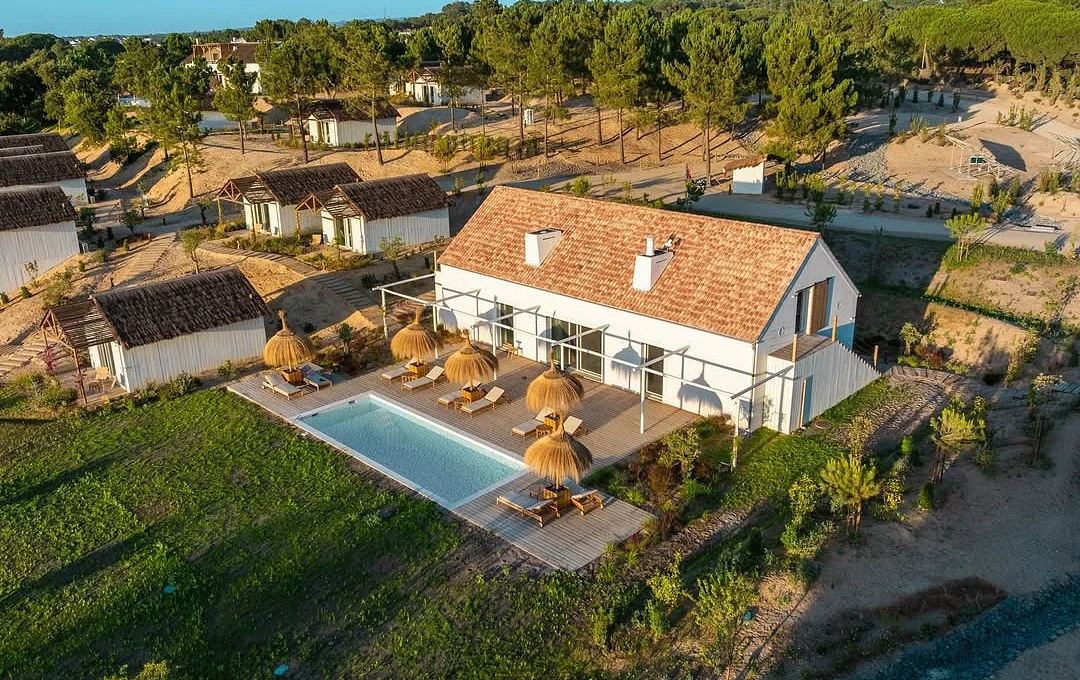
What sets this retreat apart in 60 seconds:
- Sanskrit-rooted philosophy (‘Amala’ meaning pure) manifested in design simplicity
- Cabanas using traditional Comporta architectural principles with natural materials
- Rice field setting 30 minutes from Comporta beaches in coastal Alentejo
- Wellness-centered: yoga, sauna, organic cuisine, massage treatments
- Unstructured time emphasis over programmed activities
The wellness tourism sector in Portugal continues its sharp trajectory — the country welcomed 2.49 million inbound wellness trips in 2024, surpassing pre-pandemic levels. Yet volume alone reveals little about experience quality. What separates properties worth your consideration from those merely capitalising on wellness vocabulary?
The answer often lies in whether the architectural choices derive from genuine cultural engagement or simply adopt the visual language of tradition. This retreat’s approach merits scrutiny because it attempts something more demanding than aesthetic mimicry: translating a philosophical concept into spatial and material decisions whilst honouring the specific building heritage of its coastal Alentejo location.
The ‘Amala’ philosophy: purity through simplicity
The Sanskrit term “amala” carries a precise meaning that extends beyond the generic “authentic” so liberally applied in boutique hospitality marketing. As documented across Vedic and Sanskrit classical sources, amala denotes “that which is clear” or “having been rendered free of impurity” — a concept appearing in Buddhist, Hindu, and Jain philosophical traditions. The term surfaces in architectural contexts within Vastushastra literature, where it designates a sacred temple typology noted for its pure, square form, linking spiritual clarity directly to spatial intent.
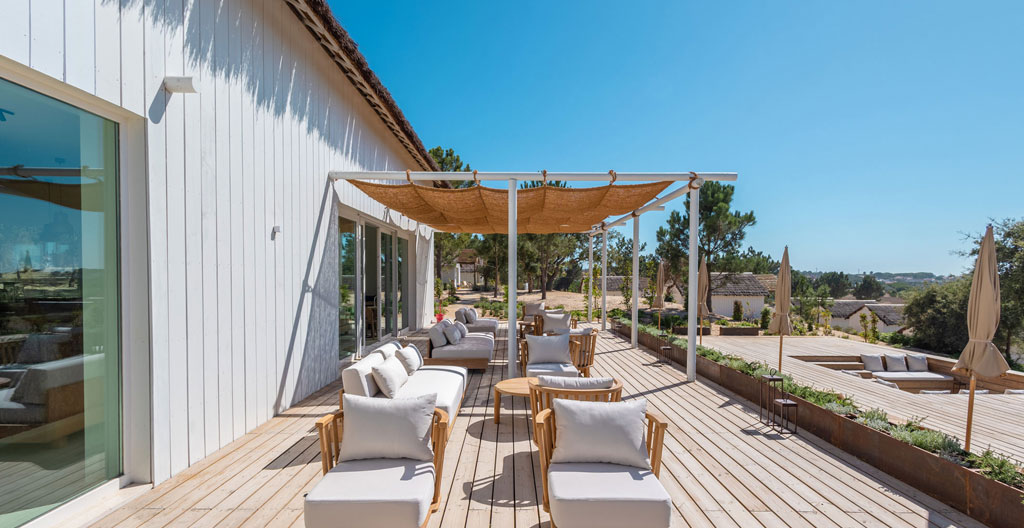
The property translates this concept into hospitality through deliberate absence. The accommodation excludes televisions, minimises digital connectivity, and forgoes the orchestrated activity schedules that characterise conventional resort models. This isn’t deprivation marketed as luxury — it’s the creation of unstructured time as the primary offering. Guests encounter a material palette restricted to wood, natural textiles, and locally sourced stone, with spatial design that emphasises transition between interior and exterior rather than sealed, climate-controlled enclosure.
The philosophical foundation finds academic parallel in research examining minimalist design principles. A peer-reviewed study on Wabi-Sabi aesthetics and contemporary space design establishes that both Wabi-Sabi and Scandinavian minimalism embrace a philosophy where emptiness is not a void but a meaningful presence. This concept — termed “Ma” (間) in Japanese tradition — describes the pause, the silence, the space between things. The estate’s design operates on this principle: what it excludes matters as much as what it provides.
Property essentials
- Location: Melides, coastal Alentejo (30 minutes from Comporta)
- Accommodation: Cabanas with natural materials, rice field views
- Core services: Seasonal organic cuisine, yoga, sauna, infinity pool, cycling, massage
- Philosophy: Amala (purity) — authenticity, calm, nature connection
- Best for: Travellers seeking cultural depth and design simplicity
The challenge with any philosophy-driven hospitality concept is whether it manifests in tangible experience or remains marketing language. This retreat’s test arrives in how its architectural decisions engage with the specific building traditions of its region.
Where traditional Comporta architecture meets contemporary design
The Comporta region developed a distinctive vernacular architecture shaped by its dual identity: coastal access and rice cultivation. Traditional cabanas served agricultural functions — storing harvested rice, housing seasonal workers, providing shelter for fishing communities. These structures employed materials available within the landscape: timber framing, thatched roofing using local reeds, and foundations that accommodated the marshy terrain.
What distinguished Comporta building traditions from generic rural Portuguese architecture was the adaptation to specific environmental conditions. The rice fields demanded structures elevated or moisture-resistant. The coastal exposure required wind-resilient construction. Material choices reflected local ecology rather than imported aesthetics.
The architectural approach at Quinta Amala honours these principles through structural choices rather than decorative reference. The cabanas maintain low profiles that integrate with the horizontal rice field landscape instead of dominating it. Natural materials provide thermal regulation suited to Alentejo’s climate patterns — cool interiors during summer heat, warmth retention during winter months. Spatial organisation favours outdoor transition zones that blur the boundary between interior shelter and exterior landscape, reflecting the agricultural heritage where work and living spaces maintained fluid relationships.
This represents a more demanding approach than applying thatched roofing to standard hotel construction. Authentic engagement with vernacular architecture requires understanding the functional logic behind traditional forms, then translating those principles into contemporary comfort expectations without abandoning the original environmental intelligence.
The material palette extends beyond wood and thatch. Local stone provides thermal mass and connects the structures to Alentejo’s geological character. Natural textiles in neutral tones avoid the bright colours that signal tourist accommodation whilst maintaining the visual quiet that allows the surrounding landscape to command attention. The infinity pool — a decidedly contemporary element — positions itself to reflect the rice field horizon rather than compete with it.
The distinction between traditional Comporta architecture and contemporary boutique adaptation lies in which elements serve function versus decoration. The cabanas maintain the elevated construction that originally protected against moisture whilst now providing elevated views across the rice fields. The natural ventilation systems reflect agricultural building wisdom adapted to guest comfort. Where historical cabanas used thatch purely for waterproofing and insulation, the contemporary interpretation adds acoustic qualities that buffer external noise and create interior tranquility.
This architectural integrity matters because it determines whether guests experience genuine cultural continuity or simply consume a styled version of Portuguese rural life. The difference manifests in details: how light enters spaces, how materials age, how structures respond to seasonal weather patterns.
The rhythm of days: wellness, food and landscape
The weakness of many rural retreats lies in imposing rigid activity schedules that contradict the supposed emphasis on relaxation. This property structures guest experience around optional rhythms rather than mandatory programmes. This approach aligns with the underlying philosophy — creating space for what matters rather than filling time with orchestrated distractions.
Consider a typical three-day stay: arrival mid-afternoon allows time for settling into the cabana before the evening yoga session at sunset, when the rice fields shift from green to gold. Day two begins with vinyasa practice followed by cycling to Melides beach — 40 minutes each way through cork oak forests. The Atlantic proves too cold for extended swimming even in July, but the deserted shoreline rewards the effort. Returning for lunch, guests discover tomato salad dressed with the morning’s olive oil pressing. The afternoon sauna ritual, followed by pool floating whilst observing cloud patterns, occupies the hottest hours. By day three, the absence of scheduled demands creates space for noticing details previously overlooked: the specific quality of morning light on wooden beams, the rhythm of agricultural work in neighbouring fields, the silence that follows sunset.
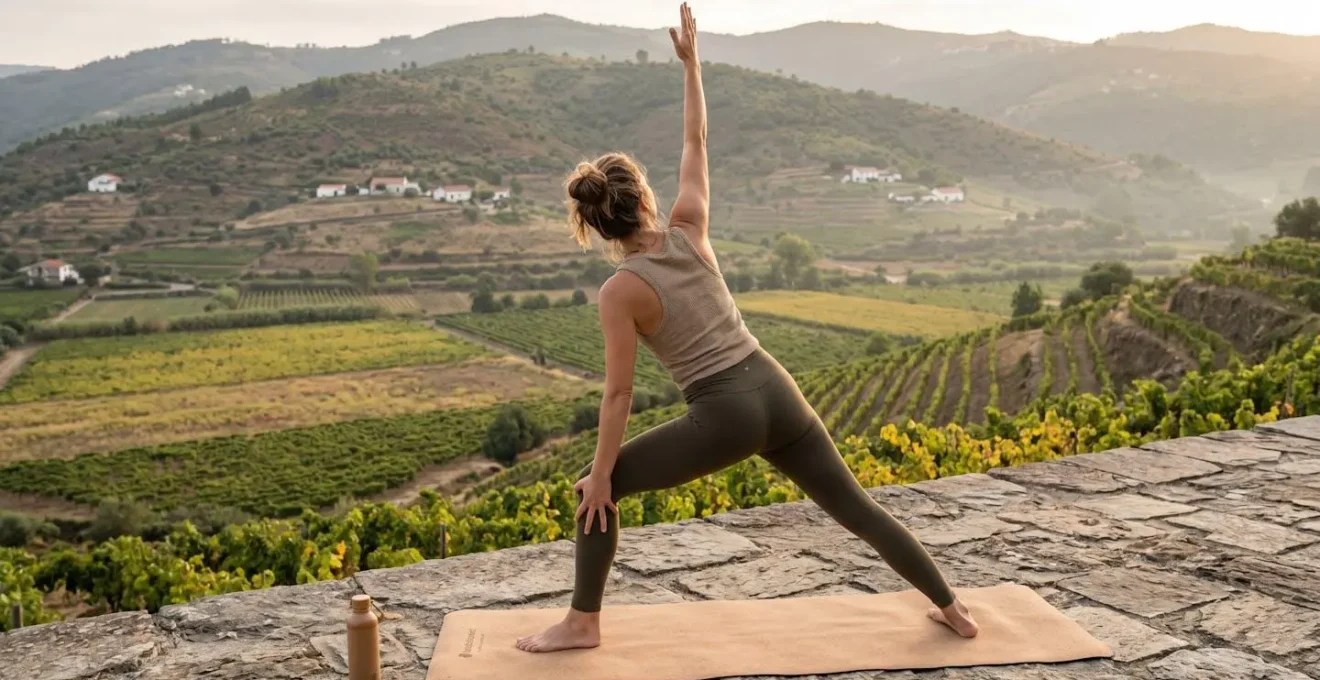
Yoga sessions take place in an outdoor pavilion positioned at the rice field edge, integrating practice with landscape rather than isolating it within a dedicated studio. Morning and evening sessions accommodate different energy levels — active vinyasa flows versus restorative practices. The sauna ritual follows Nordic traditions adapted to Portuguese climate, with outdoor cooling zones that leverage natural air circulation instead of relying exclusively on plunge pools. Massage treatments employ techniques from both Portuguese therapeutic traditions and contemporary wellness protocols. The integration of local olive oil and regional herbs in treatments connects the experience to Alentejo’s agricultural heritage without resorting to invented “ancient rituals” that characterise less scrupulous spa offerings. The wellness infrastructure remains deliberately minimal. The infinity pool serves as much for contemplative floating as exercise swimming. Cycling equipment emphasises exploration over fitness metrics. This restraint prevents the wellness elements from overwhelming the fundamental offering: unstructured time in a landscape that rewards attention.
The gastronomy programme prioritises seasonal availability over menu consistency. Spring brings wild asparagus and fresh peas from nearby cultivators. Summer features tomatoes, peppers, and the stone fruits that thrive in Alentejo heat. Autumn introduces game, mushrooms, and the new olive oil pressing. Winter shifts to root vegetables, citrus, and preserved preparations. This seasonal discipline means menus change substantially throughout the year. The approach frustrates guests seeking specific dishes read about in reviews but rewards those willing to encounter what the region offers at that particular moment. The organic certification extends beyond marketing language — ingredients derive from specified local producers whose farming practices guests can visit during their stay. The cooking style favours Portuguese techniques — charcoal grilling, slow braising, olive oil-based preparations — over contemporary fusion experiments. This isn’t reactionary traditionalism but rather confidence in regional culinary wisdom developed across generations of adaptation to local ingredients and climate.
The location 30 minutes from Comporta’s better-known beaches positions it within cycling range of both coast and interior villages. The surrounding landscape rewards slow exploration — rice field irrigation channels, traditional fishing communities, cork oak forests that supply Portugal’s wine industry. Melides itself maintains agricultural character despite increasing tourism pressure. The weekly market brings regional producers and maintains social patterns that predate the area’s discovery by design-conscious travellers. For visitors interested in understanding how rural Portuguese communities navigate economic change whilst preserving cultural identity, the region provides insight into authentic village life in Portugal beyond heritage preservation exhibits. The beaches themselves range from the increasingly fashionable Comporta strip to quieter stretches requiring local knowledge to access. The Atlantic water remains bracing even in summer — this isn’t Mediterranean bathing temperature. Visitors expecting warm, calm swimming may find the ocean here demanding, though those who appreciate wilder coastal character will recognise the appeal.
- Morning yoga sessions in outdoor pavilion or rice field edge
- Seasonal breakfast with regional produce
- Cycling routes to nearby beaches with equipment provided
- Afternoon pool time or sauna ritual
- Massage treatments requiring advance booking
Planning your visit
Access from Lisbon requires approximately 90 minutes by car, following the A2 motorway south then transitioning to regional roads through Alentejo countryside. Public transport options remain limited — this location suits travellers comfortable with car rental or private transfers rather than those preferring train-based exploration.
The rural setting means genuine darkness at night and insect life that flourishes in rice field ecosystems. Urban dwellers accustomed to sealed, climate-controlled environments may find the integration with landscape more challenging than promotional materials suggest. The property makes no apology for this — the authentic rural experience includes the insects, the frogs, the occasional agricultural noise from neighbouring properties.
Seasonal patterns significantly affect the experience. Spring and autumn offer moderate temperatures ideal for cycling and outdoor yoga. Summer heat can make midday activities uncomfortable, though this aligns with Portuguese rhythms that favour early morning and late evening activity. Winter brings rain and cooler temperatures that shift the experience toward sauna rituals and interior contemplation.
Is this retreat right for your travel style?
- How do you prefer to spend vacation time?
Structured activities and full itineraries: Consider carefully — This property emphasises unstructured time and self-directed exploration rather than programmed schedules.
Flexible days with optional activities: Good fit — Yoga, cycling, and meals provide loose structure with ample free time for reading, walking, or simply observing the landscape.
- What’s your comfort versus authenticity balance?
Luxury amenities essential (television, room service, extensive facilities): Consider carefully — Simplicity philosophy means fewer conventional hotel services and deliberate technological restraint.
Comfortable basics in authentic setting: Good fit — Quality materials and thoughtful design provide comfort whilst maintaining cultural and environmental integration.
- Digital connectivity needs?
Must stay connected for work: Verify current connectivity provisions before booking — Rural location and design philosophy may limit reliable digital access.
Happy to disconnect: Good fit — Rural setting and minimal technology naturally support digital detox without requiring disciplined abstinence.
Booking patterns suggest the accommodation appeals primarily to couples and solo travellers rather than families with young children. The absence of dedicated child facilities and the emphasis on quiet contemplation creates an adult-oriented atmosphere. This isn’t exclusionary policy but natural consequence of design philosophy.
For those whose travel priorities align with cultural depth, architectural integrity, and wellness practices integrated with landscape rather than imposed upon it, this approach differs substantively from mainstream boutique hospitality. The property succeeds or fails based on whether guests value what’s excluded as much as what’s provided — a litmus test that reveals as much about the traveller as the accommodation.
Understanding how to integrate well-being and authentic vacation experiences requires honest assessment of personal preferences rather than aspirational self-image. The property rewards those who genuinely seek simplicity. For travellers who discover they prefer their minimalism aesthetically curated rather than functionally lived, the Comporta region offers alternatives with more conventional luxury positioning.