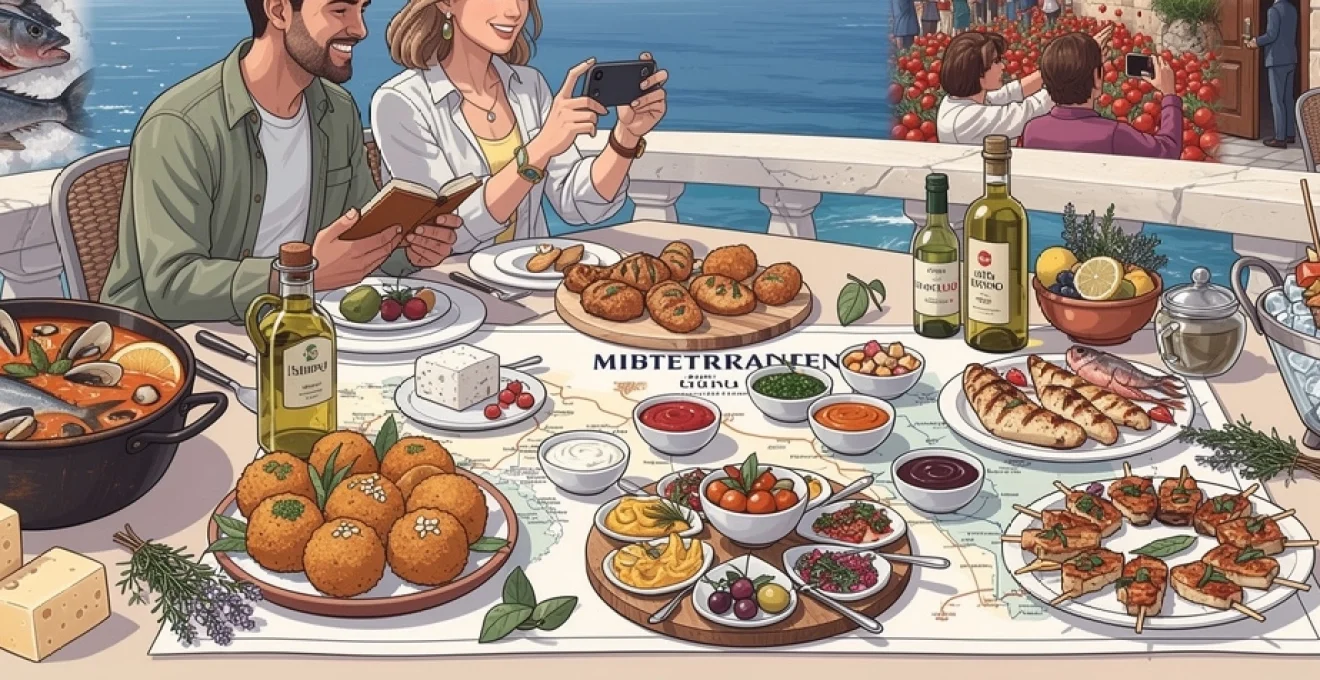
Mediterranean cuisine represents one of the world’s most celebrated culinary traditions, offering an extraordinary tapestry of flavours, techniques, and cultural heritage that spans across multiple continents. From the sun-drenched shores of Greece to the aromatic spice markets of Morocco, this remarkable gastronomic landscape has evolved over millennia, shaped by ancient trade routes, diverse climates, and the passionate dedication of countless generations of home cooks and professional chefs. The Mediterranean basin encompasses not merely a collection of recipes, but rather a complete philosophy of dining that emphasises fresh, seasonal ingredients, communal eating experiences, and the profound connection between food and cultural identity.
Understanding how to navigate this complex culinary terrain whilst travelling requires more than simply knowing which restaurants to visit. It demands an appreciation for regional variations, seasonal considerations, and the intricate protocols that govern authentic Mediterranean dining experiences. Whether you’re seeking the perfect bouillabaisse in Marseille, hunting for the finest olive oil in Kalamata, or mastering the art of ordering mezze in Istanbul, each destination offers unique opportunities to engage with centuries-old traditions that continue to evolve in fascinating ways.
Regional mediterranean culinary traditions and gastronomic heritage
The Mediterranean’s culinary diversity reflects a complex history of cultural exchange, geographical influences, and local innovations that have created distinct regional identities whilst maintaining certain unifying principles. Each area has developed its own interpretation of Mediterranean cooking, influenced by climate, available ingredients, and historical connections with various civilisations that have inhabited these shores.
Provençal bouillabaisse and marseille’s traditional fish markets
Marseille’s iconic bouillabaisse represents perhaps the most sophisticated expression of Mediterranean seafood cookery, requiring precise technique and an understanding of local fish varieties that many visitors overlook. This legendary dish originated as a humble fisherman’s stew but has evolved into a refined culinary art form governed by strict protocols established by the Marseille Bouillabaisse Charter. The authentic preparation involves at least four different types of Mediterranean rock fish, including rascasse, saint-pierre, and baudroie, each contributing specific flavours and textures to the final dish.
Visiting Marseille’s traditional fish markets, particularly the morning auctions at the Quai des Belges, provides essential insight into the seasonal rhythms that govern Provençal cuisine. The market vendors possess encyclopaedic knowledge about which fish are at their peak during different months, and they can guide you towards the specimens that will yield the most flavourful results. Understanding these seasonal patterns enhances your ability to identify restaurants that source their ingredients properly and respect traditional preparation methods.
Sicilian arancini variations across palermo and catania
Sicily’s beloved arancini demonstrate how a single dish can reflect profound regional variations within relatively small geographical boundaries. Palermo’s arancini typically feature a spherical shape stuffed with ragù, peas, and mozzarella, whilst Catania favours cone-shaped versions filled with ricotta and spinach or butter and ham. These differences aren’t merely aesthetic preferences but reflect distinct cultural influences and local ingredient availability that have shaped each city’s culinary identity over centuries.
The preparation techniques for authentic arancini require specific rice varieties, typically Carnaroli or Arborio, and a precise understanding of how to achieve the ideal texture balance between the creamy interior risotto and the crispy exterior coating. Professional Sicilian cooks emphasise the importance of allowing the risotto base to cool completely before shaping, and many establishments prepare their arancini early in the morning to achieve optimal texture by lunch service. Observing these preparation methods in traditional friggitorie provides invaluable insight into the craftsmanship behind this seemingly simple street food.
Greek mezze culture in santorini tavernas and mykonos ouzeries
Greek mezze culture embodies the Mediterranean philosophy of leisurely, communal dining more completely than perhaps any other regional tradition. In Santorini’s traditional tavernas and Mykonos’s authentic ouzeries, mezze service follows specific protocols that enhance both the social experience and the gastronomic journey. The progression typically begins with lighter, cooler dishes such as tzatziki, dolmades, and Greek salads, gradually building towards heartier preparations like grilled octopus, lamb
lamb chops, or slow-braised kokkinisto. Ouzo or local white wines, such as Assyrtiko in Santorini, are traditionally sipped slowly alongside these dishes, emphasising conversation and connection over speed.
In Santorini’s cliffside tavernas, you’ll often find mezze built around the island’s volcanic produce: fava purée made from yellow split peas, cherry tomatoes preserved in oil, and caper leaves dressed with extra virgin olive oil and lemon. In Mykonos’s ouzeries, the focus may shift more towards seafood mezzes like marinated anchovies, fried gavros, and grilled squid, designed to complement the licorice notes of ouzo. As a traveller, you can signal your understanding of this culture by ordering several dishes to share rather than individual mains, and by pacing yourself; mezze is less a sequence of courses than a flowing conversation of flavours that can last for hours.
Turkish meze protocols in istanbul’s beyoğlu district
In Istanbul’s Beyoğlu district, particularly around Çiçek Pasajı and Nevizade Sokak, Turkish meze follows a semi-formal protocol that seasoned diners recognise instantly. Even before you order, a waiter may present a large tray or enter with a glass-fronted trolley displaying cold meze options: haydari (strained yoghurt with herbs), patlıcan salatası (smoky aubergine), şakşuka (fried vegetables in tomato sauce), and various bean salads. The expectation is that you will choose several small plates to begin, typically accompanied by rakı, Turkey’s anise-flavoured spirit diluted with water.
Hot meze, such as sigara böreği (cheese-filled filo pastry), grilled sucuk (spiced sausage), and kalamar tava (fried calamari), usually follows once the cold dishes have been sampled. Unlike Western appetisers, meze is not simply a prelude to the “main” but can constitute the entire meal if you wish. To avoid ordering too much, ask the server for guidance on portion sizes and customary combinations; they are often delighted to curate a balanced selection that progresses from lighter to richer dishes, mirroring the rhythm of a traditional Beyoğlu evening.
Spanish tapas evolution from andalusian chiringuitos to basque pintxos
Spanish tapas culture has evolved significantly from its Andalusian origins in simple chiringuitos (beach bars) to the elaborate pintxos culture of the Basque Country. In coastal Andalusia, traditional tapas might include boquerones fritos (fried anchovies), tortilla española, and simple montaditos (small sandwiches), often offered free or at a nominal cost with each drink. The emphasis remains on informality: locals move from bar to bar, ordering one or two tapas and a small beer or sherry in each establishment.
In contrast, Basque pintxos in cities like San Sebastián and Bilbao represent a more structured and visually striking evolution. Here, intricately composed bites are displayed across the bar, skewered with toothpicks that traditionally helped tally your final bill. Modern pintxos bars now often emphasise made-to-order hot specialties, with blackboards listing seasonal creations such as grilled prawns with garlic foam or slow-cooked beef cheeks on creamy potato purée. When travelling, you’ll gain the most from this culture by embracing the local habit of txikiteo—a self-guided “crawl” where you sample one or two pintxos in each bar rather than settling in one place all evening.
Essential mediterranean ingredients and authentic sourcing locations
Exploring Mediterranean cuisine while travelling is not only about restaurant meals; it also involves understanding the ingredients that underpin the region’s most emblematic dishes. Visiting markets, co-operatives, and small producers helps you trace ingredients back to their source and appreciate how terroir, climate, and traditional practices shape flavour. By learning where and how to purchase authentic products, you can recreate some of these experiences in your own kitchen long after your journey ends.
Extra virgin olive oil terroir from kalamata and ligurian groves
Extra virgin olive oil forms the backbone of Mediterranean cooking, yet its characteristics can vary dramatically from one region to another. In Greece’s Kalamata region, olive groves benefit from intense summer heat and mild winters, producing an oil with pronounced fruitiness, peppery notes, and a deep green hue. Many local producers still harvest by hand and press their olives within hours, a key factor in achieving low acidity and high polyphenol content—both crucial quality indicators.
By contrast, Ligurian olive oil from Italy’s terraced coastal groves tends to be lighter and more delicate, reflecting the cooler maritime climate and different cultivars such as Taggiasca. This subtle, almost sweet oil pairs particularly well with fish and pesto alla Genovese, where a more aggressive oil could overwhelm the basil and pine nuts. When visiting these regions, look for small mills and cooperatives that offer guided tastings; sampling oils side by side, much like wine, reveals nuances of bitterness, fruitiness, and spiciness that you might otherwise miss.
DOP cheese varieties: parmigiano reggiano, feta pdo, and manchego curado
Protected Designation of Origin (PDO/DOP) cheeses provide a reliable way to access authentic Mediterranean flavours rooted in specific landscapes and traditions. Parmigiano Reggiano DOP, produced in limited provinces of Emilia-Romagna and Lombardy, must follow strict ageing and production criteria, resulting in complex flavours of toasted nuts, broth, and pineapple. Visiting a caseificio (cheese dairy) in the Parma region allows you to see the vast ageing rooms and understand why minimum maturation of 12–24 months is essential.
Feta PDO, legally restricted to Greece, is made primarily from sheep’s milk with the possible addition of goat’s milk. The salty, tangy profile varies between regions such as Epirus, Thessaly, and the Peloponnese, where variations in pasture plants subtly influence the flavour of the milk. In Spain’s La Mancha, Manchego Curado PDO showcases the potential of sheep’s milk in a different way, delivering nutty, caramelised notes after several months of ageing. When you’re travelling, buying these cheeses directly from farm shops or local markets not only ensures freshness but also supports producers who maintain age-old practices.
Wild mediterranean herbs: oregano rigani, thyme thymus, and rosmarinus officinalis
Wild herbs are to Mediterranean cooking what a soundtrack is to cinema: often subtle, yet essential to the overall impact. Greek rigani (wild oregano) harvested from rocky hillsides has an intensity that bears little resemblance to supermarket oregano, with concentrated essential oils that stand up to high-heat grilling and strong cheeses. Many Greek islanders still dry their oregano in shaded courtyards, preserving colour and aroma without harsh sunlight.
Similarly, wild thyme and rosemary—Thymus vulgaris and Rosmarinus officinalis—thrive in poor, stony soils along the coasts of Provence, Catalonia, and the Dalmatian islands. Their essential oils are richer when plants endure stress from sun and wind, a botanical paradox that travellers can taste in a simple grilled sea bream or lamb shoulder. Market stalls across the Mediterranean often sell bundles of herbs tied with string; choosing those that retain vibrant colour and release a pronounced aroma when rubbed between your fingers is a simple way to ensure quality.
Seafood seasonality and local catch protocols in coastal markets
Understanding seafood seasonality is fundamental if you want your Mediterranean dining experiences to align with both flavour and sustainability. Coastal markets from Marseille’s Vieux-Port to Barcelona’s Mercat de la Boqueria operate according to rhythms dictated by spawning periods, migration patterns, and local regulations. For example, bluefin tuna season in southern Spain’s Cádiz province typically peaks in late spring during the almadraba harvest, when fishermen use age-old trapping techniques along the Strait of Gibraltar.
As a traveller, you can look for signs that a restaurant respects these cycles: menus that change frequently, daily chalkboards listing the “catch of the day,” and servers who can explain where and how a fish was caught. Many Mediterranean countries now publish guidelines or certification schemes for sustainable seafood; asking simple questions about origin and method of capture signals to restaurateurs that visitors value responsible practices. In practical terms, this can mean choosing sardines, mackerel, or local shellfish in season rather than out-of-season species flown in from distant waters.
Strategic culinary tourism planning and restaurant selection methodologies
Travelling for food in the Mediterranean can easily become overwhelming given the sheer volume of options, from humble harbour-side shacks to three-Michelin-star institutions. Strategic planning helps you balance spontaneity with targeted experiences, ensuring that you enjoy both headline restaurants and lesser-known gems. By combining guidebook resources, local recommendations, and on-the-ground observation, you can build a dining itinerary that reflects your interests and budget while avoiding common tourist traps.
Michelin guide navigation for mediterranean establishments
The Michelin Guide, long associated with fine dining in France, now covers much of the Mediterranean and offers a useful framework for evaluating higher-end restaurants. Stars indicate exceptional cuisine, but for many culinary travellers, the Bib Gourmand category—highlighting establishments that offer good quality at reasonable prices—can be even more valuable. In cities like Barcelona, Athens, and Istanbul, Bib Gourmand listings often point towards modern bistros and neo-tavernas where chefs reinterpret local ingredients with creativity but without excessive formality.
When using the Michelin Guide, it’s wise to cross-reference reviews with local blogs, reservation platforms, and social media to gauge current performance; chefs change, concepts evolve, and a star awarded three years ago may not reflect today’s reality. Booking well in advance is recommended for popular venues, particularly in peak seasons from May to September. However, leaving a few evenings unplanned allows room for serendipity—perhaps inspired by a conversation with a market vendor or your hotel receptionist’s personal favourite spot.
Local food festival calendars: sagra del tartufo and festa de la tomatina
Aligning your travel dates with local food festivals can dramatically enrich your Mediterranean culinary experience. In Italy, regional feste and sgre celebrate ingredients at their seasonal peak, such as the Sagra del Tartufo in Umbria and Piedmont, where entire villages dedicate weekends to truffle-themed menus, tastings, and markets. These events offer rare opportunities to sample dishes that rarely appear on standard restaurant menus and to purchase high-value products directly from hunters and foragers.
In Spain, festivals like La Tomatina in Buñol, while famous for their exuberant tomato-throwing, also highlight the cultural importance of local produce through associated markets and communal meals. Checking municipal tourism websites or regional event calendars before you finalise flights can help you build your itinerary around such celebrations. The trade-off, of course, is increased crowds and higher accommodation prices, so booking early and staying in nearby but less touristy towns can help manage costs while keeping you close to the action.
Osteria and taverna identification techniques in rural villages
Outside major cities, some of the most memorable Mediterranean meals are found in modest osterie, tavernas, and ventas tucked away on side streets or village squares. How can you identify promising spots when online reviews are sparse or non-existent? One useful indicator is the clientele: venues filled with locals, particularly multi-generational families, usually signal honest cooking and fair pricing. Another is the menu format; hand-written boards or short, seasonal lists often reflect a kitchen that cooks what is fresh and available rather than relying on frozen stock.
Visual cues such as a charcoal grill in use, baskets of seasonal vegetables near the entrance, or a shelf of house-preserved olives and pickles also point towards a commitment to traditional methods. When in doubt, don’t hesitate to ask in a bakery, pharmacy, or small grocery for recommendations; residents are often proud to direct you to their favourite spot. Approaching rural dining with a degree of flexibility—accepting that the advertised opening time may be approximate and card payments not always possible—will help you enjoy these experiences as they are intended.
Chef-driven establishments versus traditional family-run trattorias
Across the Mediterranean, you’ll encounter both chef-driven restaurants showcasing contemporary techniques and family-run trattorias preserving culinary heritage. Each offers distinct advantages. Chef-driven establishments, often helmed by cooks with international experience, may experiment with tasting menus, unusual ingredient pairings, and refined plating. These venues can be ideal when you want to see how Mediterranean flavours intersect with global trends or when celebrating a special occasion.
Traditional trattorias and tavernas, by contrast, tend to prioritise consistency and comfort over innovation, focusing on a shorter repertoire of time-tested dishes. In many cases, recipes have been passed down within the same family for generations, providing a living link to past eras. A balanced culinary itinerary might therefore include a mix of both types: perhaps one or two high-end meals punctuating a week of more rustic dining. When choosing between them, consider your goals: are you seeking to be surprised, or to taste canonical versions of classic dishes?
Hands-on culinary experiences and professional cooking workshops
Participating in cooking classes and workshops while travelling allows you to convert fleeting restaurant experiences into lasting skills. Throughout the Mediterranean, professional chefs, home cooks, and agriturismo owners offer classes ranging from two-hour pasta sessions to multi-day immersive programs. These experiences often begin with a visit to a local market or garden, where you learn how to select ingredients and understand their seasonality—a crucial foundation for authentic Mediterranean cooking.
In Italy, for example, farmhouse kitchens in Tuscany or Puglia frequently run small-group classes where you make fresh egg pasta, gnocchi, or focaccia under the guidance of a nonna who has spent decades perfecting her technique. On Greek islands like Crete or Naxos, workshops might focus on filo pastry, stuffed vegetables, or slow-cooked stews enriched with local olive oil and wild herbs. In Morocco and Turkey, tagine and kebab classes often incorporate spice-blending sessions, helping you decode the complex aromas that define these cuisines.
When choosing a cooking class, look for small group sizes (ideally no more than eight participants), clear descriptions of what you will cook, and a focus on regional specialities rather than generic “Mediterranean” menus. Reviews that mention hands-on participation, rather than mere demonstration, are particularly valuable. Besides equipping you with recipes and techniques, these classes often provide cultural context—stories about family traditions, feast days, and local superstitions—that deepen your appreciation for the dishes you encounter throughout your trip.
Wine pairing protocols and regional viticulture exploration
Wine is inseparable from Mediterranean dining culture, and understanding basic pairing principles can elevate your meals from enjoyable to extraordinary. Each sub-region has developed grape varieties and styles that naturally complement its local cuisine: think crisp Assyrtiko with grilled fish in Santorini, structured Nebbiolo with rich braises in Piedmont, or aromatic Grenache blends with herb-laden dishes in Provence. Rather than memorising complex rules, you can think of pairing as matching the “weight” and personality of the wine to the food, much like choosing the right soundtrack for a film scene.
Visiting vineyards and cellars offers a direct route into this world. In Spain’s Rioja and Priorat, Portugal’s Douro Valley, and Croatia’s Pelješac Peninsula, many wineries now welcome visitors with guided tastings and tours of their facilities. These visits often reveal how altitude, soil type, and proximity to the sea shape a wine’s acidity, minerality, and aromatic profile. Asking winemakers which of their local dishes they most enjoy with particular bottlings is an excellent way to gather insider pairing tips that go beyond generic guidelines.
For travellers keen to integrate wine more deliberately into their culinary itinerary, it can be helpful to plan at least one dedicated vineyard day per region, leaving room for leisurely tastings without the pressure of long drives or strict schedules. When dining out, don’t hesitate to order wine by the glass to sample a wider range, or to ask the sommelier for a recommendation based on what you’ve chosen to eat. In many Mediterranean establishments, staff take pride in suggesting local, often lesser-known labels that align with both your budget and your curiosity.
Cultural dining etiquette and mediterranean meal structure protocols
Finally, navigating Mediterranean cuisine as a traveller involves more than choosing dishes; it also requires sensitivity to local dining etiquette and meal structures. In much of Southern Europe, for instance, lunch remains the main meal of the day, and dinner is served later than many visitors expect—often not before 20:30 or 21:00. Arriving too early may find you in a half-empty dining room, whereas aligning your schedule with local norms allows you to experience the full social atmosphere, from multi-generational families to groups of friends lingering over dessert and digestifs.
Table customs vary, but some principles are broadly shared. Bread, when provided, is usually intended to accompany the meal rather than as a pre-dinner snack; using it to mop up sauces at the end of a course is widely accepted and even appreciated in many places. In Greece and Turkey, it is common to keep plates on the table and share dishes communally, while in France and parts of Italy, courses may be more individually plated and sequenced. Observing how locals interact with servers, pour wine, or divide shared plates offers quick cues you can mirror to blend in respectfully.
Payment etiquette can also differ from what you might be used to. In many Mediterranean countries, splitting bills item by item is less common; groups often total the amount and divide it equally. Tipping practices are generally modest compared with North America: service is often included, and leaving 5–10% or rounding up is usually sufficient for good service, though high-end venues may warrant more. By approaching these protocols with curiosity rather than anxiety, you’ll find that dining becomes not only a way to taste Mediterranean cuisine, but also a means to participate, however briefly, in the region’s enduring culture of hospitality and shared pleasure at the table.