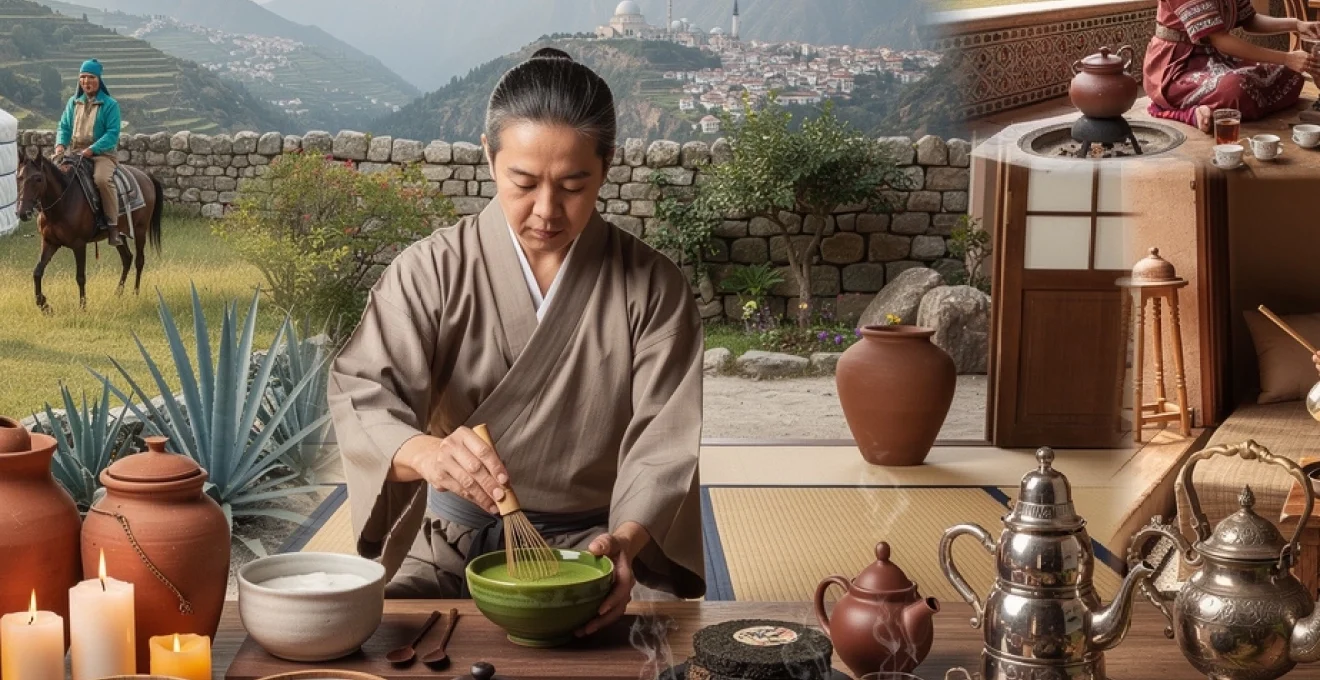
From the misty highlands of Ethiopia where honey wine flows like liquid gold to the bustling tea houses of Istanbul where centuries-old brewing rituals continue unchanged, traditional beverages represent far more than simple refreshment. These liquid ambassadors carry the essence of their cultures, embodying agricultural practices, ceremonial significance, and social customs that have been refined over millennia. Each sip tells a story of climate, geography, and human ingenuity, revealing how communities have transformed local ingredients into beverages that define their identity and foster connection across generations.
The world’s traditional drinks showcase humanity’s remarkable ability to create complex flavours from simple ingredients. Whether it’s the delicate balance achieved in a perfect Turkish tea or the robust complexity of fermented mare’s milk from Central Asian steppes, these beverages demonstrate sophisticated understanding of fermentation, distillation, and brewing techniques developed long before modern science explained the processes involved. Today’s craft beverage renaissance owes much to these time-tested traditions that continue to influence contemporary drinking culture worldwide.
Ancient fermented beverages and their cultural significance
Fermentation represents one of humanity’s oldest biotechnological innovations, transforming simple sugars into complex alcoholic beverages that have shaped civilisations. Archaeological evidence suggests that fermented beverages predated bread in many cultures, highlighting their fundamental importance in human development. These ancient drinks served multiple purposes: preserving nutrients, providing safer alternatives to contaminated water, facilitating social bonding, and enabling spiritual communion. The fermentation process itself was often viewed as magical transformation, leading to the association of many traditional fermented drinks with religious ceremonies and cultural celebrations.
Tej from ethiopia’s highland regions and traditional brewing methods
Ethiopia’s ancient honey wine, tej, represents one of the world’s oldest continuously produced alcoholic beverages, with production methods largely unchanged for over 3,000 years. This golden elixir combines wild honey with water and gesho (Rhamnus prinoides), a bittering agent that provides antimicrobial properties while contributing distinctive flavours. Traditional tej makers, known as tej bet proprietors, guard their family recipes closely, with each establishment developing unique characteristics based on honey sources, fermentation vessels, and timing.
The brewing process begins with diluting honey in clay vessels called mukecha, which are specially prepared with smoking techniques that impart subtle flavours while sterilising the containers. Gesho twigs are added to initiate fermentation, creating a complex ecosystem of wild yeasts and bacteria that transforms the mixture over 15-30 days. The resulting beverage ranges from 7-11% alcohol by volume, with sweetness levels varying according to honey-to-water ratios and fermentation duration.
Authentic tej experiences await visitors in Addis Ababa’s traditional tej bet establishments, where the drink is served in bulbous glass vessels called berele. The Yod Abyssinia Cultural Restaurant offers exceptional tej alongside traditional Ethiopian cuisine, while smaller neighbourhood establishments provide intimate settings for experiencing this cultural cornerstone. Highland regions like Lalibela and Gondar offer opportunities to witness traditional tej production methods firsthand, with some monasteries maintaining centuries-old brewing traditions.
Kumys production in kazakhstan’s nomadic communities
Central Asia’s fermented mare’s milk, known as kumys in Kazakhstan and airag in Mongolia, exemplifies the ingenuity of nomadic cultures in creating nutritious beverages from available resources. This slightly alcoholic drink contains 1-3% alcohol alongside probiotics, vitamins, and proteins essential for nomadic lifestyles. The fermentation process requires constant agitation, traditionally achieved by suspending leather bags from horse saddles during daily travels, allowing natural movement to churn the developing beverage.
Modern kumys production maintains traditional methods while adapting to contemporary hygiene standards. Fresh mare’s milk is combined with starter culture from previous batches, then fermented in leather bags or wooden churns for 12-24 hours. The continuous agitation prevents separation while encouraging beneficial bacterial growth, creating a slightly carbonated, tangy beverage with distinctive equine milk characteristics. Kumys production peaks during spring and summer months when mares are lactating, making seasonal availability part of its cultural significance.
<p
Travellers interested in tasting authentic kumys should head to regions such as Almaty, Karaganda and the rolling pastures around Nursultan, where roadside yurts and family-run farms serve freshly fermented mare’s milk during the warmer months. In places like the ethno-village complexes near Almaty, you can observe the entire kumys production process, from milking the mares to the rhythmic shaking of leather bags. As with many traditional fermented beverages, hygiene and freshness are crucial, so it’s wise to seek recommendations from local guides or hosts when choosing where to try your first glass.
Pulque ceremonial preparation in tlaxcala and hidalgo states
Long before tequila and mezcal became Mexico’s global ambassadors, pulque reigned as the sacred drink of central Mexican civilisations. Made from the fermented sap of the maguey (agave) plant, pulque has been consumed for at least 2,000 years and featured prominently in Aztec religious rituals honouring fertility deities. Its production remains deeply rooted in rural communities, particularly in Tlaxcala and Hidalgo states, where traditional tinacal (pulque houses) still follow ancestral methods.
The process begins with carefully selecting mature maguey plants, often 8–12 years old, whose hearts are scraped to create a reservoir for collecting sap, known as aguamiel. This sweet liquid is harvested daily and transferred to large fermentation vats, where natural airborne yeasts and bacteria rapidly transform it into a slightly viscous, mildly alcoholic beverage within 12–24 hours. Because pulque spoils quickly, it is rarely exported, reinforcing its status as a hyper-local traditional drink best experienced at the source.
In Tlaxcala and Hidalgo, pulque retains ceremonial significance, frequently served during community festivals, weddings and agricultural celebrations. Traditional pulquerías often feature colourful murals, long communal tables and an atmosphere that encourages conversation across generations. Visitors can sample natural pulque or flavoured variations called curados, made with ingredients like oat, guava or celery. Guided pulque routes around towns such as Nanacamilpa and Apan offer opportunities to visit maguey fields, observe tapping techniques and appreciate how this ancient fermented beverage remains intertwined with regional identity.
Chicha de jora fermentation techniques in peru’s sacred valley
In the Andean highlands of Peru, chicha de jora functions as both everyday refreshment and ritual offering, continuing Inca-era traditions of maize fermentation. This cloudy, mildly sour beverage is crafted from germinated maize, typically a special variety of yellow corn known as jora, which is malted in a process similar to that used in early European beer production. For centuries, chicha has played a central role in communal labour exchanges, agricultural rites and social gatherings throughout the Sacred Valley.
The traditional method begins with soaking maize kernels until they sprout, converting starches into fermentable sugars. The sprouted grains are then dried in the mountain sun and ground into flour, which is boiled with water in large clay or metal pots over wood fires. Once cooled to a specific temperature judged by touch—a skill passed down through generations—the liquid is transferred to fermentation vessels, often enormous clay jars called aryballos. Wild yeasts initiate fermentation, which typically lasts 2–4 days depending on ambient temperature, producing a drink with 1–3% alcohol and a distinctive grainy aroma.
Authentic chicha houses, known as chicherías, are still common in Sacred Valley towns such as Pisac, Chinchero and Ollantaytambo. Locals identify them by a red plastic bag or flag hanging outside, a centuries-old sign that fresh chicha is available. Inside, you can sip the beverage from traditional potos (ceramic bowls) while observing production equipment and, in some cases, guinea pigs scurrying near the hearth—a reminder of the household-based nature of this craft. For a deeper cultural experience, time your visit to coincide with agricultural festivals, when chicha de jora is poured as an offering to Pachamama (Mother Earth) before fields are planted or harvested.
Tea culture and regional brewing traditions
Tea, in its many forms, stands among the most widely consumed traditional drinks on the planet, second only to water. Yet what we casually refer to as “a cup of tea” encompasses an extraordinary diversity of preparation methods, serving rituals and social meanings. From the contemplative precision of Japanese tea ceremony to the bustling energy of Moroccan mint tea stalls, each culture has refined its own way of coaxing flavours from the same humble leaves. Understanding these tea traditions offers a fascinating lens into regional philosophies of hospitality, time and aesthetic beauty.
Matcha ceremony protocols at kyoto’s urasenke tea school
In Japan, tea is elevated to a performing art through the chanoyu, or Japanese tea ceremony, with Kyoto’s Urasenke school recognised as one of the most influential institutions preserving this tradition. At the heart of the ceremony is matcha, a finely ground powdered green tea whisked with hot water in a series of deliberate, codified movements. Rather than focusing solely on the beverage, Urasenke protocol emphasises harmony, respect, purity and tranquillity—principles that guide everything from guest seating to how the tea bowl is rotated before drinking.
During a formal Urasenke-style ceremony, the host follows a choreographed sequence: cleansing utensils, measuring matcha with a bamboo scoop (chashaku), adding water at precisely controlled temperatures and whisking with a bamboo whisk (chasen) to create a smooth, frothy surface. Even the selection of tea bowl, hanging scroll and seasonal sweets is intentional, designed to create a particular emotional atmosphere. For visitors, watching this ritual can feel like observing a living museum piece, yet the experience remains warmly human, grounded in the simple act of sharing a drink.
To experience authentic Urasenke matcha ceremony protocols, Kyoto offers several accessible venues. The official Urasenke headquarters periodically opens its doors to international guests through introductory sessions, while affiliated tea rooms in districts such as Gion and Nishijin provide shorter demonstrations adapted for travellers. When booking, look for experiences that specify Urasenke lineage or instruction, as this ensures adherence to traditional etiquette and brewing standards. You do not need to memorise every rule in advance; a willingness to observe, imitate and show appreciation will help you navigate the ceremony with ease.
Pu-erh aged tea authentication in yunnan province
China’s Yunnan Province is home to one of the world’s most complex and storied traditional drinks: pu-erh tea. Unlike most teas that are best enjoyed fresh, pu-erh is intentionally aged, developing deeper flavours and higher value over years or even decades. High-quality pu-erh is made from large-leaf Camellia sinensis varieties grown on ancient tea trees in regions such as Xishuangbanna and Lincang, then processed into compressed cakes or bricks that undergo slow microbial transformation. As the market has grown, so too has the challenge of authenticating genuine aged pu-erh.
Authentic pu-erh production follows carefully controlled steps: withering, pan-firing, rolling, sun-drying and, for raw (sheng) pu-erh, compression into shapes like discs or nests. Over time, naturally occurring microbes within the tea continue to act on residual moisture and compounds, much like ageing cheese or wine. This gradual transformation is why connoisseurs describe vintages, storage conditions and terroir when discussing pu-erh. However, the very qualities that make pu-erh collectible—age, origin and rarity—have led to widespread counterfeiting, making authentication an essential skill for serious tea enthusiasts.
When visiting Yunnan’s tea markets in cities such as Menghai or Pu’er, you will encounter a dizzying range of cakes with handwritten wrappers, factory stamps and claims of decades-long ageing. Reputable merchants will provide details about harvest year, mountain origin and storage conditions, often allowing side-by-side tastings to compare aroma, mouthfeel and aftertaste. Genuine aged pu-erh tends to produce a clear, reddish-gold liquor with layered, evolving flavours rather than harsh bitterness or muddiness. If you’re considering purchasing pu-erh as an investment, working with established vendors, checking for government quality seals and starting with smaller quantities can help you build both your palate and your confidence.
Turkish çay preparation techniques using traditional çaydanlık
In Turkey, black tea—or çay—is a cornerstone of daily life, served in tiny tulip-shaped glasses from sunrise to well past midnight. Unlike many Western brewing methods, Turkish tea is prepared using a double-stacked kettle called a çaydanlık, allowing drinkers to adjust strength to their preference. The upper pot holds concentrated tea infusion, while the lower pot contains boiling water used both to keep steam circulating and to dilute the brew. This simple yet ingenious system reflects a cultural preference for lingering conversations, where you can top up and customise your cup throughout the gathering.
The preparation begins by filling the lower kettle with water and bringing it to a boil, then adding loose tea leaves—typically from Turkey’s Black Sea region—to the upper pot along with a portion of hot water. As the water in the lower pot continues to simmer, gentle steam heats the upper pot, allowing the tea to infuse slowly without turning overly bitter. When serving, hosts pour a small amount of the strong concentrate into each glass and top it up with hot water, asking whether you prefer your çay “light” (açık) or “dark” (demli). Sugar cubes are offered, but milk is almost never added.
To experience authentic çay preparation techniques, head to Istanbul’s historic tea gardens in districts like Üsküdar or Eminönü, where waiters deftly navigate crowded terraces balancing trays of steaming glasses. You will also find traditional tea houses in smaller Black Sea towns such as Rize and Trabzon, often filled with locals playing backgammon and discussing politics. While modern electric samovars are increasingly common, establishments that still use classic metal çaydanlık over gas or charcoal stoves provide the most atmospheric introduction to Turkey’s tea culture. Taking time to simply sit, sip and observe is as important as the tea itself.
Moroccan mint tea ritual in fez medina establishments
Known poetically as “Moroccan whisky,” mint tea (atay) is the social glue of Morocco, offered to guests as a near-obligatory gesture of hospitality. This fragrant drink typically combines Chinese green tea, large handfuls of fresh spearmint and generous amounts of sugar, brewed and served in an elaborate ritual that varies slightly by region. In Fez’s labyrinthine medina, traditional tea houses and riads continue to honour time-honoured preparation techniques that turn a simple beverage into a performance of welcome.
The ritual usually begins with rinsing the green tea leaves in hot water to remove bitterness, then brewing them in a metal teapot alongside a fresh charge of boiling water. Sprigs of mint and sugar—often more than visitors expect—are added, and the mixture is allowed to steep briefly. The most recognisable part of the ceremony comes when the host pours the tea from a height into small decorated glasses, aerating the liquid and creating a delicate foam on top. This high-pour technique also serves as a test: the first glass is often poured back into the pot to help mix flavours evenly.
In Fez, you can experience authentic mint tea rituals in traditional establishments around the Nejjarine Square and along the terraces overlooking the tanneries, as well as in restored riads that welcome non-resident guests for tea. Many venues will happily demonstrate their method if you show interest, explaining why they choose specific mint varieties or adjust sugar levels for different seasons. If you’re keen to recreate Moroccan mint tea at home, consider purchasing a classic hammered-metal teapot and tea glasses from the medina; beyond their decorative value, they help you replicate both the flavour and the theatre of this beloved traditional drink.
Coffee heritage and preparation methodologies
While coffee today fuels global cities and remote co-working spaces alike, its roots lie in intimate, ritualised preparations that still reveal much about local priorities and social structures. Traditional coffee drinks around the world showcase an astonishing range of techniques: beans roasted over open flames, grounds simmered in long-handled pots, condensed milk poured into phin filters and espresso shots cut with sugar. By tracing coffee back to these heritage methods, we gain a deeper appreciation for what might otherwise seem like a simple morning habit.
Ethiopian coffee ceremony in kaffa province villages
Ethiopia, widely regarded as coffee’s birthplace, preserves one of the most elaborate and meaningful coffee traditions through its ceremonial preparation, particularly in regions such as Kaffa Province. Far from a quick caffeine fix, the Ethiopian coffee ceremony can last several hours and is often performed three times a day, marking key social moments within the household or community. Green coffee beans are roasted, ground and brewed in full view of guests, who participate not only as drinkers but as witnesses to a shared cultural performance.
The ceremony typically unfolds on a floor strewn with fresh grass or aromatic flowers, symbolising renewal. The host—often the woman of the house—washes green coffee beans before roasting them in a flat pan over charcoal, fanning the smoke towards guests so they can appreciate the evolving aroma. Once the beans reach a glossy, dark roast, they are ground by hand using a mortar and pestle and added to a black clay pot called a jebena, where they are simmered with water until foam rises through the spout. The resulting coffee is poured in three successive rounds—abol, tona and baraka—each slightly weaker but carrying its own symbolic weight.
To experience an authentic Ethiopian coffee ceremony in Kaffa, consider staying in community-based lodges or eco-tourism projects that partner with local villages. Many homes welcome visitors to observe and participate, often serving popcorn or roasted barley alongside the coffee. Urban cafés in Addis Ababa also offer abbreviated versions, but the slower pace of rural ceremonies better reflects coffee’s deep social role as a vehicle for conversation, reconciliation and blessing. If you are invited to a ceremony, arriving on time and staying for all three rounds is considered a sign of respect.
Turkish coffee brewing standards at istanbul’s historic mehmet efendi
Turkish coffee, with its thick texture and intense flavour, remains a hallmark of Ottoman culinary heritage and is recognised by UNESCO as an intangible cultural heritage of humanity. One of the most influential names in its modern history is Kurukahveci Mehmet Efendi, an Istanbul-based roaster founded in 1871 that helped popularise pre-ground, packaged Turkish coffee. Today, the brand’s historic shop in the Spice Bazaar district still draws queues of locals and visitors, its air thick with the aroma of freshly roasted beans.
Brewing Turkish coffee to traditional standards involves more than simply boiling grounds. Finely ground coffee—closer to powder than typical espresso grinds—is combined with cold water and sugar (if desired) in a long-handled copper pot called a cezve. The mixture is heated slowly, often over a sand-filled brazier that distributes heat evenly, until a dark foam begins to rise. At this crucial moment, skilled brewers lift the cezve to prevent boiling, preserving the foam that is considered a sign of quality. The coffee is then poured into small cups in such a way that each receives an equal share of the foam, and it is left to rest briefly so the grounds can settle at the bottom.
At Mehmet Efendi’s flagship in Istanbul, you can purchase freshly ground beans optimised for this method and watch experienced staff demonstrate correct preparation techniques. Nearby cafés, particularly those around the historic Süleymaniye Mosque and Karaköy districts, serve exemplary Turkish coffee made to exacting standards, often accompanied by a piece of Turkish delight. When ordering, you specify your sugar level—no sugar (sade), a little (az şekerli), medium (orta) or sweet (şekerli)—as it is added during brewing rather than after. Be prepared to leave the sediment undisturbed in the cup; some places even offer traditional fortune-telling based on the patterns left by the grounds.
Vietnamese egg coffee crafting at hanoi’s café giang
Among the many creative responses to scarcity in culinary history, Vietnam’s cà phê trứng—egg coffee—stands out as both resourceful and delicious. Developed in Hanoi during the 1940s when fresh milk was hard to obtain, this drink replaces dairy with a creamy mixture of egg yolk and sweetened condensed milk, whipped to a custard-like froth and layered over strong coffee. The result resembles a liquid tiramisu, balancing bitter, sweet and silky textures in a single cup.
Café Giang, tucked down a narrow alley in Hanoi’s Old Quarter, is widely credited as the birthplace of egg coffee and remains the benchmark for its execution. Baristas begin by brewing robusta-based Vietnamese coffee using a traditional metal drip filter (phin), producing a concentrated base similar in strength to espresso. Meanwhile, egg yolks are beaten with condensed milk and sometimes a touch of vanilla until pale and voluminous. The hot coffee is poured into a cup placed in a small bowl of warm water to maintain temperature, then topped generously with the egg cream, which forms a thick cap you can either sip through or stir in.
Visitors to Hanoi can sample egg coffee at numerous cafés, but Café Giang and a handful of other long-established venues, such as Café Đinh and Café Phố Cổ, maintain the most traditional recipes and methods. Seating is often on low stools, and the atmosphere encourages lingering—perfect for slowly working your way through the dense topping. If you’re sensitive to caffeine but curious about the drink, many places will prepare an egg cocoa variation using hot chocolate instead of coffee. Recreating Vietnamese egg coffee at home requires only a hand whisk or electric frother, making it one of the more accessible traditional drinks to bring back from your travels.
Cuban cortadito preparation in havana’s la floridita
In Cuba, coffee culture centres on short, intense shots of espresso sweetened to the point of becoming almost syrupy. Among the island’s many coffee styles, the cortadito occupies a special place as a bridge between pure espresso and milk-based drinks. Essentially a small espresso “cut” (cortado) with a splash of steamed or warmed milk, it softens the punch of Cuban coffee without diluting its character. The drink is closely associated with street-side ventanitas in Havana and Miami, where locals gather for quick conversations and an energy boost.
La Floridita, better known internationally as one of Ernest Hemingway’s favourite daiquiri bars, also serves classic Cuban coffee drinks including a well-executed cortadito. Preparation starts with dark-roasted coffee brewed under pressure, traditionally using Italian-style espresso machines. A crucial step is whipping the first drops of espresso with sugar to create a creamy espuma or espumita, which gives Cuban coffee its distinctive caramelised foam. Once the full shot is extracted, it is combined with this espuma and topped with an equal or slightly smaller amount of hot milk, resulting in a balanced, sweet, velvety beverage.
Beyond La Floridita, you can experience authentic cortaditos at small cafés throughout Old Havana and in the residential Vedado district, where locals line up at windows for their morning fix. Ordering one is also a way to connect with everyday Cuban life, as you’ll often find yourself chatting with neighbours and workers on a short break. When making cortadito at home, a stovetop moka pot and a handheld milk frother can reproduce much of the traditional flavour and texture, especially if you use a dark, sugar-forward roast reminiscent of Cuban blends.
Dairy-based traditional beverages and production techniques
Dairy-based drinks may not receive the same global attention as wine or coffee, but in many regions they are crucial sources of nutrition and cultural identity. From fermented yoghurt drinks that sustain farmers in hot climates to sweet, spiced concoctions served at religious festivals, these beverages demonstrate how communities transform perishable milk into stable, flavourful staples. As with other traditional drinks from around the world, their production methods often blend empirical knowledge with modern microbiology, resulting in complex textures and probiotic benefits.
Across South Asia, for example, lassi and chaas turn yoghurt into refreshing drinks tailored to local conditions. Lassi, popular in northern India and Pakistan, is made by blending yoghurt with water, then sweetening it with sugar and fruit such as mango or flavouring it with salt, cumin and mint. In contrast, chaas is a thinner, lightly spiced buttermilk often consumed after heavy meals to aid digestion. Both drinks rely on carefully cultured yoghurt, traditionally prepared at home using starters passed down through families—microbial lineages that, much like sourdough, carry a sense of ancestry.
In Central Asia and the Caucasus, fermented dairy beverages such as ayran, tan and kefir play comparable roles. Ayran, common in Turkey and neighbouring countries, combines yoghurt, water and salt into a frothy, tangy drink that pairs especially well with grilled meats. Kefir, originating in the Caucasus, is produced by inoculating milk with gelatinous “grains” of bacteria and yeasts, leading to a slightly effervescent, tart beverage rich in probiotics. Traditional kefir production once involved leather bags hung near doorways, where constant movement from passersby helped agitation—an echo of the nomadic techniques used for kumys.
If you’re interested in tasting dairy-based traditional drinks at their source, local eateries and markets are ideal starting points. In cities like Lahore or Amritsar, lassi shops churn fresh batches throughout the day, while Turkish village restaurants often offer house-made ayran served in chilled metal cups. For travellers concerned about lactose intolerance, it’s worth noting that many fermented dairy drinks contain lower lactose levels and beneficial bacteria that can aid digestion. Home experimentation is also feasible: starter cultures for kefir and yoghurt are widely available, enabling you to replicate these age-old production techniques with modern kitchen equipment.
Distilled spirits and regional distillation methods
Distilled spirits represent some of the most technically demanding traditional drinks, requiring precise control of heat, condensation and separation to concentrate alcohol and flavour. Around the world, communities have adapted basic distillation principles to local ingredients, whether grapes in the Mediterranean, grains in Eastern Europe or agave in Mexico. These spirits often began as medicinal or ceremonial substances before evolving into everyday beverages and, more recently, premium spirits celebrated by global enthusiasts. Understanding their regional distillation methods can transform how you approach that next glass of whisky, brandy or mezcal.
In Scotland and Ireland, whisky production showcases centuries of refinement in grain selection, malting, mashing, fermentation, distillation and cask ageing. Traditional pot stills—bulbous copper vessels heated from below—remain central to single malt Scotch production, with each still’s shape influencing the spirit’s character. After a double or triple distillation, the clear new make spirit is transferred to oak barrels, often repurposed from bourbon or sherry, where it slowly acquires colour and complexity over years. Distillery tours in regions like Speyside, Islay and the Highlands walk visitors through these stages, highlighting how minor changes in cut points or cask choice can create drastically different flavour profiles.
Further south, in France, the production of eau-de-vie, Cognac and Armagnac illustrates how distillation intersects with strict geographic and legal protections. Only grape spirits produced in designated regions under specific methods can bear these names, and traditional copper alembic stills remain enshrined in regulations. Distillers balance science and artistry as they decide when to separate the “heads,” “hearts” and “tails” of each batch, aiming to capture the purest expression of fruit while discarding undesirable compounds. Ageing in French oak barrels adds another layer of complexity, with cellar conditions and blending decisions shaping the final spirit.
In Mexico, small-scale mezcal producers—maestros mezcaleros—continue to use remarkably manual methods that connect modern drinkers to pre-industrial craftsmanship. Agave hearts are roasted in earthen pits, crushed with stone wheels drawn by animals and fermented in open wooden vats before distillation in simple copper or even clay stills. Each step is influenced by local microclimates, water sources and agave varieties, making mezcal one of the most terroir-expressive spirits in the world. Visitors to regions like Oaxaca can tour palenques (family distilleries) to see how traditional mezcal production contrasts with the more industrialised methods often used for tequila.
When exploring distilled spirits as traditional drinks, consider not just the final product but also the energy, resources and cultural knowledge embedded in each bottle. Many reputable distilleries now emphasise transparency, offering detailed information on raw materials, fermentation times and still types. As a traveller, opting for guided tastings at smaller, heritage-focused producers can yield more insight than simply ordering a familiar brand at a bar. Moderation matters too: high alcohol content means these beverages should be sipped slowly, allowing you to appreciate their craftsmanship while respecting local customs and your own limits.
Premium tasting destinations and authentic experience venues
With so many traditional drinks from around the world vying for your attention, where should you actually go to taste them in their most authentic form? Rather than relying solely on tourist-oriented bars or packaged experiences, it’s worth seeking out venues that balance accessibility with fidelity to local traditions. These might be family-run tea houses, community distilleries, cultural centres or even private homes that open their doors to visitors. Choosing the right setting can turn a simple tasting into a meaningful cultural exchange.
In East Africa, for example, coffee cooperatives in Ethiopia’s Kaffa and Sidamo regions now host visitors interested in farm-to-cup experiences. You can walk through coffee forests, observe harvesting and processing, then participate in traditional ceremonies that highlight coffee’s social and spiritual dimensions. Similarly, in Japan, many tea-growing areas around Uji and Shizuoka offer farm tours and hands-on matcha workshops, often led by producers affiliated with established schools like Urasenke. These settings allow you to ask questions, compare different grades and understand how climate and cultivation affect flavour.
For spirit enthusiasts, premium tasting destinations extend beyond well-known tourist circuits. In Oaxaca, mezcal routes connect visitors with artisanal palenques where families explain every step of production and pour samples directly from ageing vessels. Scotland’s less-visited islands, such as Jura or Islay’s smaller distilleries, offer intimate tours where you might chat with the master distiller themselves. Even urban centres can hide remarkable traditional venues: in Istanbul, historic coffee houses and tea gardens around the Golden Horn preserve Ottoman-era ambience; in Fez, rooftop terraces overlooking the medina serve mint tea prepared according to time-honoured rituals.
When planning your own itinerary of traditional drink experiences, a few practical strategies can help. First, look for certifications or recognition related to cultural heritage—UNESCO listings, slow food presidia or local appellation systems often signal genuine commitment to tradition. Second, consider timing your visit to coincide with harvest or festival seasons, when production is at its peak and communities are more engaged with their beverages. Finally, approach each tasting with curiosity and respect: ask about the drink’s history, thank your hosts and remember that for many communities, these liquids are not just commodities but living expressions of identity.