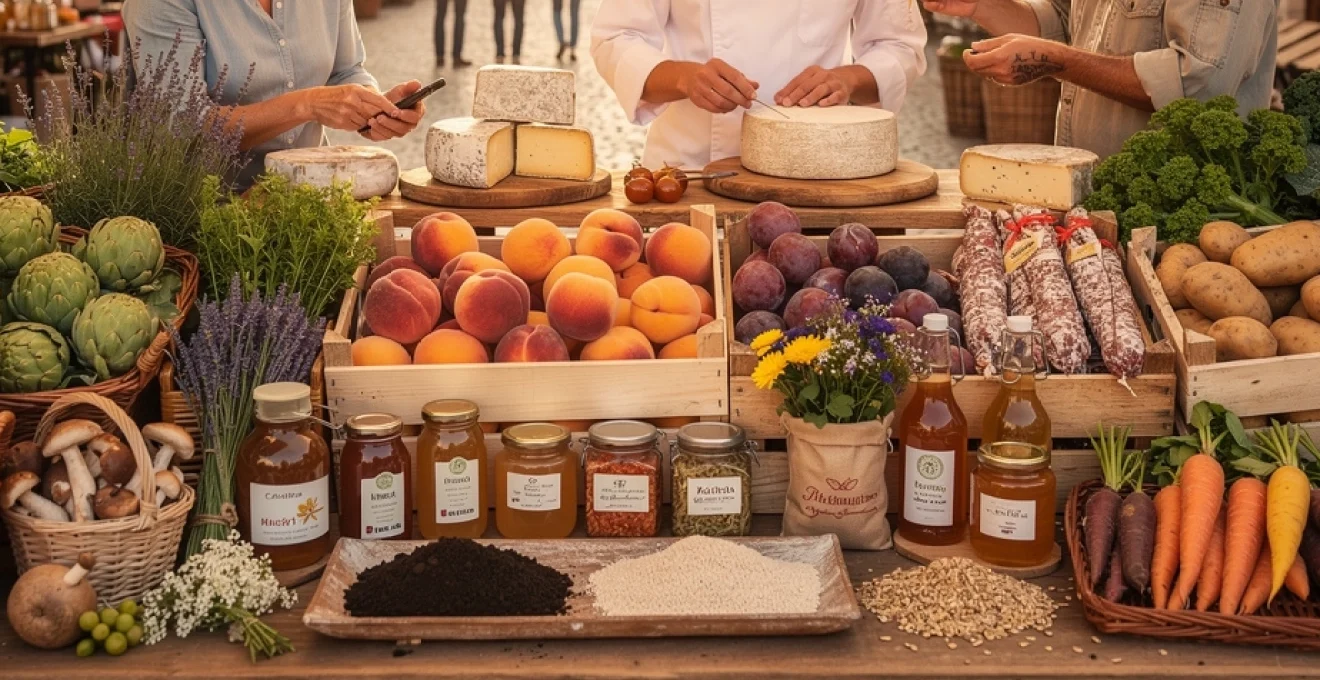
The renaissance of farmers’ markets across Britain has transformed how discerning food enthusiasts discover and experience local flavours. These vibrant community hubs offer far more than simple grocery shopping—they provide a direct gateway to understanding regional terroir, seasonal rhythms, and artisanal food production methods that have been refined over generations. Farmers’ markets represent a return to authentic food sourcing, where every purchase tells a story of local soil, climate, and craftsmanship.
Modern consumers increasingly seek transparency in their food systems, craving connections with producers who can explain farming practices, harvesting techniques, and the journey from field to plate. This shift towards conscious consumption has elevated farmers’ markets from weekend diversions to essential destinations for culinary discovery. The sensory experience of wandering through market stalls—sampling sun-warmed tomatoes, inhaling the aroma of fresh herbs, and engaging with passionate producers—creates lasting memories that supermarket aisles simply cannot replicate.
Beyond mere convenience, farmers’ markets serve as living laboratories where traditional food preservation techniques meet contemporary culinary innovation. They showcase the profound impact of microclimate variations on flavour development whilst preserving heirloom varieties that might otherwise vanish from our food landscape. Understanding why these markets excel at revealing local flavours requires exploring the intricate relationships between seasonal growing cycles, artisanal production methods, and the unique terroir expressions that define regional cuisine.
Seasonal produce availability and peak harvest timing at regional markets
The rhythm of seasonal availability at farmers’ markets creates a natural calendar that guides both producers and consumers towards peak flavour experiences. Unlike supermarket shelves stocked with year-round imports, market stalls reflect the authentic growing seasons of their local region, offering produce at its absolute prime. This seasonal approach ensures maximum nutrient density whilst supporting sustainable farming practices that work in harmony with natural cycles.
Understanding seasonal timing allows you to anticipate when specific crops will deliver their most intense flavours and optimal textures. Market vendors often adjust their growing schedules to extend harvest periods, employing techniques like succession planting and variety selection to provide continuous supplies throughout peak seasons. This sophisticated approach to crop planning demonstrates the expertise that distinguishes serious market gardeners from casual hobbyists.
Spring vegetables: asparagus, artichokes, and early greens cultivation cycles
Spring vegetables represent nature’s first fresh offerings after winter’s dormancy, delivering concentrated flavours and tender textures that epitomise seasonal eating. Asparagus spears harvested within 24 hours showcase the dramatic difference between market-fresh produce and imported alternatives, with sugars that haven’t yet converted to starches during lengthy transport. Local asparagus seasons typically span eight weeks, with daily harvests ensuring consistent quality and peak flavour.
Early spring greens like rocket, spinach, and lamb’s lettuce thrive in cool conditions, developing complex mineral profiles from slowly warming soils. These hardy vegetables often survive light frosts, which concentrate their natural sugars and create more robust flavours. Market gardeners specialising in spring crops frequently use protective cultivation techniques, extending seasons through careful variety selection and microclimate management.
Summer stone fruits: peach, plum, and apricot varietal selection
Summer stone fruits represent the pinnacle of seasonal abundance, with tree-ripened specimens offering flavour profiles impossible to achieve through post-harvest ripening techniques. Local orchardists often cultivate multiple varieties with staggered harvest dates, ensuring continuous availability of perfectly ripe fruit throughout the summer months. Heritage varieties frequently display superior flavour characteristics compared to commercial cultivars selected primarily for storage and transport qualities.
The relationship between harvest timing and flavour development becomes particularly evident with stone fruits, where a few days can dramatically alter sugar content, acidity balance, and aromatic compound development. Market vendors typically harvest fruit at optimal ripeness rather than commercial maturity stages, resulting in superior eating quality that justifies premium pricing.
Autumn root vegetables: heritage potato and heirloom carrot varieties
Autumn markets showcase the incredible diversity of root vegetables, with heritage potato varieties displaying flavour profiles ranging from nutty and earthy to creamy and buttery. Local growers often specialise in
distinct culinary qualities suited to roasting, mashing, or salad preparations. Heirloom carrot varieties in shades of purple, yellow, and white offer nuanced sweetness and varying levels of natural pigments such as anthocyanins and carotenoids. Farmers’ markets are often the only places where you can compare these heritage cultivars side by side, discovering which textures and flavours best suit your favourite dishes.
Because autumn root vegetables mature as soil temperatures begin to drop, their starches gradually convert into sugars, enhancing sweetness and depth of flavour. Many market growers leave roots in the ground until just before sale, which preserves moisture content and crispness compared to long-stored supermarket alternatives. You can frequently speak directly with growers about the best cooking methods for each variety—whether a floury potato is better for roasting or whether a waxy type will hold its shape in stews and salads.
Winter storage crops: brassicas and cold-hardy leafy greens
Winter markets prove that seasonal eating does not have to mean culinary deprivation. Brassicas such as kale, cavolo nero, Brussels sprouts, and winter cabbages actually improve in flavour after frost exposure, as cold temperatures trigger sugar accumulation that tempers bitterness. Local growers carefully select hardy cultivars specifically bred for winter resilience, ensuring that market stalls remain abundant even in the colder months.
Storage crops like squash, onions, and certain beet varieties are cured and stored under controlled conditions, allowing their flavours to develop and concentrate over time. Cold-hardy leafy greens grown under cloches or in unheated tunnels can deliver surprisingly vibrant salads in midwinter, often with more pronounced mineral notes than their summer counterparts. When you buy these crops at a farmers’ market, you gain insight into traditional winter preservation strategies and learn how to plan your own seasonal menus around what naturally thrives in colder climates.
Artisanal food production methods and traditional preservation techniques
Beyond fresh produce, farmers’ markets excel at showcasing artisanal foods that rely on time-honoured preservation methods. These products—ranging from cured meats to cultured dairy and naturally fermented vegetables—capture local flavours in concentrated, shelf-stable forms. Understanding how they are made helps you appreciate why a handcrafted cheese or small-batch sauerkraut can taste so different from mass-produced equivalents.
Traditional preservation techniques often emerged as pragmatic responses to seasonal abundance, allowing communities to enjoy local flavours year-round. Today, these methods are being refined with modern food safety knowledge, resulting in products that are both authentic and rigorously controlled. When you stand at a market stall discussing curing temperatures or fermentation times, you are essentially peering behind the scenes of regional food culture.
Charcuterie and cheesemaking: raw milk regulations and ageing processes
Farmers’ markets frequently host small-scale charcuterie producers and artisan cheesemakers who work closely with local livestock farmers. Their products illustrate how factors like animal breed, feed, and milk handling translate into complex flavour profiles. For cheese, the decision to use pasteurised or raw milk is particularly significant, as raw milk can contribute greater aromatic complexity when regulations and hygiene standards are rigorously respected.
In the UK and many other regions, raw milk cheesemaking is tightly regulated, with strict controls on herd health, milking practices, and maturation environments. Cheesemakers must age raw milk cheeses for a minimum period—often 60 days or more—at specific temperatures and humidity levels to ensure safety. This ageing process not only mitigates microbiological risk but also allows naturally occurring enzymes and cultures to develop intricate flavours, from nutty alpine styles to intensely savoury blues. At the market, producers can explain exactly how long each cheese has been aged, in what conditions, and how that affects texture and taste.
Charcuterie follows similar principles of controlled transformation. Cured sausages, pancetta, and air-dried hams rely on precise salt levels, starter cultures, and temperature management to create safe yet nuanced products. Many market charcutiers source whole animals from nearby farms, using nose-to-tail approaches that reduce waste and highlight lesser-known cuts. When you ask about a particular salami’s ageing time or spice blend, you begin to understand why small-batch charcuterie often delivers a more distinct, regionally specific flavour than industrially produced meats.
Small-batch fermentation: kimchi, sauerkraut, and kombucha production
Fermented foods have enjoyed a significant renaissance, and farmers’ markets are often at the forefront of this trend. Producers specialising in kimchi, sauerkraut, miso, and kombucha harness the power of beneficial microbes to enhance both flavour and nutrition. Unlike shelf-stable, pasteurised products, many market ferments remain “live”, meaning the cultures are still active and continuing to evolve the flavour in the jar or bottle.
Small-batch fermentation relies on careful control of salt concentrations, temperature, and oxygen exposure. For example, sauerkraut makers must ensure that shredded cabbage remains submerged in brine to create an anaerobic environment where lactic acid bacteria thrive. Kombucha brewers monitor sugar levels, tea strength, and fermentation time to strike a balance between acidity, sweetness, and effervescence. As you taste your way through different ferments at a market, you can often detect subtle differences in sourness, texture, and aroma that reflect each producer’s “house culture”—much like a sourdough bakery’s signature flavour.
From a health perspective, many consumers are drawn to fermented foods for their potential probiotic benefits and improved digestibility. Yet the real magic lies in how fermentation transforms humble local ingredients—cabbage, carrots, apples—into complex, tangy condiments that enliven simple meals. Markets provide the perfect setting to ask practical questions: How long will this kimchi continue fermenting in the fridge? Can you use this brine as a starter for home batches? In this way, the market becomes an informal classroom for fermentation enthusiasts.
Honey varietals: single-origin floral sources and terroir expression
Honey is one of the clearest examples of how farmers’ markets reveal local terroir through flavour. Beekeepers who manage hives in different locations can produce single-origin honeys that reflect specific floral sources—heather moors, lime avenues, wildflower meadows, or coastal thickets. Each variant offers a distinct colour, aroma, and taste profile shaped by the surrounding landscape and climate.
At a typical supermarket, honey is often blended from multiple regions or even countries to achieve consistent flavour and texture. In contrast, market beekeepers usually bottle smaller batches from particular apiaries or seasonal nectar flows. This approach preserves subtle differences: a dark, mineral-rich forest honey might carry notes of molasses and resin, while a pale spring blossom honey could taste delicately floral and almost fruity. Tasting flights at market stalls allow you to compare these nuances directly, much like sampling wines from different vineyards.
Beyond flavour, local honey production also raises interesting questions about pollinator health and landscape management. Beekeepers can explain how surrounding crops and wild plants influence hive nutrition, and how they mitigate challenges such as pesticide exposure or habitat loss. When you choose a jar of single-origin honey, you are effectively selecting a snapshot of local biodiversity at a particular moment in time.
Heritage grain milling: stone-ground flour and ancient wheat varieties
In recent years, heritage grains have moved from niche interest to central talking point among bakers and nutrition-conscious consumers. Farmers’ markets are often where you first encounter flours milled from ancient wheats such as einkorn, emmer, and spelt, or from heritage landrace varieties adapted to specific regions. These grains tend to offer more pronounced flavours—nutty, grassy, or slightly sweet—compared to standardised modern wheats.
Stone-milling is a key part of this flavour story. Unlike high-speed roller milling, traditional stone mills grind grain more gently, preserving a higher proportion of the bran and germ. This results in flours with greater aromatic complexity and often improved micronutrient content. Of course, the trade-off can be shorter shelf life and slightly different baking behaviour, which is why speaking directly with millers and bakers at the market is so valuable. They can suggest hydration levels, fermentation times, and recipes tailored to each flour’s unique characteristics.
For home bakers, experimenting with heritage grain flours sourced at farmers’ markets opens up a new palette of textures and tastes. Breads made with a proportion of stone-ground rye or spelt, for instance, may develop deeper crust colour and more savoury notes. As you learn to work with these flours, you become part of a broader movement to preserve agricultural biodiversity and revive regional grain economies.
Direct producer-consumer relationships and traceability systems
One of the most powerful advantages of farmers’ markets is the opportunity to build genuine relationships with the people who grow and produce your food. Instead of relying on anonymous labels and generic certifications, you can ask detailed questions about growing practices, animal welfare, and ingredient sourcing. This direct dialogue forms the foundation of robust traceability, giving you confidence in the integrity of what you are buying.
Many small-scale producers now complement face-to-face conversations with formal traceability systems. You might see QR codes on egg boxes linking to flock information, or batch numbers on jars of jam that trace back to specific harvests. Some veg growers share weekly field updates on social media, showing sowing dates, weather challenges, and pest management strategies. When you later encounter those same producers at the market, you can connect the digital story with the physical product, closing the loop between field and plate.
Traceability is not only about food safety—although knowing exactly where a product came from can be crucial in the event of a recall. It also allows you to align purchases with your values. Do you prioritise pasture-raised livestock, low-spray fruit orchards, or regenerative soil practices? At a farmers’ market, you can interrogate these issues in real time, comparing different producers and making informed decisions. Over time, many shoppers develop a trusted “shortlist” of stallholders whose standards they understand and respect.
From the producer’s perspective, this relationship-building is equally important. Regular customers provide feedback, share cooking successes, and even request specific varieties or cuts for future seasons. In this way, farmers’ markets function as feedback loops that refine production choices based on transparent, two-way communication—something far harder to achieve through conventional wholesale channels.
Regional terroir expression through indigenous ingredient sourcing
Terroir—a term borrowed from the world of wine—describes how a specific place imprints its character on the food grown there. Farmers’ markets are among the best arenas for experiencing terroir beyond the vineyard, whether through distinctive vegetables, fruits, grains, or wild foods. By sourcing indigenous ingredients and regionally adapted varieties, producers create a culinary landscape that could not simply be replicated elsewhere.
This sense of place emerges from the interplay of climate, soil, topography, and local biodiversity, filtered through human decisions about farming and foraging. When you compare a tomato from a coastal allotment with one grown inland at higher altitude, you are tasting the effect of different microclimates. Similarly, a cheese made from animals grazing on diverse upland pastures will inevitably taste different from one using silage-fed milk. Farmers’ markets bring these varied expressions together in one space, inviting you to explore them side by side.
Microclimate influence on flavour profile development
Microclimates—subtle variations in temperature, humidity, wind exposure, and sunlight over small areas—can have a surprisingly strong impact on flavour. A south-facing slope may warm earlier in spring, allowing vines or fruit trees to break bud sooner and ripen more fully. Conversely, a frost pocket in a valley bottom might delay flowering, reducing yields but concentrating flavours in the fruit that does set. Have you ever noticed how herbs grown in a slightly exposed garden bed develop stronger aromas than those on a shaded windowsill? The same principle applies at field scale.
Farmers who sell at markets are often acutely aware of these microclimatic nuances. They may plant heat-loving crops such as tomatoes and aubergines in sheltered polytunnels, while reserving cooler spots for leafy greens that would otherwise bolt. Some growers even use hedgerows or windbreaks to create protected pockets that moderate temperature extremes. When you chat with them about where and how a particular crop is grown, you are effectively taking a guided tour of your region’s microclimatic map—without leaving the market square.
Microclimate awareness also underpins harvest timing decisions. A grower might pick earlier in the day from a sun-baked field to preserve crispness, or leave fruit on the tree for an extra day in a cooler orchard to develop sweetness. These fine-grained choices are difficult to standardise at industrial scale, but they are precisely what gives small-scale, market-oriented production its distinctive edge.
Soil composition impact on vegetable mineral content
Soil is more than just a growing medium; it is a complex ecosystem that shapes the nutritional and sensory qualities of crops. Differences in clay, sand, organic matter, and mineral content all influence how plants take up nutrients and water. Carrots grown in light, sandy soils may develop a cleaner, sweeter flavour and straighter shape, while those from heavier loams can taste earthier and more robust. It is akin to brewing coffee with different water sources—subtle mineral variations alter the final cup.
Many market gardeners invest heavily in building soil health through composting, green manures, and reduced tillage. These practices enhance microbial life and improve the availability of micronutrients like magnesium, zinc, and iron. While it is challenging to quantify taste differences precisely, emerging research suggests that crops grown in biologically active soils often exhibit higher phytonutrient levels and more complex flavour profiles. When you buy from such producers, you are effectively supporting long-term soil stewardship as well as enjoying immediate culinary benefits.
Growers at farmers’ markets are typically happy to discuss their soil management philosophies, from pH testing to cover crop rotations. They may even invite customers to farm walks or open days, offering a tangible connection between the dark, crumbly earth underfoot and the vibrant produce on their stalls. This level of transparency around soil—one of the least visible yet most important aspects of food quality—is rarely available through conventional retail channels.
Native plant foraging: wild mushrooms and edible flora identification
Another dimension of local flavour expression comes from wild foods—mushrooms, herbs, berries, and leaves that are foraged rather than cultivated. Some farmers’ markets host licensed foragers who specialise in responsibly harvesting species such as chanterelles, hedgehog mushrooms, wild garlic, or sea purslane. These ingredients inject unmistakable sense of place into dishes, as their availability is tightly linked to specific habitats and seasons.
Foraging, however, carries inherent risks, especially when it comes to mushroom identification. Professional foragers follow strict guidelines, including species verification, habitat protection, and harvesting quotas designed to maintain ecological balance. Many are keen to share their knowledge at market stalls, explaining key identification features and sometimes offering short walks or workshops. This educational role helps demystify wild ingredients while reinforcing safe practices—an essential counterpoint to the tempting but risky idea of “just picking what looks edible”.
From a culinary perspective, wild foods often provide intense, distinctive flavours that are difficult to mimic with cultivated crops. The peppery punch of wild rocket, the garlicky aroma of ramsons, or the saline crunch of sea vegetables can transform simple recipes. Farmers’ markets serve as controlled gateways into this world, allowing you to experiment with small quantities and expert guidance rather than venturing blindly into the hedgerows.
Heirloom seed preservation and open-pollinated variety maintenance
Heirloom and open-pollinated varieties are living repositories of regional food heritage. Unlike hybrid seeds bred for uniformity and long-distance transport, these cultivars often prioritise flavour, resilience, and cultural significance. At farmers’ markets, you will frequently encounter growers who not only cultivate heirloom vegetables and fruits but also save their own seed, season after season.
Open-pollinated varieties breed true, meaning saved seeds will reliably produce similar plants, provided cross-pollination is controlled. This allows farmers and gardeners to select for traits that suit their specific microclimate or soil conditions—earlier ripening, improved disease resistance, or enhanced sweetness. Over time, these varieties become increasingly adapted to local conditions, embodying terroir in genetic form. Seed-saving groups and community seed swaps, often promoted through market networks, help to safeguard this diversity against the homogenising trends of global agriculture.
As a market customer, you benefit from this work every time you buy a tomato that bursts with flavour rather than travelling capacity, or a bean that has been grown in your region for generations. Some producers even sell seed packets alongside their produce, inviting you to become a co-custodian of these varieties in your own garden. This shared stewardship blurs the line between producer and consumer, creating a collaborative model of food culture preservation.
Culinary innovation through market-driven menu development
For chefs and home cooks alike, farmers’ markets function as creative laboratories. Instead of starting with a fixed recipe and then sourcing ingredients to match, you begin with what is freshest and most inspiring on the stalls. This “market-forward” approach to menu development encourages flexibility, experimentation, and a deeper responsiveness to seasonal change. It is no coincidence that many acclaimed restaurants build their menus around daily market visits.
Professional chefs often develop signature dishes based on ingredients that are only briefly available—a particular variety of apricot, a short-season salad leaf, or a wild mushroom flush. When those ingredients disappear, the dish evolves or vanishes, reinforcing a sense of seasonality that diners increasingly value. Home cooks can adopt the same mindset on a smaller scale: rather than following rigid shopping lists, you can let the market dictate the week’s meals, substituting freely and drawing on producer suggestions for simple preparations.
Market-driven menus also encourage nose-to-tail and root-to-leaf cooking. Faced with whole animals, untrimmed vegetables, or slightly imperfect produce, cooks learn to value every part—turning beet tops into pesto, bones into stock, and surplus fruit into preserves. This reduces waste while expanding your culinary repertoire, much like learning additional chords opens up new songs on an instrument.
Finally, the constant dialogue between producers and cooks fuels iterative improvement. Chefs provide feedback on how a particular variety roasts or ferments, influencing what growers plant the following year. Consumers share which chutneys or breads sold out fastest, guiding small-scale food businesses to refine their offerings. In this dynamic ecosystem, farmers’ markets become engines of culinary innovation as well as guardians of tradition—proving that local flavours are not static relics, but evolving expressions of place, season, and shared creativity.