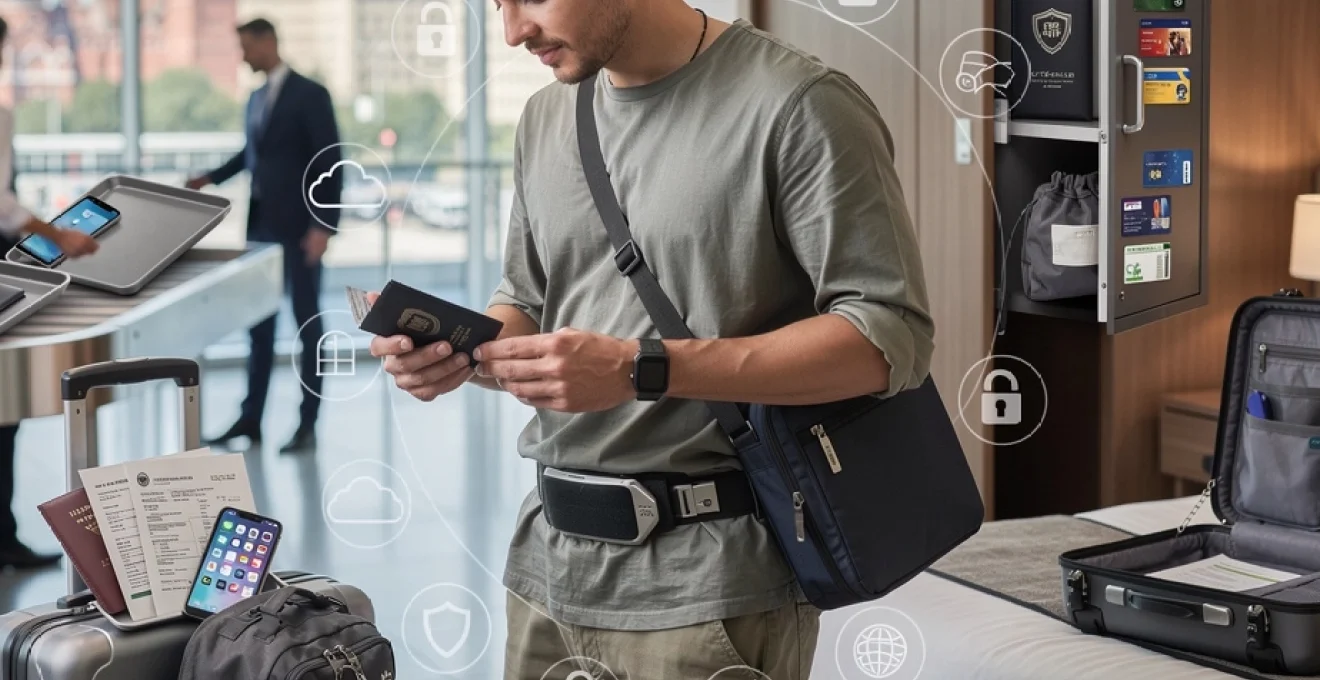
International travel exposes travellers to unique security risks that rarely exist within familiar domestic environments. From sophisticated pickpocketing operations in tourist hotspots to elaborate scams targeting unsuspecting visitors, the challenges of protecting valuable documents and belongings abroad require comprehensive preparation and vigilant execution. The consequences of losing a passport, having credit cards compromised, or falling victim to theft can transform an exciting adventure into a bureaucratic nightmare involving embassy visits, emergency document replacements, and significant financial losses.
Modern travel security encompasses both traditional protective measures and cutting-edge technological solutions. Understanding how to implement layered security strategies, leverage digital backup systems, and respond effectively to security breaches has become essential for any serious traveller. Prevention remains the most cost-effective approach to travel security, requiring investment in proper equipment, thorough preparation, and ongoing situational awareness throughout your journey.
Essential document security strategies for international travel
Document security forms the cornerstone of international travel protection, requiring systematic approaches that address both physical and digital vulnerabilities. The most critical documents – passports, visas, travel insurance policies, and identification cards – demand multiple layers of protection to ensure continuous access throughout your journey.
Passport protection protocols and RFID-Blocking technology
Modern passport security extends beyond simple physical protection to include electronic safeguarding against sophisticated scanning devices. RFID-blocking technology has become crucial as passport chips contain sensitive biometric data that criminals can potentially harvest using portable readers. Quality RFID-blocking wallets and passport holders utilise metallic mesh or specialised fabrics that create Faraday cages, preventing unauthorised electronic access to your documents.
Physical passport protection requires careful consideration of storage location and access frequency. Never store your passport in easily accessible exterior pockets or loose in day bags where pickpockets can easily reach them. Instead, utilise dedicated passport holders that can be worn beneath clothing or secured in hotel safes when not required for immediate use. Consider carrying a certified photocopy of your passport for routine identification purposes, reserving the original document for official transactions and border crossings.
Digital backup systems using cloud storage platforms
Cloud storage systems provide essential redundancy for critical travel documents, ensuring access even when physical copies become unavailable. High-resolution scans of all important documents should be uploaded to multiple secure cloud platforms before departure. Google Drive, iCloud, and Dropbox offer robust security features including two-factor authentication and encryption protocols that protect sensitive information.
Document scanning requires attention to detail and quality standards that ensure readability under various conditions. Scan documents at minimum 300 DPI resolution, ensuring clear visibility of all text, photographs, and security features. Store different document types in separate folders with clear naming conventions that facilitate quick retrieval during emergencies. Email copies to trusted family members or friends who can assist with document retrieval if access to your own devices becomes impossible.
Embassy registration services and consular assistance programs
Embassy registration services provide crucial safety nets for travellers facing document emergencies or security incidents abroad. Many countries offer voluntary registration programmes that enable diplomatic missions to contact citizens during emergencies, natural disasters, or political upheavals. The Smart Traveler Enrollment Program (STEP) for American citizens and similar services for other nationalities create direct communication channels with consular services.
Understanding consular assistance capabilities helps set realistic expectations during document replacement procedures. Embassies can issue emergency travel documents, provide lists of local legal representatives, and facilitate communication with family members during crises. However, consular services cannot override local laws, provide bail money, or guarantee immediate resolution of legal issues. Emergency passport replacement typically requires 24-48 hours and involves specific documentation requirements including police reports for stolen documents.
Travel insurance documentation and policy verification methods
Travel insurance documentation requires careful organisation and accessibility verification before departure. Policy documents should include comprehensive coverage details, emergency contact numbers, and claim procedures that remain accessible without internet connectivity. Print physical copies of insurance cards and policy summaries, storing them separately from digital versions to ensure redundancy.
Policy verification involves confirming coverage limits, exclusions, and geographical restrictions that might affect your specific itinerary. Many policies exclude coverage for high-risk activities, certain geographical regions, or pre-existing medical conditions unless specifically
declared and accepted. Before you travel, review your schedule against the policy wording, paying particular attention to maximum trip lengths, baggage limits, and cover for lost or stolen passports and travel documents. Store your insurer’s 24/7 emergency number in your phone and write it on a physical card kept with your travel documents so you can initiate support quickly if something goes wrong abroad.
Advanced anti-theft techniques for personal belongings
Protecting personal belongings abroad involves more than simply keeping an eye on your bag. Professional thieves study tourist behaviour and exploit predictable patterns such as distracted phone use, overloaded backpacks, and unsecured handbags. By combining physical security products with smart habits, you can make yourself a far less attractive target. The objective is not to eliminate all risk – that is impossible – but to reduce it to a manageable level while still enjoying your trip.
Money belt configuration and body-worn security solutions
Money belts and body-worn pouches create a secure, low-profile storage solution for your most critical items. When configured correctly, they sit flat against your body under clothing, making it extremely difficult for pickpockets to access them without detection. Store only essentials here – your passport, a backup credit card, and a portion of emergency cash – rather than everyday spending money that you need to access frequently.
Comfort and discretion are key when selecting a body-worn security solution. Waist money belts, neck pouches, and cross-body holsters each suit different clothing styles and climates, so test them at home before departure. Avoid accessing your money belt in obvious public locations; instead, step into a restroom or quiet corner, retrieve what you need, and then return to public areas. Treat the belt as a secure vault, not a regular wallet, and use a separate, less valuable wallet for routine transactions.
Decoy wallet strategies and dummy item deployment
Decoy wallets act as sacrificial targets during opportunistic thefts or muggings, allowing you to relinquish low-value items while preserving your true travel documents and primary payment methods. A simple decoy wallet might contain expired loyalty cards, a small amount of local currency, and a non-essential debit card with a low balance. In the event of a confrontation, handing over this wallet may satisfy the thief while leaving your critical assets untouched.
Dummy item deployment extends this concept to bags and luggage. For example, you might keep a cheap, non-functional phone or headphones in an outer pocket while your real devices remain concealed deeper inside your bag. This approach works particularly well in high-risk environments where snatch thefts from café tables or train seats are common. Think of decoy items as “lightning rods” – they attract unwanted attention away from the belongings that truly matter.
Hotel safe utilisation and in-room security protocols
Hotel safes provide an essential layer of protection, but they must be integrated into a broader in-room security protocol. Begin by checking that the safe is securely fixed to the wall or furniture and not easily removable. Choose a unique access code that does not replicate your phone PIN or other common combinations, and avoid leaving the safe open while housekeeping staff are present. Store passports, backup cards, excess cash, and any high-value electronics you do not need when leaving the property.
When a room safe is unavailable or feels unreliable, consider alternative strategies. Many hotels offer safety deposit boxes at reception that are more robust and often monitored by CCTV. Portable travel safes – small lockable bags with reinforced cables – can be looped through sturdy fixtures in your room, making quick theft far more difficult. Before checkout, physically inspect the safe, drawers, and under-bed areas with your hands, not just your eyes, to ensure no documents or valuables are accidentally left behind.
Public transport anti-pickpocketing countermeasures
Public transport systems in major cities are prime hunting grounds for pickpocket gangs who specialise in distraction techniques. Crowded metro carriages, station escalators, and bus doors create ideal conditions for thieves to work unnoticed. Position yourself away from doors when possible, keep bags in front of you with zips closed, and avoid displaying expensive devices near exits where grab-and-run thefts are common. Cross-body bags with lockable zippers or slash-resistant straps significantly reduce vulnerability.
Situational awareness is your most valuable defence on buses, trains, and trams. If a group suddenly crowds around you, someone “accidentally” spills something on your clothes, or a stranger insists on helping with luggage, assume this may be a distraction tactic. Keep one hand on your main bag or money belt in crowded spaces, and avoid placing phones or wallets in back pockets. You are not being paranoid – you are simply acknowledging that, in busy transit systems, tourists are often seen as easy targets.
Airport security checkpoint documentation management
Airport security checkpoints create chaotic environments where travellers juggle trays, liquids, laptops, and passports in rapid succession. This combination of pressure and distraction makes it surprisingly easy to misplace crucial travel documents or leave them behind. To minimise risk, consolidate your passport, boarding pass, and a single payment card in a slim travel wallet that remains on your person – for example, in a zipped inner pocket – until the exact moment they are required.
Plan your checkpoint sequence before you reach the conveyor belt. Place laptops and liquids in one tray, while keeping your travel document wallet either in a secure jacket pocket or in a small tray that you watch carefully as it passes through the scanner. Avoid placing passports loose in large trays with multiple items, where they can slide under jackets or be accidentally collected by another passenger. Once through security, pause at a quiet area to re-pack methodically, confirm your documents are present, and only then proceed to your gate.
Technology-based protection systems for digital assets
As more of our travel information moves into apps and online accounts, digital security becomes as important as physical security. Flight details, hotel confirmations, banking apps, and digital boarding passes all contain sensitive data that cybercriminals can exploit. A robust digital protection strategy combines secure connections, strong authentication, and device-level safeguards that protect you even if your phone or laptop is lost or stolen abroad.
VPN implementation for public Wi-Fi security
Public Wi-Fi networks in airports, cafés, hotels, and co-working spaces are convenient but inherently risky. Unsecured networks can be monitored by attackers who intercept data such as login credentials, emails, and payment information. A virtual private network (VPN) encrypts your internet traffic, creating a secure tunnel that shields your data from prying eyes, even on open networks. Think of a VPN as the digital equivalent of a locked, tinted car – others may see that you are there, but not what you are doing.
Before departure, subscribe to a reputable VPN provider with apps for all your devices and test the connection at home. Configure the VPN to auto-connect whenever you join unknown Wi-Fi networks so you do not need to remember to switch it on at each café stop. Avoid conducting online banking or entering sensitive passwords on unmanaged Wi-Fi without an active VPN. In some countries, VPN use is restricted or regulated, so verify local laws in advance and comply with all applicable regulations.
Two-factor authentication setup for travel apps
Two-factor authentication (2FA) significantly enhances account security by requiring a second verification step – such as a code sent via SMS or generated by an authenticator app – in addition to your password. This extra layer means that, even if someone steals or guesses your password, they still cannot access your account without the second factor. For travellers, enabling 2FA on email accounts, cloud storage, banking apps, and booking platforms is one of the most effective defences against unauthorised access.
When setting up 2FA for travel, consider how you will receive codes while abroad. Roaming restrictions or SIM card changes can interrupt SMS-based authentication, so authenticator apps like Google Authenticator, Microsoft Authenticator, or built-in device authenticators are often more reliable. Securely store backup recovery codes in your cloud document folder or with a trusted contact in case your phone is lost. This preparation ensures you can still log in to critical services, request password resets, or contact support if your primary device fails.
Mobile device encryption and remote wipe capabilities
Your smartphone is effectively a portable identity vault, containing emails, photos of documents, saved passwords, and access to financial accounts. Full-disk encryption ensures that if the device is lost or stolen, the data stored on it remains inaccessible without your passcode. Most modern devices enable encryption by default when you set a strong PIN, password, or biometric lock, but it is worth confirming this in your settings. Avoid simple patterns or four-digit PINs that can be guessed or observed.
Remote wipe and location services add another critical layer of protection. Apple’s Find My and Google’s Find My Device allow you to locate a missing phone, lock it, display a message, or erase all data remotely once you are sure it cannot be recovered. Before you travel, verify that these services are active, that your devices are linked to your current accounts, and that you know how to access the web dashboards from another device. Losing a phone abroad is stressful, but knowing you can instantly lock or wipe it turns a potential catastrophe into a manageable inconvenience.
Banking app security protocols and transaction monitoring
Banking apps offer unparalleled convenience for travellers, but they also present valuable targets for cybercriminals. Strong passwords, 2FA, and biometric logins are your first line of defence. Disable automatic login where possible so that anyone finding your phone cannot open your banking app without additional verification. Avoid saving card details in unsecured browser autofill fields, and regularly log out of financial apps when they are not in active use.
Proactive transaction monitoring can help detect fraudulent activity early, limiting financial losses. Enable real-time spending alerts via SMS or app notifications so that every card transaction generates a message. If you see activity you do not recognise, contact your bank immediately using a verified phone number from your card or official website. Before travel, inform your bank of your destinations and dates so legitimate foreign transactions are less likely to be flagged as suspicious and blocked, leaving you without access to funds when you need them most.
Region-specific security considerations and risk assessment
Not all destinations present the same level or type of risk, so a one-size-fits-all approach to protecting travel documents and personal belongings is rarely sufficient. Large urban centres might have higher rates of pickpocketing and card skimming, while remote regions may pose challenges related to limited consular support or unreliable communications. A basic risk assessment before each trip allows you to adjust your security measures, packing list, and behaviour to match local conditions.
Begin by reviewing official travel advisories from your government, paying attention to crime trends, political stability, and recent incidents involving tourists. Supplement this with credible local sources and recent traveller reports, looking for patterns such as frequent bag snatches in specific districts or common taxi scams at certain airports. Ask yourself: what are the most likely threats in this region, and how can I reduce my exposure to them? For example, in areas known for card fraud, you might rely more on cash withdrawals from bank ATMs attached to branches rather than freestanding machines.
Cultural norms also influence how you should carry and display valuables. In some cities, wearing visible luxury watches or jewellery can draw unwanted attention, while in others, business attire with a laptop bag is commonplace and unremarkable. Extreme climates further affect security planning; in hot environments, bulky money belts may be uncomfortable, prompting alternatives such as lightweight neck pouches. By aligning your security setup with local realities, you maintain a low profile and avoid standing out as an obvious tourist target.
Emergency response protocols and document replacement procedures
Despite careful preparation, there is always a chance that a passport, wallet, or device will be lost or stolen abroad. Having a clear, rehearsed emergency protocol helps you respond quickly and calmly, turning a potential crisis into a solvable administrative task. Think of this protocol as a fire drill for your travel identity – a series of predefined steps you can follow when stress levels are high and time is critical.
The first step after discovering a loss or theft is to secure yourself and your remaining assets. Move to a safe, well-lit location such as your hotel lobby or a busy café, and use your digital backups to identify what exactly is missing – passport, specific cards, or devices. Call your bank’s emergency number to block compromised cards, and use remote-wipe tools to protect any lost phones or laptops. Then, report the incident to local police and obtain a written report or incident number, as insurers and consulates often require this documentation.
Next, contact your embassy or consulate to initiate passport replacement or emergency travel document procedures. Having scanned copies of your passport, visas, and travel insurance policy will streamline this process significantly. Consular staff will explain required forms, photographs, and fees, and may provide letters to airlines or border officials where necessary. At the same time, notify your travel insurer, who may be able to assist with additional accommodation costs, replacement fees, or alternative travel arrangements if your plans must change.
Finally, adjust your security posture for the remainder of the trip. After an incident, you might decide to consolidate valuables into the hotel safe more strictly, use taxis organised through reputable apps rather than hailing them on the street, or avoid certain high-risk areas at night. Reflecting on what happened – and how your preparations helped or hindered your response – will also inform better strategies for future travels. An incident abroad is never pleasant, but it can become a valuable learning experience rather than a reason to stop exploring the world.
Accommodation security measures and luggage protection strategies
Your choice of accommodation and how you manage luggage play a substantial role in protecting travel documents and personal belongings. While high-end hotels often feature sophisticated security systems, smaller guesthouses, hostels, and rental apartments may rely more on basic locks and the surrounding neighbourhood’s safety. Regardless of where you stay, adopting a standard set of security routines helps ensure your valuables remain under your control.
Start by assessing room security upon arrival. Check that doors and windows lock properly, identify secondary exits, and locate any in-room safe or lockable storage. If you are staying in shared accommodation such as hostels, invest in a solid padlock for lockers and consider a lightweight cable lock to secure your bag to a fixed object. When leaving for the day, avoid broadcasting that you are a tourist carrying valuables; conceal laptops and cameras rather than leaving them in plain sight, and use “do not disturb” signs sparingly to avoid drawing attention to an unattended room.
Luggage protection strategies are especially important during transit phases, when bags are out of your direct line of sight. Use sturdy luggage with lockable zips and consider TSA-approved combination locks for checked baggage, recognising that these deter opportunistic interference rather than determined attacks. Distinctive straps or covers not only make your suitcase easier to identify on carousels but also act as a visual deterrent by signalling that tampering would be more noticeable. For carry-on bags, keep essential documents and electronics in a smaller personal item that stays under your seat rather than in overhead bins where others can access it.
Simple habits can significantly reduce the likelihood of accidental loss. Develop a personal “carry checklist” – passport, wallet, phone, keys, travel card – and mentally run through it every time you stand up to leave a hotel room, café, or vehicle. At night, store your key items in a consistent location, such as a small pouch on the bedside table or inside a locked suitcase, so you can find them quickly in the event of an emergency. By combining structural measures like locks and safes with disciplined routines, you create a robust, layered defence that keeps your travel documents and personal belongings as safe as practicable, wherever your journey takes you.