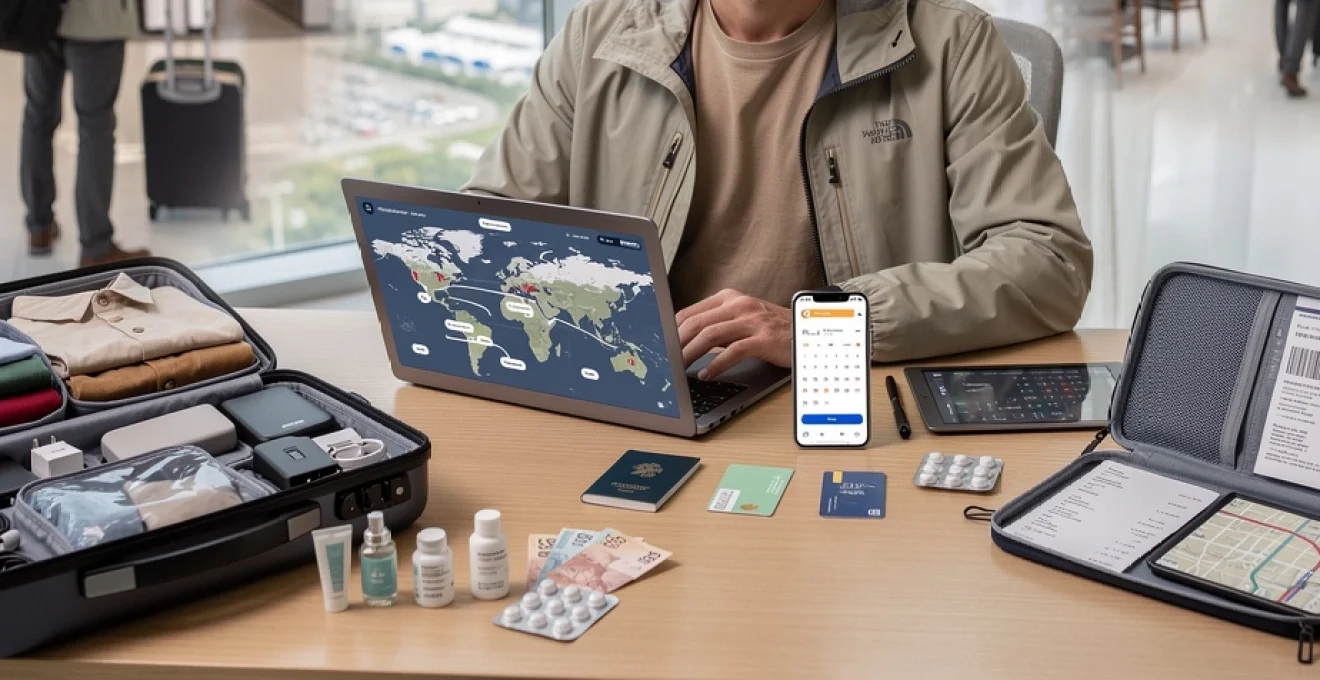
Navigating the complexities of modern travel requires more than just booking a flight and packing a suitcase. Seasoned globetrotters distinguish themselves through carefully cultivated habits that transform potentially stressful journeys into seamless adventures. These travellers have accumulated wisdom through countless airport sprints, missed connections, and cultural misunderstandings—lessons that now inform their every move. Whether you’re preparing for your first international trip or seeking to refine your travel approach after years of occasional holidays, understanding these practised behaviours can dramatically enhance your experience. The difference between arriving exhausted and arriving energised often lies not in budget or destination, but in the systematic approaches veteran travellers employ before, during, and after their journeys.
Pre-trip planning strategies that seasoned globetrotters rely on
The foundation of any smooth journey is laid weeks or even months before departure. Experienced travellers understand that meticulous preparation eliminates countless headaches and creates opportunities that spontaneous bookings rarely afford. This preparation extends far beyond simply reserving accommodation and flights—it encompasses contingency planning, document management, and strategic booking approaches that maximise flexibility whilst minimising costs.
Leveraging Multi-City flight search engines like skyscanner and google flights ITA matrix
Veteran travellers rarely book the first flight they find. Instead, they employ sophisticated search strategies using platforms such as Skyscanner and Google Flights ITA Matrix to uncover routing options that casual travellers might miss entirely. These tools reveal that flying into Brussels rather than Paris, or arriving in Manchester instead of London, can save hundreds of pounds whilst adding minimal travel time. The ITA Matrix, originally developed by MIT researchers, allows users to explore complex multi-city itineraries with precise control over layover durations, preferred airlines, and routing rules. Experienced travellers regularly check prices across flexible date ranges, often discovering that shifting departure by just one day can reduce fares by 40% or more.
Beyond simple price comparisons, seasoned globetrotters understand the nuances of different booking classes, knowing that a slightly higher fare might include benefits like increased baggage allowance, seat selection, or better cancellation terms. They also recognise that booking directly with airlines—rather than through third-party aggregators—typically provides superior customer service when disruptions occur, alongside the ability to earn and redeem loyalty programme points more effectively.
Creating redundant digital document storage using google drive and TravelVault
The nightmare scenario of losing your passport in a foreign country becomes significantly less catastrophic when you’ve implemented proper digital backup systems. Experienced travellers maintain redundant copies of essential documents across multiple platforms, typically uploading scanned versions of passports, visas, travel insurance policies, vaccination certificates, and credit cards to secure cloud storage services like Google Drive or specialised platforms such as TravelVault. This practice extends to photographing hotel confirmations, tour bookings, and even prescription medications with their generic pharmaceutical names clearly visible.
The redundancy principle means storing these documents in at least three locations: cloud storage accessible from any device, the native storage on your smartphone, and an email sent to yourself with attachments. Should your phone be stolen and your laptop fail simultaneously—an unlikely but not impossible scenario—you can still access critical information from any internet café or borrowed device. Seasoned travellers also share copies with a trusted contact at home, creating an additional backup layer whilst ensuring someone can assist if you become unreachable during an emergency.
Booking accommodations with flexible cancellation policies through booking.com and airbnb
The travel landscape has shifted dramatically in recent years, with flexibility becoming paramount. Experienced travellers now prioritise accommodation booking platforms that offer generous cancellation policies, even if this means paying marginally higher rates. Booking.com and Airbnb both provide filtering options that highlight properties with free cancellation up to 24-48 hours before arrival, allowing travellers to lock in preferred accommodation whilst retaining the ability to adjust plans as circumstances evolve.
This approach proves particularly valuable when monitoring airfare prices, as it allows you to secure lodging in your preferred neighbourhood whilst continuing to search for better flight deals. Veteran travellers also exploit the practice of making multiple provisional bookings across different properties, then cancelling all but their top choice once
they’ve confirmed which flight times, prices, and routes make the most sense. This layered booking strategy reduces the risk of being left without suitable lodging if a preferred flight sells out or changes. At the same time, savvy travellers always review the fine print on each reservation, double-checking cut-off times and any non-refundable components such as cleaning or resort fees.
Setting up travel alert systems via STEP registration and smart traveller apps
For experienced travellers, safety and situational awareness are not afterthoughts; they are a core part of pre-trip planning. Registering trips with government programmes like the U.S. State Department’s STEP (Smart Traveler Enrollment Program) or similar services offered by other countries provides vital security updates and alerts about your destination. These notifications can include information on protests, extreme weather, health outbreaks, or changes to entry requirements, enabling you to adapt your travel plans before issues escalate.
In addition to government registries, seasoned globetrotters rely on travel alert apps and airline notifications to keep a real-time finger on the pulse of their journey. Tools like airline mobile apps, airport-specific apps, and third-party services provide push alerts for gate changes, delays, and cancellations, often before announcements appear on departure boards. Think of these systems as an early-warning radar for your trip: by the time other passengers begin queuing at a help desk, you may already have rebooked your flight or rerouted your itinerary directly from your phone.
Packing methodologies that maximise efficiency and minimise stress
What separates a smooth trip from a chaotic one often comes down to your suitcase. Experienced travellers treat packing like a repeatable system rather than a last-minute scramble. They know that every unnecessary item adds weight and mental overhead, while every missing essential can create costly detours and frustration. By employing structured packing methodologies, they achieve that elusive blend of travelling light and being fully prepared for diverse situations.
Implementing the capsule wardrobe system for extended multi-destination journeys
Veteran travellers often swear by the capsule wardrobe approach, especially for multi-destination trips where climates and dress codes may vary. Instead of packing outfits, they pack interchangeable pieces around a consistent colour palette—typically neutrals like black, navy, grey, and beige, with a couple of accent colours. This allows them to create dozens of combinations from a limited number of items, dramatically reducing both luggage weight and decision fatigue each morning.
A practical capsule might include two pairs of trousers, one pair of versatile shoes, a lightweight dress or smart shirt, and several tops that layer well. High-performance fabrics such as merino wool and technical blends are favoured because they resist odour, dry quickly after washing in a hotel sink, and maintain their shape. The result? You can travel for three weeks with carry-on luggage and still look appropriate in both a street food market and a business meeting. As with a well-designed toolkit, each item earns its place because it serves multiple purposes.
Utilising compression packing cubes and eagle creek organisers for cabin baggage optimisation
For travellers aiming to maximise cabin baggage, compression packing cubes are game-changers. Brands like Eagle Creek have refined organisers that not only compress clothing but also keep categories—tops, bottoms, undergarments—neatly separated. This makes it easier to find what you need without exploding your belongings across a small hotel room or cramped hostel dorm. The organisers also act as a visual inventory; you’ll notice immediately if something is missing when repacking.
Compression systems also help you adapt to different airline cabin baggage allowances, which can vary significantly between carriers and regions. By reducing bulk, you gain space for non-negotiables such as a light jacket, a travel pillow, or snacks for a long-haul flight. Have you ever watched someone desperately sit on their suitcase to cram it shut at check-in? Experienced travellers avoid this spectacle entirely because their packing structure is tested and repeatable from one journey to the next.
Carrying essential backup electronics including portable chargers and universal adaptors
In an era where boarding passes, hotel keys, and navigation tools all live on your smartphone, keeping your devices powered is non-negotiable. Seasoned travellers always carry at least one high-capacity power bank—ideally 10,000 mAh or more—to survive long travel days, layovers, and unexpected delays. They also favour universal travel adaptors with multiple USB ports so a single wall socket in an old guesthouse can charge a phone, tablet, and e-reader simultaneously.
To prevent failure at critical moments, these travellers test their chargers and cables before departure and pack spares for small but essential items like charging leads or earbuds. They also know airline and airport rules about battery capacity and carry-on requirements, keeping power banks in cabin luggage to avoid security issues. Think of your electronics back-up kit as the spare tyre of your digital life: you hope not to need it, but when a delayed flight turns into an unexpected overnight, you’ll be relieved it’s there.
Preparing medication kits with generic names and prescriptions for international travel
Experienced travellers understand that healthcare systems and pharmacy regulations vary widely across countries. To avoid language barriers and availability issues, they assemble compact medication kits that cover common travel ailments—pain relief, antihistamines, anti-diarrhoeals, rehydration salts, and any prescription medications they rely on daily. Crucially, they carry these in original packaging where possible, along with a list of generic drug names rather than brand names, which may be unfamiliar abroad.
They also request written prescriptions or doctor’s letters that outline dosages and medical conditions, particularly for controlled substances or injectable medications. These documents can smooth interactions at border controls and make replacements easier if luggage goes missing or a long trip extends unexpectedly. By treating the medication kit as essential safety equipment, not an optional extra, veteran travellers minimise the chance that a minor health issue will derail an otherwise well-planned journey.
Airport navigation techniques that veteran travellers master
Airports can be among the most stressful environments for infrequent travellers, yet experienced globetrotters often navigate them with calm efficiency. The difference rarely comes down to VIP status alone; it stems from understanding airport systems and planning moves like a chess player thinking several turns ahead. From security lanes to connection times, seasoned travellers reduce uncertainty wherever possible.
Enrolling in trusted traveller programmes like TSA PreCheck and global entry
Trusted traveller programmes such as TSA PreCheck and Global Entry (or their equivalents around the world) are among the most powerful tools in a frequent flier’s arsenal. According to TSA data, PreCheck passengers typically wait less than 10 minutes at security, compared with 30 minutes or more at peak times for standard lanes. This time saving is only part of the benefit; skipping shoe removal and laptop unpacking also reduces the chance of leaving an item behind in a grey bin.
For international travellers, Global Entry and similar schemes like NEXUS, SENTRI, or e-Gates in Europe shorten immigration queues dramatically. Have you ever landed after a 10-hour flight only to face an hour-long line at passport control? Veteran travellers glide past much of that congestion by using automated kiosks and dedicated lanes. Whilst there is an application process and a modest fee, the cost per trip quickly becomes negligible if you fly more than once or twice a year.
Downloading offline terminal maps for major hubs including heathrow and changi
Major hubs such as Heathrow, Changi, Frankfurt, and Dubai can feel like small cities, with multiple terminals, train systems, and sprawling gate areas. Experienced travellers eliminate guesswork by downloading offline terminal maps through airline apps, airport apps, or tools like Google Maps before they depart. That way, if their connection time is tight, they already know whether they’re facing a five-minute stroll or a 25-minute dash between gates.
Offline maps are particularly valuable when roaming data is expensive or mobile reception is unreliable inside terminals. Rather than searching for the nearest information desk, you can check the closest restroom, lounge, or restaurant directly on your device. It’s a bit like entering a maze with the blueprint in hand: you may still need to walk a distance, but at least you know the fastest route and avoid unnecessary detours.
Timing security queue arrivals using historical data from GateGuru and ifly
Another hallmark of experienced travellers is their sense of when to arrive at the airport. Instead of blindly following the “arrive two hours early” rule, they use apps such as GateGuru or iFly to gauge typical security wait times at specific airports and terminals. These platforms aggregate historical data and user reports to show whether your 7 a.m. departure coincides with a daily rush or a quiet lull.
By cross-referencing this information with airline guidance and their own risk tolerance, veteran travellers strike a balance between needless waiting and razor-thin margins. They also account for variables like checked baggage, travelling with children, or unfamiliar airports, building in additional buffer time as needed. This calculated approach reduces the anxious clock-watching that plagues many travellers, replacing it with a more relaxed, predictable pre-flight routine.
In-destination adaptation practices for seamless cultural integration
Once on the ground, the habits of experienced travellers shift from logistics to integration. Rather than remaining in a tourist bubble, they aim to understand and respect local customs, which leads to richer experiences and fewer misunderstandings. Their tools of choice range from translation apps to public transport planners, all geared toward moving through a new city with confidence.
Installing offline translation tools such as google translate and itranslate
Language barriers can transform simple tasks—like ordering a meal or buying a train ticket—into stressful challenges. To avoid this, seasoned travellers download offline language packs in apps such as Google Translate or iTranslate before they leave home. Offline functionality ensures that even without data or Wi-Fi, you can still type or speak phrases, and in many cases, use your camera to translate menus and signs in real time.
These tools are not perfect, but they are often accurate enough to bridge gaps and show respect for local communication norms. Have you ever seen a traveller resort to shouting English words in the hope of being understood? With a translation app at hand, you can instead show the translated phrase on your screen or play the audio aloud, turning a potentially awkward encounter into a cooperative one. Over time, this habit also helps you pick up key phrases, making each subsequent interaction smoother.
Securing local SIM cards or eSIM services through airalo and holafly
Reliable connectivity is one of the most valuable assets in an unfamiliar city. Rather than relying exclusively on hotel Wi-Fi or expensive roaming packages, experienced travellers typically arrange local data access through physical SIM cards or eSIM services. Platforms like Airalo and Holafly allow you to purchase regional or country-specific data plans before departure, often at a fraction of the cost of roaming with your home provider.
This constant connectivity supports everything from real-time navigation to on-the-spot restaurant research and ride-hailing. It also enhances personal safety, as you can quickly look up emergency numbers or embassy details. Think of a local data plan as your digital lifeline; much like a good map in the pre-smartphone era, it gives you the freedom to explore without worrying about getting irretrievably lost.
Researching public transport systems using citymapper and rome2rio before arrival
Veteran travellers know that understanding a city’s public transport system in advance can save both time and money. Before landing, they often use tools like Citymapper (for major metropolitan areas) and Rome2rio (for regional and intercity routes) to map out how they’ll travel from the airport to their accommodation and between key points of interest. This pre-trip research reveals whether a city is best navigated by metro, tram, bus, or a combination of all three.
By familiarising yourself with ticket types, contactless payment options, and typical journey times, you avoid the overwhelmed feeling that can strike when confronted with a complex ticket machine after a long flight. It’s the travel equivalent of reading the manual before you start a new job: the small investment of time beforehand pays off in smoother, more confident execution on the ground.
Understanding tipping customs and payment preferences across different regions
Money etiquette varies widely across the world, and missteps can range from mildly awkward to genuinely offensive. Experienced travellers therefore research tipping customs and payment habits for each destination. In some countries, tipping 10–20% in restaurants is expected; in others, service charges are already included, or tipping is reserved for exceptional service only. Similarly, some markets remain largely cash-based, whilst others prioritise contactless and mobile payments.
Knowing whether you should round up a taxi fare, tip hotel staff, or simply say thank you helps you avoid social friction and ensures that service workers are treated fairly. Many tourism boards and reputable travel guides publish up-to-date advice on tipping norms and payment preferences. By arriving with this knowledge, you not only appear more culturally aware but also reduce the mental load of constantly wondering, “Am I doing this right?”
Financial management systems that protect against currency loss and fraud
Managing money on the road is about far more than finding the cheapest exchange rate. Experienced travellers aim to balance convenience, security, and cost, using a combination of tools and habits that protect them from fraud, excessive fees, and currency volatility. Their approach is proactive rather than reactive, addressing risks before they turn into expensive problems.
Selecting multi-currency travel cards like revolut and wise for favourable exchange rates
Traditional bank cards often charge hefty foreign transaction fees and apply unfavourable exchange rates. To counter this, seasoned travellers increasingly turn to multi-currency travel cards from providers such as Revolut and Wise (formerly TransferWise). These cards allow you to hold balances in multiple currencies at interbank or near-interbank rates, which are typically far better than the rates offered at airport exchange kiosks.
With these cards, you can convert money when rates are favourable and then spend locally like a resident, often using contactless technology. Many also provide real-time spending notifications, helping you track your travel budget day by day. This system functions like a financial Swiss Army knife: one compact tool that replaces multiple less efficient options, from travellers’ cheques to expensive currency exchanges.
Notifying banks of travel itineraries to prevent card blocks and security freezes
Few things are more frustrating than having your card declined at a foreign checkout because your bank suspects fraud. Experienced travellers pre-empt this by notifying their banks and credit card providers of their travel plans, either through online portals or mobile apps. Even as many banks automate risk systems, a travel notice can reduce the likelihood that legitimate transactions will be flagged as suspicious.
They also carry at least two different cards (from different issuers or networks) and store them separately—for instance, one in a wallet and one in a secure hotel safe or money belt. That way, if a card is lost, stolen, or frozen, they can switch to a backup with minimal disruption. This layered approach to payment methods mirrors the redundant document storage used for passports and visas: if one layer fails, another is ready to take over.
Carrying emergency cash in USD or EUR as universal backup currency
Digital payments may be increasingly common, but cash still has its place, particularly in remote areas, markets, or during power outages. Many experienced travellers carry a small reserve of widely accepted hard currency—usually U.S. dollars or euros—in clean, undamaged notes. This emergency stash is kept separate from everyday spending money and only used when cards are not an option or ATMs are unavailable.
Why is this habit so valuable? Imagine arriving late at night to discover that every ATM in the small airport is out of service. With a modest amount of universal currency, you can still pay for a taxi, a basic meal, or a first night’s accommodation. It’s the financial equivalent of a spare battery in your backpack: rarely needed, but invaluable when circumstances demand it.
Post-travel documentation and loyalty programme optimisation
For seasoned travellers, the trip doesn’t end when the plane lands back home. They treat the post-travel phase as an opportunity to capture lessons learned, reconcile finances, and leverage loyalty programmes for future benefits. This final stage closes the loop, turning each journey into data and rewards that make the next trip smoother and more cost-effective.
Tracking expense receipts through expensify and TripIt for tax deductions
Whether you travel for business, freelance work, or a mix of personal and professional reasons, accurately tracking expenses is crucial. Tools like Expensify allow you to photograph receipts on the go, automatically extracting key details such as vendor, date, and amount. Combined with itinerary management apps like TripIt, which consolidate flight and hotel confirmations, you gain a centralised record of your travel spend.
This documentation proves invaluable when filing expense reports, claiming tax deductions, or simply analysing how your travel budget was allocated. Instead of sorting through a shoebox of crumpled receipts weeks later, you process costs in near real time. Over multiple trips, patterns emerge—perhaps you overspend on last-minute airport meals or underutilise public transport—giving you concrete data to refine your travel habits.
Maximising airline miles accumulation with oneworld and star alliance partnerships
Experienced travellers treat airline miles and hotel points as strategic assets, not afterthoughts. Rather than scattering flights across dozens of carriers, they typically concentrate their bookings within one or two major alliances, such as Oneworld or Star Alliance. This focused approach accelerates status accumulation, unlocking perks like priority boarding, extra baggage, and lounge access that further smooth each journey.
They also register every possible flight, hotel stay, and car hire with the relevant loyalty programme, even for short hops or budget carriers where miles may seem negligible. Over time, these fragments add up to meaningful rewards, from free flights to cabin upgrades. By regularly reviewing statements and promotions, they ensure no miles expire unused and capitalise on bonus offers that can boost balances significantly with minimal extra effort.
Submitting travel insurance claims promptly with world nomads or allianz
Finally, veteran travellers understand that travel insurance is only as good as your willingness to use it. If luggage is delayed, flights are cancelled, or medical expenses arise, they document everything—receipts, airline communications, police reports where relevant—and submit claims promptly to providers such as World Nomads or Allianz. Insurers often have strict time limits and documentation requirements, so acting quickly maximises the chance of a smooth payout.
This habit transforms insurance from a sunk cost into an integral part of financial risk management. Instead of shrugging off minor losses or absorbing major ones, experienced travellers recoup what they are entitled to, effectively lowering the net cost of unforeseen disruptions. Over a lifetime of travel, this disciplined approach can save thousands, proving once again that the most experienced travellers are those who treat each trip as part of a larger, well-managed journey.