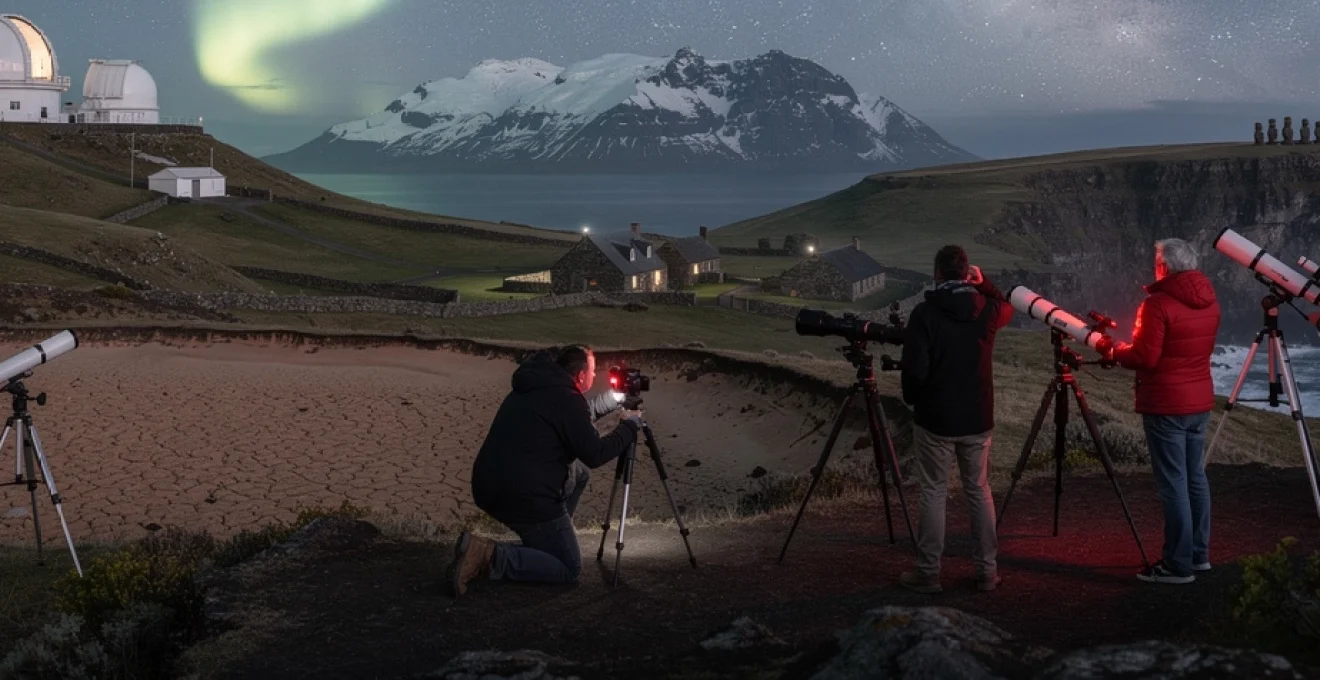
The night sky has captivated humanity for millennia, yet today’s urban glow obscures this celestial theatre for billions of people worldwide. With light pollution increasing by approximately 10% annually and affecting over 80% of the global population, pristine stargazing locations have become increasingly precious. Dark sky destinations offer refuge from artificial illumination, providing unparalleled opportunities to witness the cosmos in its full glory. These protected locations span continents, from remote desert observatories to high-altitude mountain peaks, each offering unique advantages for astronomical observation and astrophotography.
Professional astronomers and amateur stargazers alike seek these sanctuaries where the Milky Way stretches majestically across the heavens, meteor showers paint brilliant streaks against the darkness, and planetary details emerge with startling clarity. The International Dark-Sky Association has recognised numerous locations worldwide, establishing rigorous standards for light pollution control and environmental protection. These destinations combine natural darkness with exceptional atmospheric conditions, creating optimal environments for celestial observation.
Dark sky reserves and international Dark-Sky association certified locations
The International Dark-Sky Association’s certification programme represents the gold standard for stargazing destinations worldwide. These locations undergo rigorous assessment for light pollution levels, atmospheric clarity, and commitment to preserving natural darkness. Dark Sky Reserves encompass vast protected areas where strict lighting ordinances maintain exceptional viewing conditions, often spanning thousands of square kilometres of pristine wilderness.
The most exceptional dark sky reserves demonstrate Bortle Scale classifications of 1-2, indicating truly pristine conditions where even the faintest celestial objects become visible to the naked eye.
Aoraki mackenzie international dark sky reserve, new zealand
Covering an impressive 4,367 square kilometres, the Aoraki Mackenzie International Dark Sky Reserve holds the distinction of being the Southern Hemisphere’s first Gold-tier Dark Sky Reserve. This magnificent location combines exceptional atmospheric conditions with minimal light pollution, creating ideal environments for observing Southern Hemisphere constellations invisible from northern latitudes. The reserve’s unique geographical position provides access to celestial phenomena including the Southern Cross, Magellanic Clouds, and spectacular views of the galactic centre.
Lake Tekapo serves as the reserve’s primary observation hub, featuring the Mount John Observatory with its array of professional-grade telescopes. The facility offers guided stargazing sessions throughout the year, with winter months (April through September) providing the clearest atmospheric conditions. Astrophotographers particularly value this location for its stable atmospheric conditions and minimal atmospheric turbulence, essential factors for capturing detailed images of distant galaxies and nebulae.
Mont-mégantic national park dark sky reserve, quebec
Established as the world’s first International Dark Sky Reserve in 2007, Mont-Mégantic represents a pioneering achievement in dark sky preservation. Located approximately 250 kilometres east of Montreal, this 5,470-square-kilometre reserve demonstrates exceptional commitment to light pollution reduction through comprehensive municipal lighting regulations. The park’s observatory features one of eastern North America’s most powerful public telescopes, offering visitors access to professional-quality equipment typically reserved for research institutions.
Summer months provide optimal viewing conditions, with the reserve hosting numerous astronomy festivals and educational programmes. The location’s moderate climate and accessibility make it particularly suitable for novice stargazers seeking their first experience with truly dark skies. Visitors can observe spectacular meteor showers, planetary conjunctions, and detailed views of Saturn’s rings through the facility’s advanced optical systems.
Brecon beacons national park dark sky reserve, wales
Wales’s first International Dark Sky Reserve encompasses 1,347 square kilometres of dramatic mountain terrain, offering some of Europe’s darkest skies. The reserve’s high elevation and remote valleys create natural barriers against light pollution from distant urban areas. This location provides exceptional opportunities for observing northern hemisphere constellations, with winter months offering extended periods of darkness ideal for prolonged observation sessions.
The park’s network of designated stargazing sites includes purpose-built observation platforms and accessible viewing areas suitable for wheelchair users. Educational programmes focus on both astronomical observation and the cultural significance of dark skies in Welsh heritage. Aurora borealis viewing becomes possible during periods of high solar activity, with the park’s northern exposure providing occasional glimp
ses of shimmering curtains on the northern horizon. While the aurora here is less frequent than in Scandinavia, catching it above the rugged Welsh peaks can be an unforgettable bonus to an already world-class stargazing destination.
Kerry international dark-sky reserve, ireland
Located on Ireland’s southwest coast, the Kerry International Dark-Sky Reserve encompasses parts of the Iveragh Peninsula, including sections of the famed Ring of Kerry. Its Atlantic-facing coastline and sparsely populated interior create exceptionally low levels of light pollution, with large areas classified around Bortle Class 2. On clear winter nights, the Milky Way appears as a bright, mottled band stretching from horizon to horizon, and zodiacal light can sometimes be seen as a faint, triangular glow before dawn.
The reserve’s position at mid-northern latitudes makes it ideal for observing classic constellations such as Orion, Cassiopeia, and Ursa Major, as well as deep-sky objects like the Andromeda Galaxy. Local communities actively support dark-sky conservation, hosting annual festivals and guided night walks led by experienced astronomy guides. For visitors, this combination of rugged coastline, Celtic heritage, and truly dark skies creates one of the most compelling stargazing holidays in Europe.
Northumberland international dark sky park, england
Northumberland International Dark Sky Park covers more than 1,500 square kilometres across Northumberland National Park and Kielder Water & Forest Park, making it one of Europe’s largest protected dark-sky areas. Despite being in England, one of the world’s more densely populated countries, the park achieves Bortle Class 2–3 conditions over much of its interior thanks to its remote uplands and strict lighting controls. On moonless nights, observers can see thousands of stars with the naked eye and even hints of structure within the Milky Way.
The park’s Kielder Observatory has become a major centre for public astronomy, offering year-round observing sessions, astrophotography workshops, and themed events for both beginners and advanced observers. Winter often brings the best transparency and longest observing windows, though clear autumn and spring nights can be equally rewarding. For those looking to escape city lights without leaving the UK mainland, Northumberland offers one of the most accessible ways to experience near-pristine dark skies.
High-altitude desert observatory destinations
High-altitude desert regions combine two of the most important factors for exceptional stargazing: thin, dry air and minimal cloud cover. At these elevations, you are literally above a significant portion of Earth’s atmosphere, reducing turbulence and scattering that normally blur celestial objects. When you pair this with vast distances from urban light domes, you get some of the darkest, clearest skies anywhere on the planet—ideal for both visual observation and long-exposure astrophotography.
Many of the world’s premier professional observatories have been constructed in these environments for exactly this reason. As an astro-tourist, you gain the unique opportunity to observe from the same landscapes that host cutting-edge research on exoplanets, dark matter, and galaxy formation. However, high-altitude desert observing does require extra preparation: cold night-time temperatures, lower oxygen levels, and long travel distances mean you should plan carefully and respect both the environment and local regulations.
Atacama desert and alma observatory region, chile
The Atacama Desert in northern Chile is often described as the ultimate stargazing destination, and with good reason. Parts of this high plateau receive less than 1 mm of rain annually, making it one of the driest places on Earth. Combined with elevations exceeding 2,500 metres around San Pedro de Atacama and more than 5,000 metres at professional observatory sites, this region delivers incredibly stable, transparent skies. The result? A night sky so rich with stars that the Milky Way casts a faint shadow and dark nebulae appear as inky rivers cutting across the galactic glow.
The Atacama Large Millimeter/submillimeter Array (ALMA) and other facilities such as Paranal and the upcoming Vera C. Rubin Observatory highlight the scientific importance of this landscape. While ALMA itself does not generally offer casual telescope viewing, visitor centres and local tour operators in San Pedro de Atacama run guided stargazing sessions with high-quality telescopes and expert commentary. When planning a trip, keep in mind that nights can be extremely cold even in summer, and the high altitude may cause mild altitude sickness—acclimatisation and hydration are essential.
Mauna kea summit and visitor information station, hawaii
Hawaii’s Mauna Kea is legendary in the astronomical community, rising 4,207 metres above sea level and hosting some of the world’s most advanced optical and infrared telescopes. Its isolated mid-Pacific location, incredibly stable atmosphere, and low humidity create conditions that rival or exceed any other observing site on Earth. From the slopes of Mauna Kea, the Milky Way arches overhead like a luminous bridge, and faint deep-sky objects normally reserved for large telescopes become visible in binoculars.
Visitors typically observe from the Mauna Kea Visitor Information Station at around 2,800 metres, which offers safer conditions than the summit while still providing outstanding seeing. Ranger- or guide-led programmes often include orientation talks, star tours with green laser pointers, and access to medium-aperture telescopes. Due to altitude and cultural sensitivity—Mauna Kea is sacred to Native Hawaiians—it’s important to respect local guidelines: ascend slowly, dress in multiple warm layers, and follow all posted restrictions regarding summit access and lighting.
Death valley national park astronomical programs
Spanning parts of California and Nevada, Death Valley National Park is renowned for its extreme landscapes and equally extreme darkness. Much of the park approaches Bortle Class 1–2, placing it among the darkest accessible locations in the continental United States. The combination of below-sea-level basins, distant horizons, and arid desert air yields superb views of the Milky Way, zodiacal light, and faint star clusters that are often invisible from suburban skies.
The National Park Service and partner organisations host regular astronomy events, including ranger-led “Star Parties,” night-sky festivals, and astrophotography workshops. Prime observing sites such as Dante’s View, Badwater Basin, and Mesquite Flat Sand Dunes offer wide, unobstructed vistas ideal for panoramic night-sky images. Because summer temperatures can be dangerously high, most astro-tourism in Death Valley is concentrated between November and March, when nights are cooler and more comfortable for extended observing sessions.
Big bend national park remote viewing areas, texas
Big Bend National Park, nestled along a remote stretch of the Rio Grande in southwest Texas, boasts some of the darkest skies in the lower 48 states. The park’s isolation—hundreds of kilometres from major urban centres—results in Bortle Class 1–2 darkness across much of its 3,242-square-kilometre area. On clear nights, the Milky Way is so vivid that many first-time visitors mistake it for a band of clouds, and naked-eye observers can spot the Andromeda Galaxy and numerous open clusters without optical aid.
Key remote viewing areas include Santa Elena Canyon, the Chisos Basin, and the desert flats near Rio Grande Village. While you can stargaze year-round, spring and autumn offer the best combination of clear skies and comfortable temperatures. As with all desert stargazing trips, prepare thoroughly: bring extra water, a red-light headlamp, and let someone know your plans if you head to more isolated pullouts or backcountry sites after dark. In such a remote environment, your safety planning is just as important as your stargazing checklist.
Northern hemisphere aurora borealis viewing zones
For many travellers, witnessing the aurora borealis—northern lights—is the pinnacle of a stargazing trip. Unlike static constellations or galaxies, the aurora is a dynamic phenomenon driven by interactions between solar particles and Earth’s magnetic field. Curtains of green, purple, and red light ripple across the sky, sometimes bright enough to read by, sometimes faint and elusive. Because aurora activity is tied to solar cycles and geomagnetic conditions, planning an aurora-focused trip requires more flexibility than a typical dark-sky holiday.
Prime aurora viewing zones circle the geomagnetic pole in an oval that typically passes through northern Scandinavia, Iceland, northern Canada, and Alaska. Within this zone, long winter nights and clear, stable weather are your best allies. While the exact locations may vary, successful aurora hunters share several strategies: staying in dark-sky areas away from town lights, dedicating multiple nights to maximise chances, and monitoring real-time aurora forecasts. Think of it less as booking a single “showtime” and more as increasing your odds in a week-long celestial lottery.
Remote island archipelagos for celestial photography
Remote islands offer some of the most enchanting stargazing environments on Earth, combining dark skies with dramatic seascapes and minimal atmospheric pollution. Surrounded by water, many archipelagos enjoy stable air masses and reduced dust, which can sharpen views of stars and planets. For astrophotographers, these islands provide striking foregrounds—sea stacks, cliffs, lighthouses, and volcanic craters—that transform standard Milky Way shots into gallery-worthy compositions.
Of course, island stargazing comes with its own challenges. Weather can be unpredictable, clouds may roll in quickly from the ocean, and logistics can be more complex than a road trip to a national park. Yet for travellers willing to embrace a bit of uncertainty, the reward is a level of solitude and visual drama that is hard to match on the mainland. Below are several standout archipelagos where you can escape city lights and craft unforgettable celestial photographs.
Faroe islands dark sky photography locations
Perched in the North Atlantic between Iceland and Norway, the Faroe Islands offer a rugged backdrop of cliffs, waterfalls, and turf-roofed villages beneath relatively dark skies. While not as pristine as some interior continental sites, many Faroese locations achieve Bortle Class 3–4, which is impressive given their proximity to Europe. On clear nights, the Milky Way is easily visible, and during periods of strong geomagnetic activity, the aurora borealis can occasionally dance above sea stacks and fjords.
Popular dark-sky photography spots include the cliffs at Gásadalur, the dramatic coastline near Trælanípa and Sørvágsvatn, and more remote vantage points on the islands of Kalsoy and Viðoy. Because weather here changes rapidly, flexibility is key: you may need to move between islands or elevation levels to dodge low cloud. For long-exposure astrophotography, pack a sturdy tripod and weather-resistant clothing—Atlantic winds can be fierce, but they also clear the skies quickly after passing showers.
Shetland islands remote observing sites
Further east, the Shetland Islands off Scotland’s northern coast provide another compelling combination of high-latitude aurora potential and relatively dark skies. With a population spread across numerous small islands and villages, light pollution remains low, yielding Bortle Class 3 conditions in many rural areas. In winter, the “Mirrie Dancers” (local name for the aurora borealis) sometimes ripple across the sky, while in summer, you can experience the ethereal glow of “simmer dim,” the long twilight characteristic of high latitudes.
Excellent remote observing sites include coastal headlands on mainland Shetland, the cliffs of Eshaness, and quieter beaches on islands such as Yell and Unst. As with other northern archipelagos, strong winds and frequent cloud cover mean patience is essential. When the sky does clear, you are rewarded with crisp views of constellations reflected in calm seas or framed against ancient stone structures, adding historical depth to your night-sky images.
Easter island moai silhouette stargazing
Easter Island (Rapa Nui), located in the southeastern Pacific Ocean, is world-famous for its enigmatic moai statues—and its isolation also makes it a fascinating destination for stargazing. Situated at a relatively low latitude in the Southern Hemisphere and more than 3,500 kilometres from the nearest continental landmass, the island experiences minimal light pollution, with much of its terrain falling around Bortle Class 2–3. On clear nights, the Southern Cross, Magellanic Clouds, and rich star fields of the Milky Way dominate the sky.
For astrophotographers, the opportunity to capture the silhouettes of moai against a star-studded backdrop is unparalleled, though you must always respect local regulations and cultural sensitivities when accessing archaeological sites at night. Guided tours can help navigate both logistics and etiquette, ensuring that your nocturnal photography does not disturb protected areas. The combination of Polynesian cultural heritage and pristine southern skies makes Easter Island a unique, once-in-a-lifetime destination for celestial photography.
Azores archipelago volcanic crater viewing points
Located in the mid-Atlantic, Portugal’s Azores archipelago is increasingly recognised for its eco-tourism potential, including dark-sky experiences. While not as remote as the Faroe or Shetland Islands, the Azores benefit from relatively low population density and strict environmental policies, resulting in Bortle Class 3–4 skies across much of the rural landscape. The volcanic origins of the islands have left dramatic calderas, crater lakes, and ridgelines that serve as stunning foregrounds for Milky Way and constellation photography.
On São Miguel, viewpoints around Sete Cidades and Lagoa do Fogo provide elevated, 360-degree vistas ideal for wide-field astrophotography. On Pico Island, the towering stratovolcano of Pico itself offers opportunities for more adventurous observers—though night ascents should only be attempted with experienced guides and proper equipment. As always on islands, cloud cover can be a limiting factor, so plan several nights of observing and be ready to adapt your location based on real-time weather forecasts.
Light pollution assessment and bortle scale classifications
Understanding light pollution is essential when choosing the best destinations for stargazing far from city lights. Not all dark skies are equal: two locations that both seem “rural” can differ dramatically in how many stars you see and how much detail emerges in faint objects. This is where the Bortle Scale comes in—a nine-level classification system, from Class 1 (excellent dark-sky site) to Class 9 (inner-city sky), that helps observers quantify sky quality. While not a perfect scientific measure, it provides a practical framework for comparing locations and setting expectations.
At a Bortle Class 1 site, the Milky Way is richly structured, zodiacal light is visible, and even experienced observers may have difficulty recognising familiar constellations due to the sheer number of visible stars. By contrast, in a Class 5 or 6 suburban sky, only the brightest stars and a faint hint of the Milky Way (if any) remain. When planning a trip, combining Bortle estimates from local astronomy clubs with satellite-based light pollution maps allows you to identify genuine dark-sky sanctuaries rather than relying on vague descriptions like “rural” or “remote.”
So how can you, as a traveller, quickly assess sky quality on-site? One simple method is to count how many stars are visible in key constellations (such as the Little Dipper) and compare them with Bortle descriptions. Another is to look for features like the Milky Way’s dust lanes, the presence of zodiacal light, or the visibility of the Andromeda Galaxy to the naked eye—benchmarks that correlate with increasingly darker skies. Over time, you will develop an intuitive feel for different Bortle classes, just as a photographer learns to judge ambient light without a meter.
Professional astronomical equipment requirements for remote stargazing
While you can enjoy impressive night-sky views with nothing more than your eyes, remote dark-sky destinations invite you to push deeper into the cosmos. Choosing the right astronomical equipment is a bit like packing for a trek: bringing the heaviest, most powerful gear is tempting, but portability and ease of use often matter more than raw specifications. In many cases, a high-quality pair of binoculars and a compact travel telescope will outperform a large, unwieldy instrument you struggle to transport and align.
For visual observers, 8×40 or 10×50 binoculars strike an excellent balance between magnification, light-gathering power, and portability. Mounted on a simple tripod or monopod, they reveal craters on the Moon, Jovian moons, Saturn’s rings, and numerous star clusters under dark skies. If you wish to add a telescope, consider a small apochromatic refractor or collapsible Dobsonian in the 130–200 mm range. These designs maximise light-collecting area while remaining manageable for flights or long drives to remote sites, and they set up quickly in the dark.
Astrophotographers planning to take advantage of truly dark skies should prioritise a sturdy tripod, a camera body with good high-ISO performance, and fast wide-angle lenses in the 14–24 mm range. A compact star-tracker mount can dramatically improve your results by allowing longer exposures without star trailing, effectively turning your camera into a lightweight, wide-field telescope. Remember that in remote areas, power management becomes critical: spare batteries, power banks, and even small solar chargers can keep your tracking mounts and cameras running through multiple long nights of imaging.
Finally, no matter how advanced your gear, comfort and safety equipment are non-negotiable. A red-light headlamp, warm layered clothing, hot drinks, and a reliable GPS or offline maps app can make the difference between a memorable observing session and a miserable one. Think of it this way: your telescope shows you the universe, but your preparation determines how long and how often you can look up. By matching your equipment to your destination and travel style, you ensure that the world’s best dark-sky locations live up to their full potential when you finally stand beneath them and gaze into the stars.