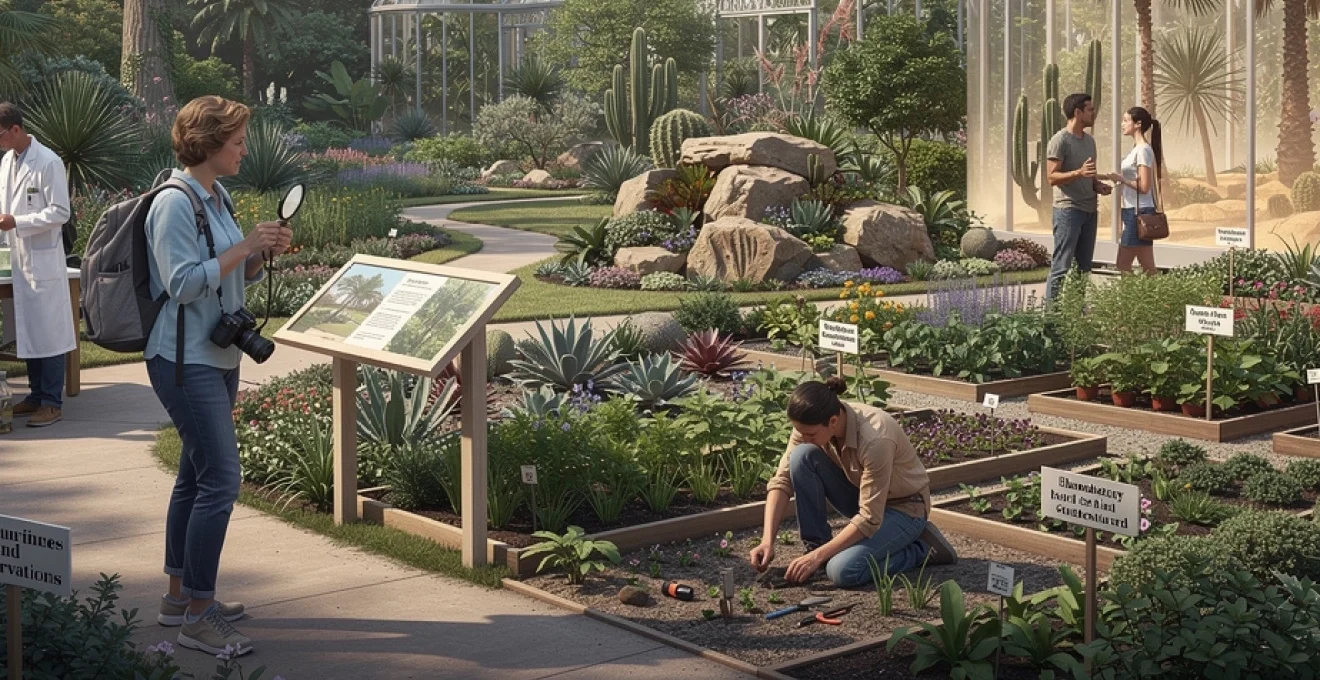
When travellers plan their itineraries, they often gravitate towards famous landmarks, museums, and cultural attractions. However, botanical gardens represent one of the most underappreciated travel experiences available worldwide. These living repositories of plant knowledge offer far more than mere aesthetic beauty—they serve as windows into local ecosystems, conservation efforts, and centuries-old horticultural wisdom. Whether you’re exploring the sprawling collections at Kew Gardens or discovering endemic species in remote mountain gardens, botanical institutions provide profound insights into the natural world whilst offering respite from urban environments.
Modern botanical gardens have evolved far beyond simple plant displays to become sophisticated research centres, educational facilities, and conservation sanctuaries. They preserve endangered species, conduct cutting-edge scientific research, and maintain living collections that represent biodiversity from across the globe. For travellers seeking meaningful experiences beyond conventional tourist attractions, botanical gardens offer opportunities to engage with local flora, understand regional environmental challenges, and appreciate the intricate relationships between plants and human culture.
Biodiversity conservation and plant taxonomy education through garden collections
Contemporary botanical gardens serve as crucial bastions for biodiversity conservation in an era of unprecedented environmental change. These institutions maintain extensive living collections that preserve genetic diversity whilst providing platforms for taxonomic research and species identification. Many gardens house rare and endangered plants that exist nowhere else in cultivation, making them essential repositories for future conservation efforts.
The educational value of these collections extends far beyond basic plant identification. Visitors can observe evolutionary relationships between species, understand adaptation mechanisms, and witness firsthand how plants respond to different environmental conditions. This direct engagement with botanical diversity creates lasting impressions that traditional textbook learning simply cannot match.
Endemic species preservation at royal botanic gardens, kew
The Royal Botanic Gardens at Kew exemplifies world-class conservation through its comprehensive approach to endemic species preservation. Home to over 50,000 living species, Kew’s collections include numerous plants that are extinct in their natural habitats. The gardens maintain sophisticated propagation facilities that enable staff to breed rare species and eventually reintroduce them to restored wild environments.
Kew’s Millennium Seed Bank Project represents one of the most ambitious conservation initiatives globally, housing seeds from over 40,000 plant species. This underground facility maintains seed viability for centuries, ensuring that future generations will have access to genetic material from plants that may disappear from wild populations due to climate change or habitat destruction.
Living seed banks and Ex-Situ conservation programmes
Modern botanical gardens operate sophisticated ex-situ conservation programmes that complement in-situ preservation efforts in natural habitats. These programmes involve maintaining live plant collections, seed banks, and tissue culture facilities that preserve genetic material from threatened species. Many gardens coordinate internationally to ensure comprehensive coverage of regional flora and prevent genetic bottlenecks in rare species populations.
The integration of traditional seed storage techniques with modern cryopreservation methods enables gardens to maintain viable genetic material for extended periods. Some facilities utilise liquid nitrogen storage systems that can preserve seeds and plant tissues for hundreds of years, creating insurance populations against future extinction events.
Taxonomic research facilities and herbarium collections
Botanical gardens house extensive herbarium collections that serve as permanent reference libraries for plant identification and taxonomic research. These dried plant specimens, some dating back centuries, provide crucial evidence for species descriptions and evolutionary studies. Modern herbaria utilise digital imaging and molecular techniques to enhance traditional morphological classification methods.
Research facilities within botanical gardens often collaborate with universities and international institutions to conduct phylogenetic studies that reveal evolutionary relationships between plant groups. This research contributes to our understanding of plant evolution and helps identify conservation priorities based on evolutionary distinctiveness and genetic diversity.
Climate change adaptation studies in controlled environments
Botanical gardens provide ideal settings for studying how plants respond to changing environmental conditions. Controlled greenhouse environments allow researchers to simulate future climate scenarios and observe plant responses to increased temperatures, altered precipitation patterns, and elevated carbon dioxide levels. These studies inform conservation strategies and help identify species that may be particularly vulnerable to climate change.
Long-term phenological records maintained by botanical gardens reveal how flowering times, fruiting patterns, and growth cycles have shifted in response to changing climatic conditions. This data proves invalu
sable for tracking long-term environmental change and provides policymakers with concrete evidence of climate impacts on regional flora.
For travellers, these climate-focused exhibits and research plots offer a rare glimpse into how future landscapes may look. Interpretive signage often explains how local trees, shrubs, and wildflowers are shifting their ranges or flowering earlier in spring. As you walk through experimental beds or climate gardens, you are, in effect, stepping into a living laboratory where scientists test adaptation strategies such as assisted migration, drought-tolerant planting schemes, and resilient urban forestry models. This context can fundamentally change the way you see the surrounding city or countryside for the rest of your trip.
Horticultural techniques and landscape design methodologies
One of the great joys of visiting botanical gardens while travelling is discovering new horticultural techniques and landscape design ideas that you can later apply at home. Unlike private estates, public gardens are designed to be didactic spaces: beds are labelled, planting combinations are explained, and maintenance practices are often demonstrated through workshops and guided tours. As you move from one themed area to another, you effectively walk through a series of full-scale case studies in sustainable garden design.
These institutions experiment with everything from soil regeneration methods to low-input irrigation systems. You might encounter edible landscapes integrated into ornamental borders, wildlife-friendly planting along paths, or rain gardens that manage stormwater whilst looking beautiful. For travellers interested in sustainable living, a day in a well-designed botanical garden can feel like an intensive short course in practical ecology, with each border and glasshouse offering lessons in how to work with, rather than against, local conditions.
Permaculture principles at eden project cornwall
The Eden Project in Cornwall provides a particularly compelling example of how permaculture principles can be applied at scale. Built in a former clay pit, the site demonstrates how degraded landscapes can be regenerated through careful design, soil restoration, and the strategic use of pioneer species. Visitors walking through its outdoor gardens and iconic biomes encounter layered planting, rainwater harvesting systems, and integrated wildlife habitats that echo natural ecosystems.
Permaculture concepts such as stacking functions—where a single plant or element serves multiple purposes—are made visible through mixed plantings that provide food, shelter for pollinators, and erosion control. When you observe how paths follow contours, how water is slowed and stored, or how windbreaks protect more delicate species, abstract diagrams from permaculture books suddenly come to life. As a traveller, you leave not just with pretty photos but with concrete ideas for creating resilient, productive spaces in your own garden or community.
Xerophytic garden design in mediterranean climates
In regions with hot, dry summers—such as parts of Spain, Greece, California, and Australia—botanical gardens often maintain dedicated xerophytic or Mediterranean-climate collections. These areas showcase drought-tolerant plants like agaves, aloes, lavenders, and native shrubs, arranged in ways that maximise shade, reduce evaporation, and minimise irrigation needs. For visitors from cooler or wetter climates, these gardens can feel almost otherworldly, yet they hold vital lessons in water-wise gardening.
Design strategies such as gravel mulches, terracing, and the use of pale paving to reflect heat are all on display, allowing you to see the cumulative effect of decades of experimentation. Rather than relying on thirsty lawns, paths may snake through mixed plantings that deliver year-round interest with minimal inputs. If you are planning a garden in a warming climate, observing these xerophytic designs in situ can be as instructive as attending a formal course, giving you a realistic sense of plant size, growth rate, and seasonal appearance.
Companion planting systems and polyculture arrangements
Many contemporary botanical gardens have embraced edible and agro-ecological displays that explore companion planting and polyculture systems. Instead of rigid rows of single crops, you might find vegetables, herbs, and flowers interplanted in patterns that recall natural plant communities. Marigolds nestle beside tomatoes, nitrogen-fixing legumes grow among fruit trees, and flowering herbs draw in beneficial insects that help keep pests in check.
Seeing these combinations at maturity offers insights that seed catalogues and diagrams cannot. How tall does that heritage maize really get? How much space do squash vines require when grown under fruit trees? As you walk through these polyculture beds, you can observe vertical layering, successional planting, and seasonal rotation in action. It is rather like watching a well-rehearsed orchestra, where each plant plays its part in maintaining the health and productivity of the whole system.
Micropropagation laboratories and tissue culture facilities
Behind the scenes, many botanical gardens maintain micropropagation laboratories and tissue culture facilities that support both conservation and horticultural innovation. Through sterile in-vitro techniques, staff can rapidly multiply rare plants, disease-free rootstocks, or new ornamental cultivars that might otherwise be difficult to propagate. For travellers with a scientific or horticultural interest, tours of these facilities (when available) reveal the painstaking work required to support the lush displays seen outdoors.
Even when the labs themselves are not open to visitors, interpretive exhibits often explain how a tiny fragment of plant tissue can be encouraged to form roots and shoots under controlled conditions. This process, which may sound abstract on paper, becomes more tangible when you see rows of jars filled with miniature ferns, orchids, or endangered shrubs. Understanding this invisible infrastructure deepens your appreciation for the technical expertise underpinning every botanical garden collection you encounter on your travels.
Ethnobotanical collections and traditional plant medicine systems
Beyond horticulture and design, botanical gardens excel at highlighting the relationships between plants and people through ethnobotanical collections. These curated areas explore how different cultures have used local flora for food, medicine, textiles, rituals, and construction over millennia. For travellers, such displays offer a powerful way to connect with the cultural landscape of a destination, revealing stories that may not appear in standard guidebooks.
By walking through beds organised by region, Indigenous group, or medical tradition, you begin to see plants not just as decorative elements but as cultural artefacts embedded in language, ceremony, and daily life. Labels and interpretive panels often include vernacular plant names, historical uses, and contemporary scientific research, helping you bridge the gap between traditional knowledge and modern pharmacology. In this way, a visit to an ethnobotanical garden can feel like stepping into a living encyclopedia of human–plant relationships.
Ayurvedic medicinal gardens at chelsea physic garden
Chelsea Physic Garden in London, founded in 1673, is one of the oldest botanic gardens devoted to medicinal plants. Among its themed beds, the Ayurvedic garden stands out for travellers interested in South Asian healing traditions. Here, species such as Withania somnifera (ashwagandha), Ocimum tenuiflorum (holy basil), and various gingers are grown according to the principles of Ayurveda, which emphasises balance between body, mind, and environment.
Interpretive boards explain how different plants correspond to the three doshas—Vata, Pitta, and Kapha—and how preparations like decoctions, oils, and pastes are traditionally made. For visitors who may only know these herbs from supplement bottles or wellness blogs, seeing them as living organisms grounds the tradition in reality. It also raises important questions: How are these plants sourced? What ecological pressures do wild populations face? A thoughtful garden visit can thus shift your perspective from passive consumer to informed participant in global medicinal plant networks.
Indigenous australian flora at royal botanic gardens melbourne
At the Royal Botanic Gardens in Melbourne, dedicated sections celebrate Indigenous Australian flora and the knowledge systems of First Nations communities. Species such as grass trees, wattles, and native grasses are accompanied by interpretive material describing their uses for food, fibre, tools, and ceremony. Rather than presenting this information as a relic of the past, the garden highlights ongoing cultural connections and contemporary land management practices.
As you traverse these landscapes, you may learn how certain plants are used for weaving, how others signal seasonal changes, or how fire has traditionally been used as a tool for regenerative land stewardship. This encounter can profoundly deepen your understanding of the country you are visiting, moving beyond surface-level sightseeing towards a more respectful engagement with place. In many cases, guided walks led by Indigenous rangers or educators provide additional context and create opportunities for meaningful dialogue.
Traditional chinese medicine herb collections
Many major botanical gardens across Asia, Europe, and North America now maintain collections devoted to Traditional Chinese Medicine (TCM). These areas bring together species like Panax ginseng, Ginkgo biloba, Astragalus membranaceus, and various medicinal fungi, arranged according to their roles in classical formulas or organ systems. For travellers who have encountered TCM through acupuncture clinics or herbal pharmacies, these gardens offer a rare opportunity to see the raw ingredients growing in the soil.
Detailed labels often explain which parts of the plant are used—roots, bark, leaves, or seeds—and whether they are harvested wild or cultivated. You may also learn about sustainability challenges, such as overharvesting of wild populations or the need for certified cultivation. By contextualising TCM within broader discussions of conservation and ethical sourcing, botanical gardens encourage visitors to consider the ecological footprint of popular wellness trends.
Amazonian rainforest medicinal plant research
Some botanical gardens, particularly those with strong research mandates, participate in projects focused on Amazonian rainforest medicinal plants. Through collaborations with local communities and institutions in South America, they cultivate species that have long been used in Indigenous healing systems, from anti-malarial shrubs to plants with analgesic or anti-inflammatory properties. These ex-situ collections serve both as research resources and as platforms for educating the public about rainforest conservation.
For travellers encountering these displays, the experience can be eye-opening. You may discover that compounds in familiar pharmaceuticals originated from obscure rainforest vines, or that many potentially life-saving plants remain understudied because their habitats are threatened by deforestation. The analogy often drawn is that of a library being burned before its books have been read: each lost species may contain information crucial to future medicine. Standing among these plants, your appreciation of tropical forests shifts from abstract concern to a sense of urgent, personal relevance.
Specialised glasshouse environments and controlled climate systems
Specialised glasshouses are among the most memorable features of many botanical gardens, allowing visitors to experience multiple climates in a single afternoon. Step from a cool temperate fern house into a humid tropical conservatory, then into a desert pavilion filled with cacti and succulents, and you effectively travel thousands of kilometres without leaving the site. For travellers, these transitions highlight how plant life has adapted to extremes of temperature, moisture, and light across the globe.
Behind the scenes, sophisticated climate control systems regulate temperature, humidity, and ventilation, often using automated shading, misting, and energy-efficient glazing. Some gardens now integrate renewable energy sources or heat-recovery systems to reduce their environmental footprint, turning glasshouses into showcases of sustainable engineering as well as botany. As you move through these spaces, look for interpretive displays explaining how microclimates are created and managed; understanding these mechanisms can inspire ideas for creating more stable growing conditions in your own greenhouse or indoor plant collection.
Botanical photography and scientific documentation techniques
Botanical gardens offer ideal conditions for photographers of all levels to refine their skills, thanks to abundant subjects, varied light conditions, and relatively controlled environments. Whether you are capturing the intricate geometry of a succulent or the translucent petals of a spring ephemeral, these settings invite close observation. For travellers, photography becomes more than a means of collecting souvenirs; it turns into a tool for scientific documentation and deeper engagement with plant diversity.
Many gardens provide guidance on ethical photography practices, such as avoiding trampling beds or disturbing wildlife. Some host workshops on macro photography, smartphone techniques, or citizen science projects in which visitors upload geotagged images to biodiversity databases. By participating, you contribute to long-term records of flowering times, pest outbreaks, or the spread of invasive species—effectively turning your holiday snapshots into useful data. The process is much like keeping a travel journal, but in visual form and with the added benefit of supporting ongoing research.
Seasonal phenology and plant lifecycle observation methods
Finally, botanical gardens are invaluable places to observe seasonal phenology—the timing of key life-cycle events such as budburst, flowering, fruiting, and leaf fall. Because many institutions record these events year after year, they provide some of the longest and most detailed plant calendars available. As a visitor, you can tap into this knowledge simply by noting which collections are highlighted in a given month, or by consulting seasonal maps that suggest routes to see the best displays.
Engaging with phenology as you travel can change the way you experience time and place. Rather than thinking only in terms of dates or temperatures, you begin to notice patterns: the first magnolias along a path, the shift from spring bulbs to summer perennials, or the quiet beauty of seed heads in late autumn. Some gardens invite visitors to become phenology volunteers, recording flowering times via apps or observation cards. By joining in, you help build datasets that reveal how climate change is altering local seasons—turning your leisurely stroll into a small but meaningful act of environmental monitoring.