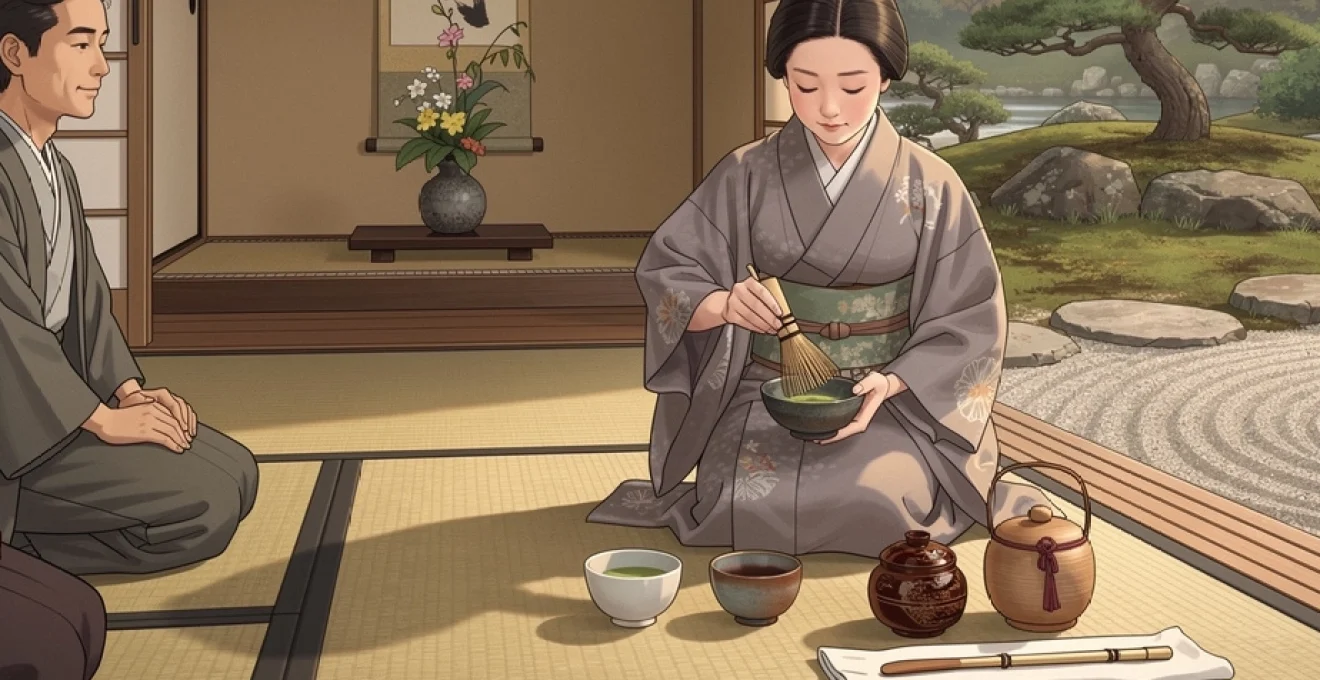
Few cultural experiences capture the essence of Japanese aesthetics, philosophy, and hospitality quite like the traditional tea ceremony. This ritualized preparation and consumption of matcha green tea transcends mere beverage service, transforming into a meditative art form that has captivated practitioners and guests for over five centuries. Rooted in Zen Buddhist principles and refined through generations of dedicated masters, the tea ceremony—or chanoyu—offers visitors to Japan an intimate glimpse into values that have shaped the nation’s cultural identity. Whether you’re attending a formal chaji gathering lasting several hours or participating in a more accessible chakai demonstration, understanding the foundations, protocols, and nuances of this ancient practice will profoundly enhance your appreciation of this quintessentially Japanese tradition.
Understanding chanoyu: the philosophical foundations of japanese tea ceremony
The Japanese tea ceremony represents far more than choreographed movements and beautiful ceramics. At its core, chanoyu—literally “hot water for tea”—embodies a complete worldview integrating aesthetics, spirituality, and social harmony. This philosophical depth distinguishes the Japanese approach from tea traditions in other cultures, elevating what could be a simple refreshment into a transformative experience.
Wabi-sabi aesthetics and sen no rikyū’s four principles: wa, kei, sei, jaku
The aesthetic philosophy underlying tea ceremony centers on wabi-sabi, the appreciation of imperfection, impermanence, and incompleteness. This concept celebrates the beauty found in weathered wood, asymmetrical pottery, and the fleeting nature of seasonal flowers—all elements that contribute to the tea room’s atmosphere. Rather than pursuing ostentatious perfection, tea practitioners embrace the rustic, understated elegance that reveals deeper truths about existence.
Sen no Rikyū, the 16th-century tea master who codified many contemporary practices, established four fundamental principles that continue to guide every aspect of the ceremony. Wa (harmony) speaks to the balanced relationships between host and guests, utensils and environment, and humans and nature. Kei (respect) manifests in the bows exchanged, the careful handling of tea implements, and the sincere appreciation shown for each element of the gathering. Sei (purity) extends beyond physical cleanliness to encompass mental and spiritual purification, symbolized by the ritual hand-washing before entering the tea room. Finally, jaku (tranquility) represents the ultimate goal—a state of inner peace achieved through mindful participation in the ceremony.
These four principles work synergistically to create an atmosphere where guests can temporarily escape worldly concerns and discover moments of profound presence and connection.
Ichigo ichie: the concept of Once-in-a-Lifetime encounters in tea gatherings
Perhaps no concept captures the spirit of tea ceremony more poignantly than ichigo ichie—”one time, one meeting.” This phrase, popularized by tea master Ii Naosuke in the 19th century, reminds participants that every tea gathering is unique and unrepeatable. Even if the same people gather in the same room with identical utensils, the passage of time, changing seasons, and evolving consciousness ensure that no two ceremonies are truly alike.
This philosophy encourages both hosts and guests to approach each gathering with complete sincerity and presence. The host meticulously selects every element—from the hanging scroll to the sweets served—to create an experience perfectly suited to that particular moment, those specific guests, and the current season. Guests, in turn, receive the offering with full attention and gratitude, recognizing the ephemeral nature of the shared experience. This awareness transforms a simple tea gathering into something sacred, where mundane actions become meaningful rituals worthy of complete devotion.
Zen buddhism’s influence on ceremonial mindfulness and meditative practice
The tea ceremony’s historical development is inseparable from Zen Buddhism, which profoundly shaped its philosophical underpinnings and practical execution. Zen monks originally
introduced tea to Japan from China during the Tang and Song dynasties, and over time, Zen temples became crucial centers for tea culture. Monks drank whisked green tea to maintain alertness during long hours of meditation, but they also embraced tea as a vehicle for cultivating awareness in everyday actions. In this way, making tea became a form of moving meditation, where every gesture—from folding the silk cloth to lifting the tea bowl—is executed with full concentration. For modern visitors experiencing a Japanese tea ceremony, this Zen influence is palpable in the deliberate pace, the silence, and the emphasis on breathing and posture throughout the ritual.
Central to this Zen-infused practice is the idea of mushin, or “no-mind,” a state in which the host performs each movement without distraction or self-consciousness. Much like a calligrapher whose brush seems to move of its own accord after years of training, an experienced tea master appears to act effortlessly, yet every motion has been refined through repetition. As guests, we are invited into this same quality of presence: listening to the kettle’s soft simmer—often poetically described as the sound of wind in the pines—becomes as important as tasting the matcha itself. Through this, the tea ceremony functions as an accessible gateway into Japanese meditative practice, even if you have never set foot in a Zen monastery.
The historical evolution from tang dynasty china to muromachi period japan
The roots of the Japanese tea ceremony reach back to the Tang Dynasty (618–907) in China, when Buddhist monks brought both tea seeds and preparation methods to Japan. Initially, tea was consumed primarily as a medicinal and monastic drink, valued for its ability to ward off fatigue and support long hours of study and meditation. By the Heian period (794–1185), members of the imperial court had also begun to enjoy tea, though it remained an elite luxury. Tea at this stage was far from the codified chanoyu you encounter today; it was simply a prized imported beverage.
It was during the Kamakura (1185–1333) and Muromachi (1336–1573) periods that tea culture in Japan evolved dramatically. Zen priest Eisai is often credited with reintroducing tea seeds and advocating green tea for both spiritual and physical health in his 12th‑century treatise. Tea gatherings known as tōcha became popular among the warrior and aristocratic classes, featuring blind tasting games and displays of prized Chinese tea bowls and utensils. Over time, however, these luxurious parties gave way to a more restrained, spiritually oriented style of gathering, influenced by Zen’s emphasis on simplicity. It was within this climate that pioneers like Murata Jukō and, later, Sen no Rikyū transformed tea from entertainment into a disciplined “Way”—sadō or chadō—that still shapes Japanese tea ceremonies in the 21st century.
Navigating the three major tea schools: urasenke, omotesenke, and mushakōjisenke
Modern Japanese tea ceremony practice is dominated by three main lineages collectively known as the “San-Senke”—the three Sen families descended from Sen no Rikyū. While they share a common foundation, each school has developed its own stylistic nuances, preferred utensils, and approaches to teaching. For travelers planning to experience a tea ceremony in Japan, understanding these differences can help you choose the kind of encounter that best suits your interests. Will you gravitate toward Urasenke’s global outlook, Omotesenke’s restrained formality, or Mushakōjisenke’s quiet classicism?
In practice, you’ll most likely encounter Urasenke, as it operates numerous cultural centers and outreach programs worldwide. Omotesenke and Mushakōjisenke, though slightly less visible to international visitors, maintain strong reputations for their devotion to classical technique and subtle aesthetics. All three train their teishu (hosts) to an exacting standard, often over decades of study. When you sit in a tearoom belonging to one of these schools—whether in Kyoto, Tokyo, or beyond—you’re not just drinking tea; you’re stepping into a living tradition that has been transmitted from teacher to student in an unbroken line since the late 16th century.
Urasenke school ceremonies at konnichian in kyoto: modern accessibility and international outreach
Urasenke is the largest and most internationally recognized tea school, known for its commitment to sharing chanoyu with a global audience. Its headquarters, Konnichian, is located in Kyoto and includes a cluster of historic tea rooms and gardens that reflect centuries of architectural evolution. While some spaces remain reserved for advanced practitioners and special occasions, Urasenke regularly hosts public demonstrations, lectures, and short-format tea experiences designed for visitors with little or no prior knowledge of Japanese tea ceremony. For many foreign guests, their first authentic encounter with chanoyu takes place under the guidance of Urasenke instructors.
This accessibility is no accident. Urasenke has long invested in cultural exchange, operating branches and study groups across Europe, the Americas, and Asia. Instruction manuals and educational materials are often available in multiple languages, making it easier for you to understand the meaning behind each gesture rather than simply imitating it. At Konnichian, you may observe both formal and informal preparations—thick tea (koicha) and thin tea (usucha)—and gain insight into how the school adapts traditional etiquette for modern lifestyles without compromising core principles. If you’re curious about deepening your study beyond a one‑time experience, Urasenke is usually the most approachable entry point.
Omotesenke traditions: fushin-an tea house protocols and formal etiquette variations
Omotesenke, centered around its historic tea house Fushin-an in Kyoto, is often associated with a particularly understated and classical style of tea. Compared with Urasenke, Omotesenke tends to favor slightly quieter colors, less frothy whisking of matcha, and a reserved handling of utensils that emphasizes economy of movement. At Fushin-an, the architecture and garden design echo this refined simplicity, with rustic materials and carefully framed views that highlight seasonal changes. Visitors who appreciate a minimalist atmosphere and subtle details often find Omotesenke’s approach especially compelling.
From an etiquette perspective, Omotesenke maintains some distinct practices that you might notice during a ceremony. For example, the way the whisk is handled, how the fukusa (silk cloth) is folded, and the degree of matcha foam are all characteristic markers. While casual guests aren’t expected to distinguish these nuances, they contribute to the overall feeling of the gathering. If you have an opportunity to attend an Omotesenke-style tea ceremony, expect a strong emphasis on composure, silence, and respect; observing how guests bow, inspect utensils, and move around the tatami can be as instructive as the tea preparation itself.
Mushakōjisenke practice: official-an tea room architecture and ceremonial distinctions
The third of the main Sen lineages, Mushakōjisenke, is headquartered at Official-an in Kyoto’s Kamigyo district. Smaller and somewhat less public-facing than Urasenke or Omotesenke, this school is highly regarded among connoisseurs for preserving a rigorous, almost ascetic interpretation of Rikyū’s ideals. Official-an’s tea rooms often emphasize intimate proportions, subdued lighting, and carefully aged materials that reinforce the sense of stepping back in time. For guests fortunate enough to attend a ceremony here or at a Mushakōjisenke-affiliated venue, the experience can feel like entering a private sanctuary.
Ceremonial distinctions in Mushakōjisenke include particular methods of folding the fukusa, unique approaches to handling the tea caddy and ladle, and a pronounced focus on the tactile qualities of utensils. Matcha is whisked with precision, producing a texture and aroma that reflect centuries of refinement. Because formal training is typically reserved for dedicated students, tourists are less likely to encounter Mushakōjisenke in casual settings; however, special cultural programs and seasonal events sometimes open a window into this lineage. If your goal is to experience the most traditional tea ceremony in Japan, seeking out a Mushakōjisenke demonstration can be a rewarding challenge.
Comparative analysis of temae procedures across the three sen lineages
While Urasenke, Omotesenke, and Mushakōjisenke all prepare matcha using the same basic tools, their temae—the codified procedures of making and serving tea—differ in subtle but meaningful ways. Think of these variations like dialects of the same language: mutually intelligible, yet instantly recognizable to a trained ear. For instance, Urasenke typically whisks usucha to a creamy, foamy texture, whereas Omotesenke prefers a quieter, less frothy surface. The shape of the tea scoop’s motion, the angle of the ladle when pouring hot water, and the pattern of wiping the bowl are all fine details that set each school apart.
For visitors, the most practical takeaway is that there is no single “correct” way to perform a Japanese tea ceremony. Instead, each school embodies a different interpretation of Rikyū’s principles—harmony, respect, purity, and tranquility. If you have the opportunity to attend multiple ceremonies across Japan, you might begin to notice these distinctions: perhaps the tempo feels faster in one school, or the choice of utensils more rustic in another. Allowing yourself to observe these contrasts with curiosity, rather than judgment, can deepen your appreciation of chanoyu as a living, evolving art rather than a static museum piece.
Essential tea ceremony utensils: the dōgu collection and their ritualistic functions
No Japanese tea ceremony is complete without its carefully curated set of utensils, collectively known as dōgu. Each item—from the tea bowl to the bamboo scoop—carries both practical and symbolic significance, and many are chosen to reflect the season, the occasion, or the personality of the guest of honor. For practitioners, selecting and handling dōgu is itself a form of aesthetic training; for visitors, learning the names and roles of key utensils can transform the experience from passive observation into informed appreciation. You might be surprised how much meaning is hidden in an apparently simple wooden ladle or linen cloth.
Over time, tea masters and artisans have developed regional styles and lineages of ceramics, lacquerware, and bamboo craft that are closely tied to tea ceremony culture. High-quality pieces, especially those associated with famous kilns or historical tea masters, can be extraordinarily valuable and are often treated as family heirlooms. When you watch a host gently rotate a bowl or wipe a tea caddy, you’re witnessing not just respect for an object, but reverence for the generations of craftsmanship that produced it. Understanding these utensils is one of the most rewarding steps in deepening your experience of traditional tea ceremonies in Japan.
Chawan selection: raku-yaki, hagi-yaki, and karatsu-yaki bowl characteristics
The chawan, or tea bowl, is arguably the most iconic utensil in chanoyu. More than a simple container, it is the focal point through which host and guest connect. Three celebrated types often encountered in tea ceremonies are Raku-yaki, Hagi-yaki, and Karatsu-yaki, each with its own tactile and visual character. Raku-yaki bowls, historically favored by Sen no Rikyū, are hand-shaped rather than wheel-thrown, with thick walls and a soft, almost fleshy feel that warms quickly in the hands. Their glazes often exhibit deep, lustrous blacks or earthy reds, embodying the wabi-sabi ideal of rustic beauty.
Hagi-yaki, originating from Yamaguchi Prefecture, is prized for its milky, porous glazes that subtly change over time as tea seeps into the clay—an aging process cherished by connoisseurs. Karatsu-yaki, from Kyushu’s Saga Prefecture, tends to feature simple iron-oxide brushwork on pale backgrounds, evoking landscapes or grasses with a single, confident stroke. When you attend a tea ceremony in Japan, take a moment to feel the bowl’s weight, notice slight irregularities in its shape, and observe how its color complements the season. These details are intentional: the chawan is chosen not only for functionality but to enhance the mood of the gathering.
Chasen bamboo whisks: 80-prong versus 120-prong configurations for usucha and koicha
The chasen, or bamboo whisk, is the instrument that brings matcha to life, transforming powdered tea and hot water into a smooth, drinkable suspension. Crafted from a single piece of bamboo split into dozens of fine tines, a chasen can range from roughly 60 to over 120 prongs depending on its intended use. For usucha, or thin tea, whisks with around 80–100 prongs are common, as they create a light, airy foam beloved in contemporary tea gatherings. For koicha, the thick, almost syrupy form of matcha served at more formal events, a slightly sturdier chasen—often with fewer, thicker prongs—is preferred to handle the denser consistency.
The choice between an 80‑prong and a 120‑prong whisk is a bit like choosing between a wire whisk and a balloon whisk in Western cooking: both work, but each excels at a different texture. Experienced hosts often own multiple chasen suited to different teas, seasons, and ceremonial formats. If you participate in a hands-on tea lesson, you may be invited to whisk your own bowl of matcha; paying attention to how the whisk moves—gently for koicha, briskly in an “M” or “W” motion for usucha—can give you a deeper feel for the craft. Proper care, including rinsing in warm water and air-drying, helps extend the life of these delicate tools.
Natsume and chaire: lacquerware and ceramic tea caddies in seasonal contexts
Tea caddies used in chanoyu come in two main forms: the natsume, a small lacquered container typically used for usucha, and the chaire, a ceramic caddy reserved for koicha. The natsume, named after the jujube fruit it resembles, often features a sleek black or subdued colored lacquer, occasionally embellished with delicate gold maki-e designs. Its simplicity allows the host to introduce seasonal motifs—such as cherry blossoms in spring or maple leaves in autumn—without overwhelming the tearoom’s overall restraint. In contrast, the chaire is usually smaller, with a tight-fitting ivory or bone lid and a protective silk pouch (shifuku) that adds an extra layer of formality.
Seasonality plays a significant role in choosing between different styles of natsume and chaire. During warmer months, lighter colors and airy patterns are favored, whereas winter ceremonies might feature darker, more subdued hues that evoke warmth and introspection. When you watch the host purify and open the tea caddy, note how much attention is given to a container that, on the surface, simply holds powder. This ritualized handling reminds everyone present that the value of the Japanese tea ceremony lies as much in mindfulness and symbolism as in the taste of the tea itself.
Chashaku bamboo scoops and chakin linen cloths: purification ritual implements
The chashaku, a slender bamboo scoop, and the chakin, a plain white linen cloth, are two of the most understated yet symbolically rich utensils in the tea ceremony. The chashaku measures out the matcha, typically one to three scoops depending on the style of tea; its curved tip and polished surface are shaped to glide smoothly through the powder. Some chashaku are carved by renowned tea masters or named after poetic themes, adding another layer of meaning. During the ceremony, the scoop is handled with great care, emphasizing the preciousness of even the smallest quantity of tea.
The chakin, used to wipe and “purify” the tea bowl, represents both physical and spiritual cleanliness. Before preparing the tea, the host uses the chakin in a prescribed sequence of folds and strokes, signaling to guests that all is in order and ready. While it may appear to be a simple cleaning cloth, its presence reinforces the principle of sei—purity—central to chanoyu. When you attend a ceremony, observe how these humble tools, which might go unnoticed in everyday life, are elevated into central actors in a carefully choreographed ritual.
Experiencing authentic tea ceremonies: venues from kyoto’s kinkaku-ji to tokyo’s happo-en
Knowing the philosophy and utensils behind Japanese tea ceremony is one thing; experiencing chanoyu in a real tearoom is another. Across Japan, from Kyoto’s ancient temples to Tokyo’s sophisticated gardens, you’ll find a wide spectrum of tea ceremony venues tailored to different levels of interest and formality. Some offer quick introductions ideal for first-time visitors, while others host multi-hour chaji gatherings that immerse you in traditional hospitality, seasonal cuisine, and contemplative silence. How do you choose the right setting for your trip?
When planning, consider three main factors: location, formality, and language support. Historical sites like Kinkaku-ji or Kenrokuen often provide picturesque backdrops and a strong sense of authenticity, but may have limited English explanations. Modern cultural centers and private tea houses in cities such as Kyoto and Tokyo, by contrast, tend to offer more structured programs specifically designed for international guests. Wherever you go, booking in advance—especially during peak cherry blossom or autumn foliage seasons—will greatly increase your chances of securing a spot in a small, intimate group.
Traditional machiya tea houses in kyoto’s gion and higashiyama districts
Kyoto’s Gion and Higashiyama districts are home to numerous machiya—traditional wooden townhouses—many of which have been converted into intimate tea houses. These venues often preserve original architectural features such as latticework facades, inner courtyards, and narrow, lantern-lit alleys leading to secluded chashitsu. Attending a tea ceremony in such a setting allows you to experience chanoyu as Kyoto residents might have centuries ago: close to the bustling streets yet somehow completely detached from their noise. Many machiya tea houses cater explicitly to visitors, offering explanations in English and the chance to whisk your own bowl of matcha.
In Gion, you may also encounter tea gatherings that incorporate elements of other traditional arts, such as ikebana (flower arranging) or koto music, creating a multi-layered cultural experience. Higashiyama’s tea houses, tucked into hillsides near temples like Kiyomizu-dera, often emphasize seasonal views—plum blossoms in late winter, fresh green leaves in early summer, or crimson maples in autumn. If you’re looking for an atmospheric, small‑group introduction to Japanese tea ceremony, these machiya are an excellent starting point, especially for travelers staying in Kyoto’s historic center.
En tea house and camellia flower tea ceremonies in tokyo’s shinjuku gyoen
Tokyo, despite its futuristic skyline, also offers tranquil pockets where you can experience authentic tea ceremonies. Within Shinjuku Gyoen National Garden, for example, seasonal tea events are sometimes hosted in traditional tea houses surrounded by manicured lawns, ponds, and cherry trees. Independent venues like En Tea House or Camellia-themed tea experiences (often inspired by the tsubaki, or camellia flower, long associated with winter and early spring) blend classic chanoyu forms with an approachable, tourist-friendly format. Here, you might join a short session in which the host explains each step in clear, simple English before inviting you to try whisking your own matcha.
These Shinjuku Gyoen tea ceremonies are ideal if you’re short on time but still want a meaningful introduction to Japanese tea culture in Tokyo. The contrast between the calm of the garden and the nearby skyscrapers underscores one of the tea ceremony’s central aims: creating an oasis of stillness within the rush of everyday life. As you sit on tatami, listening to birds and distant city sounds merge, you’ll understand why so many travelers describe this as one of their most memorable experiences in Japan.
Kanazawa’s kenrokuen garden tea houses: yugao-tei and seasonal reservations
On Japan’s Sea of Japan coast, the city of Kanazawa is renowned for Kenrokuen, often listed among the country’s three most beautiful landscape gardens. Within Kenrokuen, historic tea houses such as Yugao-tei offer visitors the chance to enjoy matcha and seasonal sweets while gazing out over strolling paths, stone lanterns, and reflective ponds. Although the service here may not always follow the full formalities of a chaji, the atmosphere captures the essence of traditional tea hospitality: simple utensils, thoughtful sweets, and a carefully framed view of nature.
Because Kenrokuen is a popular destination—especially during cherry blossom and autumn foliage seasons—advance reservations for special tea events are highly recommended. Some programs include brief explanations of tea etiquette and garden history in multiple languages, making them accessible even if you’re entirely new to Japanese tea ceremony. If you’re planning a rail journey through Hokuriku, scheduling a pause in Kanazawa to experience tea in Kenrokuen can offer a peaceful counterpoint to busier urban stops like Tokyo or Osaka.
Visiting kyoto’s urasenke headquarters: public demonstrations at konnichian
For travelers particularly interested in the formal structure and lineage of Japanese tea ceremony, a visit to Urasenke’s Konnichian complex in Kyoto is especially rewarding. While not all areas are open to the general public, Urasenke regularly organizes demonstrations, lectures, and short chanoyu experiences for visitors, often in collaboration with local tourism offices or cultural exchange programs. During these sessions, you may observe a full usucha service performed according to strict Urasenke protocol, followed by an opportunity to ask questions about the symbolism and movements you’ve just seen.
Because schedules and availability change seasonally, it’s wise to check current offerings and book ahead before your trip. Some events coincide with major festivals or cultural weeks, providing a deeper context for what you’re seeing—such as New Year’s gatherings or celebrations of traditional arts. Standing in the very space where generations of tea masters have refined their art, you’ll gain a new appreciation for chanoyu as both a local Kyoto tradition and a global cultural heritage practice that continues to evolve.
Matcha preparation techniques: mastering usucha thin tea and koicha thick tea methods
At the heart of every Japanese tea ceremony lies the preparation of matcha, and understanding the difference between usucha (thin tea) and koicha (thick tea) will greatly deepen your appreciation of what’s in your bowl. Usucha is the lighter, more commonly served style—frothy, aromatic, and relatively easy to drink, even for beginners. Koicha, by contrast, uses a higher ratio of tea to water, resulting in a dense, almost syrup-like liquid that is shared from a single bowl among guests during formal chaji. You might think of them as two distinct “courses” in a single culinary art, each requiring its own technique, tools, and etiquette.
For usucha, high-quality matcha (often from regions like Uji or Nishio) is sifted to remove clumps, then measured into the bowl with a chashaku. Hot water—usually around 80°C (176°F)—is added, and the host whisks briskly with a chasen in quick, small motions until a fine foam covers the surface. The goal is a light, smooth drink with a balance of sweetness and gentle bitterness. When you’re invited to try whisking yourself at an introductory tea ceremony in Japan, you’ll likely be making usucha; the host will correct your grip and motion, much like a barista showing you how to steam milk for the perfect cappuccino.
Preparing koicha demands a different approach. Because a larger quantity of tea is used, often from the highest-grade, shade-grown leaves, the host adds only a small amount of hot water at first, kneading the mixture slowly with the whisk rather than beating it. This creates a thick, glossy liquid with an intense umami character and very little foam. Additional water is incorporated gradually until the desired consistency is reached—smooth enough to drink, but still markedly dense. In a formal setting, the same bowl of koicha is passed from guest to guest, each taking a measured sip and carefully wiping the rim before handing it on. This shared bowl reinforces the sense of unity and mutual respect central to chanoyu.
For travelers keen on practicing at home, investing in a good-quality matcha, a basic chasen, and a simple chawan is enough to start. Many specialty tea shops in Japan and abroad now provide clear brewing instructions, and some even offer short classes that focus solely on technique. As you experiment, you’ll notice how small adjustments in water temperature, whisking speed, and tea quantity affect flavor and texture. In this way, matcha preparation becomes an everyday meditation, echoing the spirit of the tea ceremony even outside a formal chashitsu.
Tea ceremony etiquette: guest behaviour protocols and formal seating arrangements in the chashitsu
If the host is responsible for creating the atmosphere of the tea ceremony, guests are responsible for sustaining it through their behavior and attention. Fortunately, you don’t need to memorize every detail of tea ceremony etiquette to participate respectfully; most hosts understand that visitors are new to these customs and will guide you as needed. Still, knowing a few key points—how to enter the chashitsu, where to sit, and how to handle the bowl—will help you feel more at ease and allow you to focus on the experience rather than worrying about making mistakes.
Upon arrival, you’ll typically be asked to remove your shoes and sometimes to wash your hands or rinse your mouth at a stone basin, symbolically leaving the outside world behind. Inside the tearoom, guests usually sit in a line along one side of the tatami, with the “main guest” (shōkyaku) closest to the alcove (tokonoma) and the host’s working area. If you’re part of a tour group, your guide or host will often designate seating, so you don’t have to guess. Sitting in the formal seiza posture (kneeling with legs folded under) is traditional, but if you find it uncomfortable, it’s acceptable in most modern settings to sit cross-legged or with legs to the side—just move carefully to avoid disturbing the tatami or utensils.
When the tea is served, it is usually placed directly in front of you on the tatami. You should bow slightly and say a simple phrase of thanks—”itadakimasu” or “osaki ni” if you are drinking before others. Lift the bowl with your right hand and support it with your left, then rotate it slightly (typically clockwise) so the front-facing decoration is turned away from your lips. Drink in a few measured sips, taking time to notice the aroma and temperature, and finish with a soft slurping sound on the last sip—this is considered a compliment rather than rude. Afterward, wipe the rim gently with your fingers, rotate the bowl back so the front faces the host, and place it back on the tatami before offering a final bow of appreciation.
During the ceremony, conversation is kept minimal and focused on appropriate topics: the hanging scroll, the flower arrangement, the season, or the utensils themselves. It’s best to silence your phone and avoid strong fragrances or flashy accessories that might distract from the simplicity of the setting. If you’re unsure what to do at any point, simply follow the lead of the host or other guests; the tea ceremony is not a test, but an invitation to share a moment of harmony. In this way, even first-time visitors can fully partake in one of Japan’s most refined cultural traditions while honoring the centuries of practice that have shaped it.